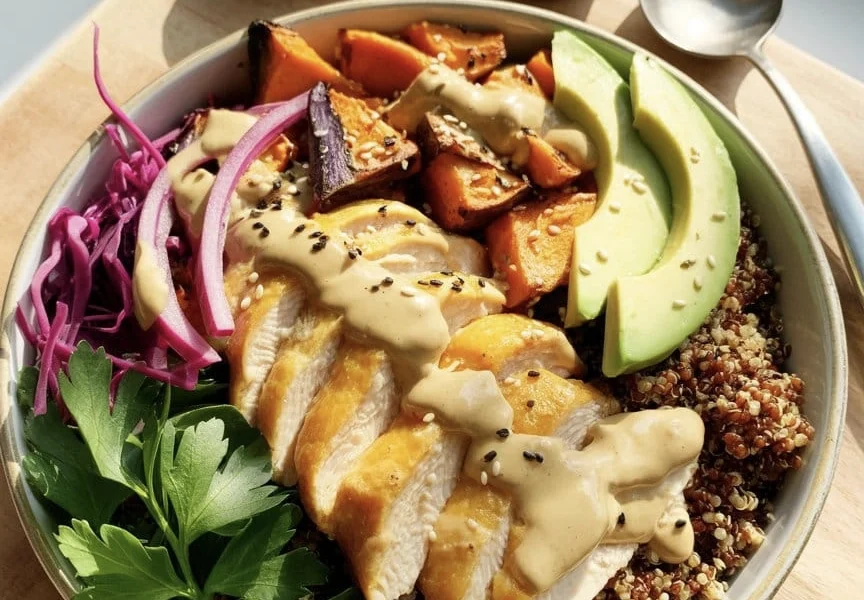
I resisted food bowls for longer than I should have. They looked like the kind of thing that required a Sunday afternoon of meal prep and a very organized fridge, and I assumed the appeal was mostly aesthetic – something that looked good on Instagram but wasn’t actually that satisfying to eat. I was wrong on both counts. The first time I built one properly, with a good sauce and some crunch on top, I understood immediately why people make them on rotation. Everything in one bowl, every forkful slightly different, and genuinely filling in a way a salad often isn’t.
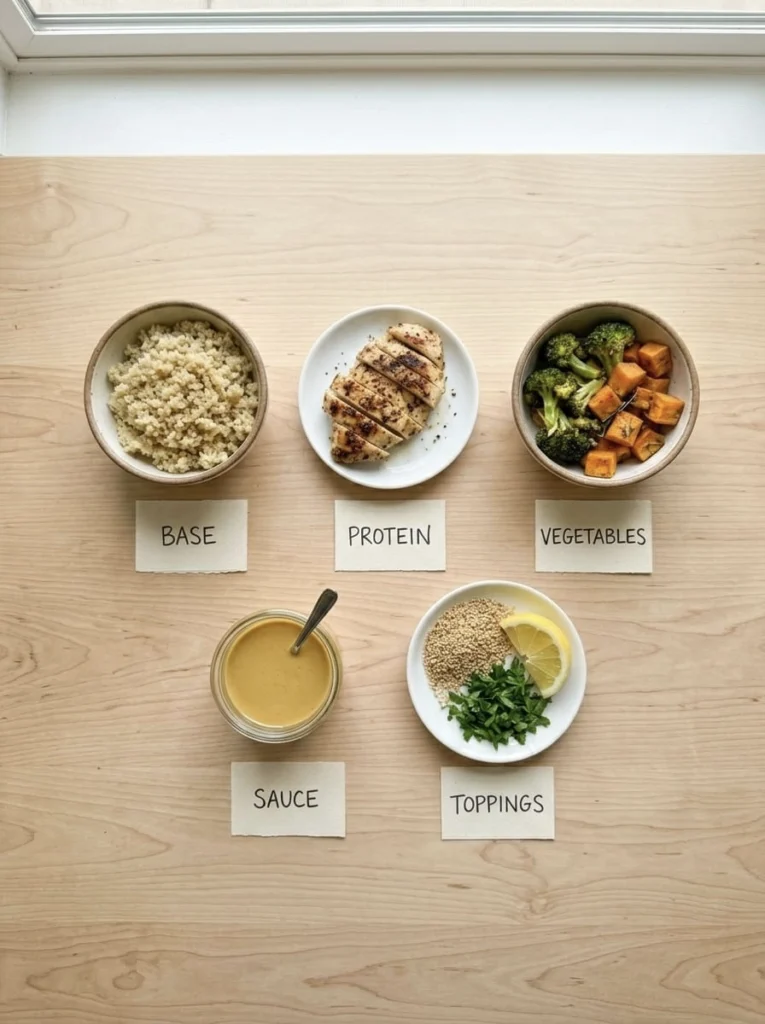
What I didn’t realize until I started making them regularly is that bowls are essentially a formula rather than a recipe, and once you know the formula you barely need to think about it. This is what I wish someone had explained to me at the start – the five layers, why each one matters, and the handful of things that separate a bowl that’s actually good from one that’s just a pile of things in a bowl.
Why Bowls Are Worth Making
The practical case for bowls is stronger than I expected. When you eat a protein, a starch and some vegetables separately on a plate, each thing is kind of isolated – you eat the chicken, then the rice, then the broccoli. In a bowl everything mingles together and every bite has a bit of everything in it. The sauce gets into the grain, the grain picks up flavor from the protein, the fresh herbs cut through the richness. It sounds like a small thing but it makes the eating experience noticeably more interesting.
The other thing I’ve found is that bowls are genuinely good for using up what’s in the fridge without it feeling like a leftovers situation. Roasted vegetables from two nights ago, half a can of chickpeas, some leftover rice – in a bowl with a good tahini sauce those things become an actual meal. The formula is forgiving in a way a specific recipe isn’t.
And then there’s the meal prep angle. I do a loose version of component prep most Sundays now – a pot of grain, a tray of roasted vegetables, a sauce or two – and it means I can put together a proper lunch in about three minutes on a weekday without thinking about it. The components keep separately so nothing goes soggy. Day four genuinely tastes as good as day one.
The Five Layers
Every bowl I make has some version of these five things. You don’t need all five every time but knowing what each one does helps you understand what’s missing when a bowl falls flat.
Layer 1: The Base
The base does two jobs: it adds substance and it absorbs the sauce so nothing ends up dry at the bottom. Grains are the obvious choice – quinoa, white or brown rice, farro, bulgur, couscous or barley all work. Soba or rice noodles are good for anything with an Asian flavor profile. For something lighter, a bed of arugula or shredded cabbage works but you need to eat it quickly once the warm ingredients go on or it wilts.
The one thing I’d say about the base: season it before anything else goes in. A little salt, a drizzle of olive oil or sesame oil, maybe a squeeze of lemon. Unseasoned grain makes the whole bowl taste flat regardless of how good everything else is. I’ve made this mistake enough times to be confident about it.
Layer 2: The Protein
The protein is what makes a bowl a meal. It shouldn’t be added plain – the difference between roasted spiced chickpeas and plain boiled chickpeas in a bowl is enormous. Whatever protein you’re using, it should have flavor of its own. Chicken thighs, ground beef, shrimp, salmon, soft-boiled eggs, chickpeas, tofu and white beans all work really well depending on the direction you’re going.
The thing that helps most is making sure the protein shares at least one flavor note with the sauce. If the sauce is miso-based, a bit of soy or sesame in the protein ties them together. If it’s tahini-lemon, the protein wants lemon and garlic. It’s what makes the bowl taste like a considered meal rather than separate things that happen to be in the same vessel.
Layer 3: The Vegetables
Vegetables are where a lot of bowls underperform, usually because they get treated as an afterthought. The ones I come back to most are roasted – high heat caramelizes the edges and concentrates the flavor in a way that steamed vegetables just don’t. Sweet potato, broccoli, cauliflower, zucchini and cherry tomatoes are my most-used options. They all roast well at 400°F for 20 to 25 minutes and they all play nicely with most sauces.
The other thing I’ve learned is that a bowl really benefits from having both something warm and roasted and something raw and fresh. Sliced cucumber, shredded cabbage, grated carrot, thinly sliced radish – these add crunch and freshness that contrast with the warm components in a way that makes every bite more interesting. It’s one of those small details that makes a big difference.
Layer 4: The Sauce
The sauce is the most important part and the one I got wrong most often when I first started making bowls. I used to add a small drizzle at the end as a finishing touch. What actually works is making the sauce first, making more of it than you think you need, and adding it generously – into the base so the grain absorbs it, and drizzled over the top. A bowl without enough sauce is dry and disappointing. A bowl with a good sauce tastes like something you’d pay for.
The sauces I make most often: tahini-lemon for Mediterranean bowls, gochujang-sesame for Korean-style, miso-ginger for anything with salmon or tofu, peanut-lime for shrimp or noodle bowls, and a jalapeño-lime crema for anything in the taco direction. All of them take under five minutes. I’ve written them all out in full at the bottom of this post.
Layer 5: The Toppings
Toppings are the finishing layer and they do two things: they add texture and they make the bowl look genuinely good. The combination I go back to most is something crunchy (toasted sesame seeds, crushed nuts, crispy shallots), something fresh (cilantro, scallions, fresh parsley, basil), and something sharp or acidic (a squeeze of lime, a few pickled onions, pickled ginger). Crumbled feta, cotija or halloumi covers both the topping and a bit of extra flavor in one go. Sliced avocado is always welcome.
The one rule: toppings go on last, after the sauce, so they stay crisp. Putting crunchy toppings on before the sauce is how you end up with soggy seeds.
The Quick Formula
Base + Protein + Vegetables + Sauce + Toppings. Per person that looks like:
- Around 1 cup of cooked grain or a good handful of noodles
- 4 to 6 oz of protein, cooked with flavor
- A generous handful of roasted vegetables plus something raw and crunchy
- 2 to 3 tablespoons of sauce – more if it’s a thinner dressing style – stirred through the base first
- A small handful of toppings: something crunchy, something fresh, something acidic
Five Bowls I Make on Repeat
These are the five I come back to most. Each one uses the formula above and takes around 30 to 40 minutes from scratch – significantly less if any of the components are already in the fridge.
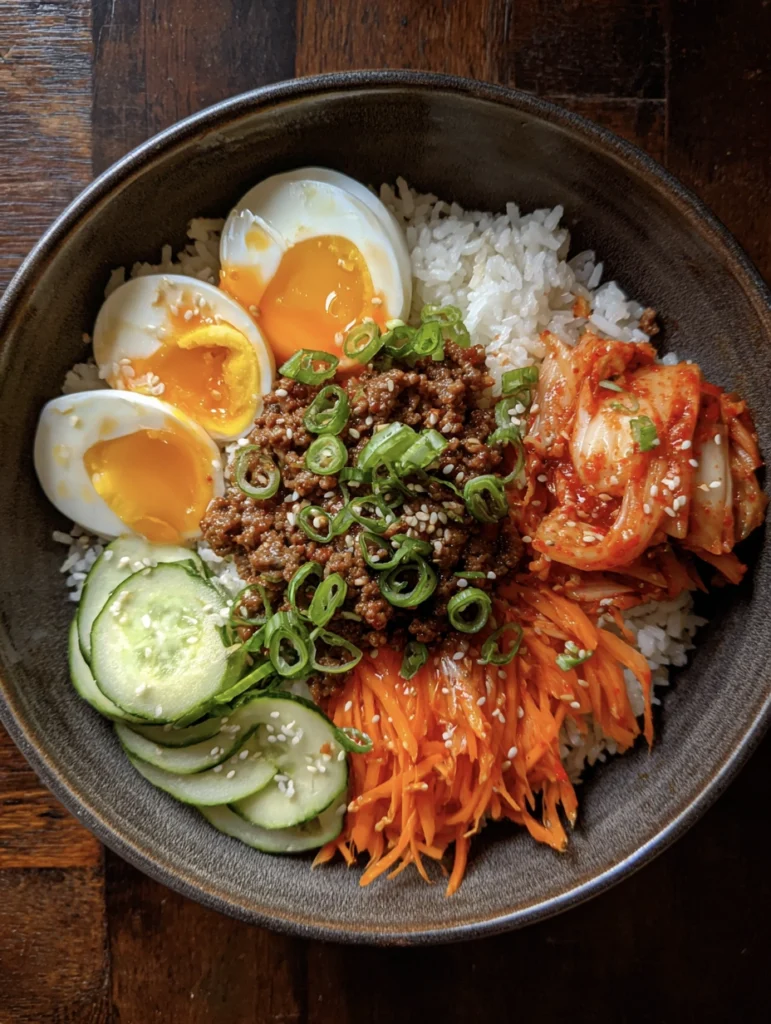
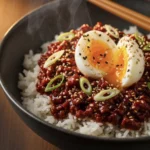
Korean Ground Beef Bowl
- Base: Steamed jasmine rice with a little sesame oil stirred through
- Protein: Ground beef cooked with soy sauce, sesame oil, garlic, ginger and gochujang
- Vegetables: Shredded carrots and sliced cucumber (kept raw), wilted spinach
- Sauce: Gochujang-sesame drizzle (gochujang, sesame oil, rice vinegar, honey)
- Toppings: Soft-boiled egg, sliced scallions, sesame seeds, kimchi if you have it
Mediterranean Chickpea Bowl
- Base: Couscous or bulgur with lemon juice and olive oil
- Protein: Roasted spiced chickpeas, or grilled chicken thighs if you want something more substantial
- Vegetables: Roasted red peppers and zucchini, plus raw sliced cucumber and cherry tomatoes
- Sauce: Tahini-lemon (tahini, lemon juice, garlic, water to thin)
- Toppings: Crumbled feta, fresh parsley, pickled red onion, toasted pine nuts
Miso Salmon Bowl
- Base: Soba noodles or rice with a splash of sesame oil
- Protein: Miso and honey glazed salmon, broiled or pan-seared
- Vegetables: Edamame, shredded purple cabbage, sliced avocado
- Sauce: Miso-ginger dressing (white miso, rice vinegar, ginger, sesame oil, honey)
- Toppings: Sesame seeds, sliced scallions, pickled ginger, a few strips of nori
Shawarma Chicken Bowl
- Base: Couscous with fresh herbs, or rice with a pinch of turmeric
- Protein: Shawarma-marinated grilled chicken thighs, sliced
- Vegetables: Roasted cauliflower, plus raw sliced tomatoes and cucumber
- Sauce: Garlic-parsley sauce or a tahini-yogurt
- Toppings: Fresh parsley, pickled red cabbage, crumbled feta, toasted pita chips for crunch
Shrimp Taco Bowl
- Base: Cilantro-lime rice, or shredded romaine for a lighter version
- Protein: Hot honey garlic butter shrimp
- Vegetables: Black beans, corn, shredded red cabbage
- Sauce: Jalapeño-lime crema (sour cream, lime juice, jalapeño, garlic)
- Toppings: Diced avocado, fresh cilantro, crumbled cotija, crushed tortilla chips
What Goes Wrong and How to Fix It
Most disappointing bowls come down to one of four things. All of them are easy to fix once you know what you’re looking for.
Not Enough Sauce
This is the one I see most often and the one I did myself for a long time. A small drizzle of sauce over a large bowl doesn’t reach most of the ingredients. The fix is to add the sauce in two stages: stir half of it through the grain first so it absorbs into the base, then drizzle the rest over the top after everything is assembled. If the bowl looks dry when you’ve finished building it, it needs more sauce. I always make extra now and keep it in a small jar alongside so people can add more at the table.
Everything the Same Temperature
A bowl where every component is warm is filling but a bit monotonous. The freshness contrast – something cool or room temperature against the warm grain and protein – is part of what makes bowls satisfying to eat. I keep the fresh toppings (herbs, cucumber, avocado) separate until the last minute and add them after everything warm is already in the bowl.
No Textural Contrast
Soft grain, soft protein and soft roasted vegetables in the same bowl gets old quickly. The toppings layer is the fix – toasted nuts or seeds, crispy shallots, crushed crackers or tortilla chips, raw sliced vegetables. Something that crunches when you eat it makes every other element in the bowl more interesting by contrast.
Underseasoned Components
I taste everything before it goes into the bowl. The grain, the protein, the roasted vegetables – all of them need to be properly seasoned on their own before they go in. A good sauce adds a lot but it can’t rescue a bowl built from bland components. The grain is the one people most often forget – unsalted cooked quinoa or rice makes the whole bowl taste muted regardless of what else is in it.
The Sunday Prep Approach
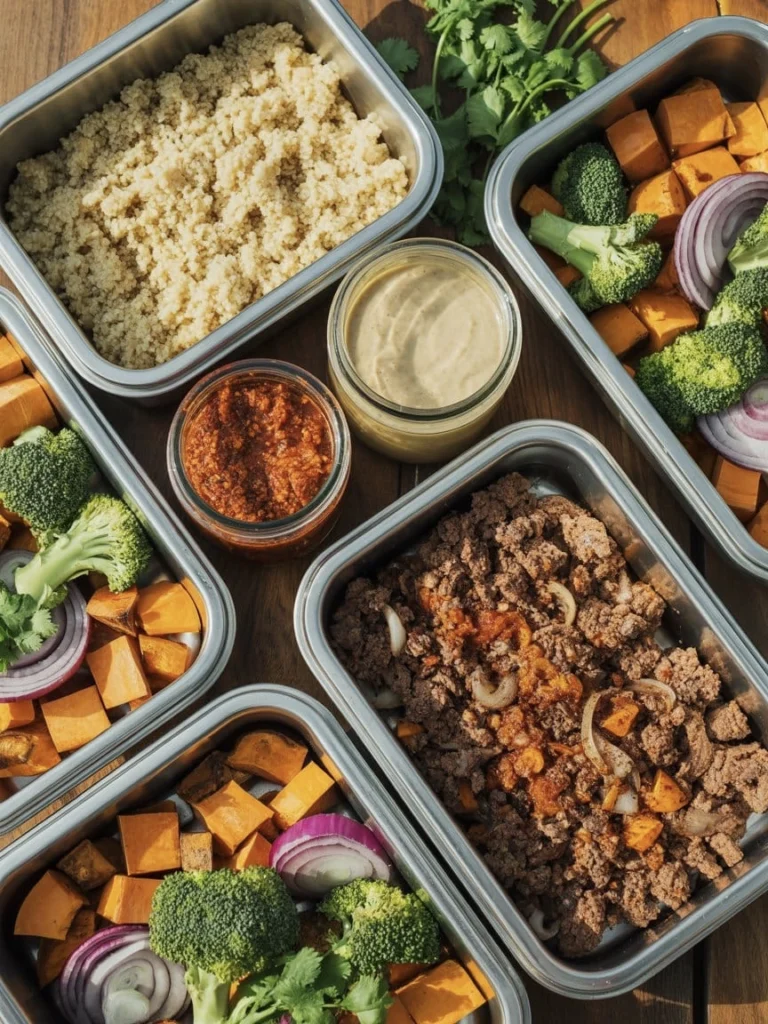
I don’t do a full structured meal prep most weeks, but I do a loose version of component prep on Sunday afternoons that takes about 45 minutes and sets me up for the whole week. A big pot of grain, two trays of roasted vegetables, a protein that keeps well, two sauces. Everything goes into separate containers in the fridge and I assemble from there each day.
The important thing is keeping everything separate rather than assembling the bowls in advance. Dressed grain goes soggy, avocado turns brown, fresh toppings wilt. Separate components mean day four genuinely tastes as good as day one. I usually have the five bowl components ready and rotate through different flavor combinations across the week – same grain, different sauce, different protein, different bowl.
My current Sunday rotation: A big pot of quinoa or rice. Two trays of mixed vegetables – usually sweet potato, broccoli and red onion because they roast well together at the same temperature. Ground beef with Korean flavors or a tin of roasted spiced chickpeas for the protein. Tahini-lemon sauce and gochujang-sesame sauce. That’s five very different lunches from about 45 minutes of cooking.
Five Sauces Worth Memorizing
If there’s one thing worth investing time in for bowl cooking it’s building a small sauce library. These five cover most flavor directions and all take under five minutes. I keep at least two in the fridge at any given time.
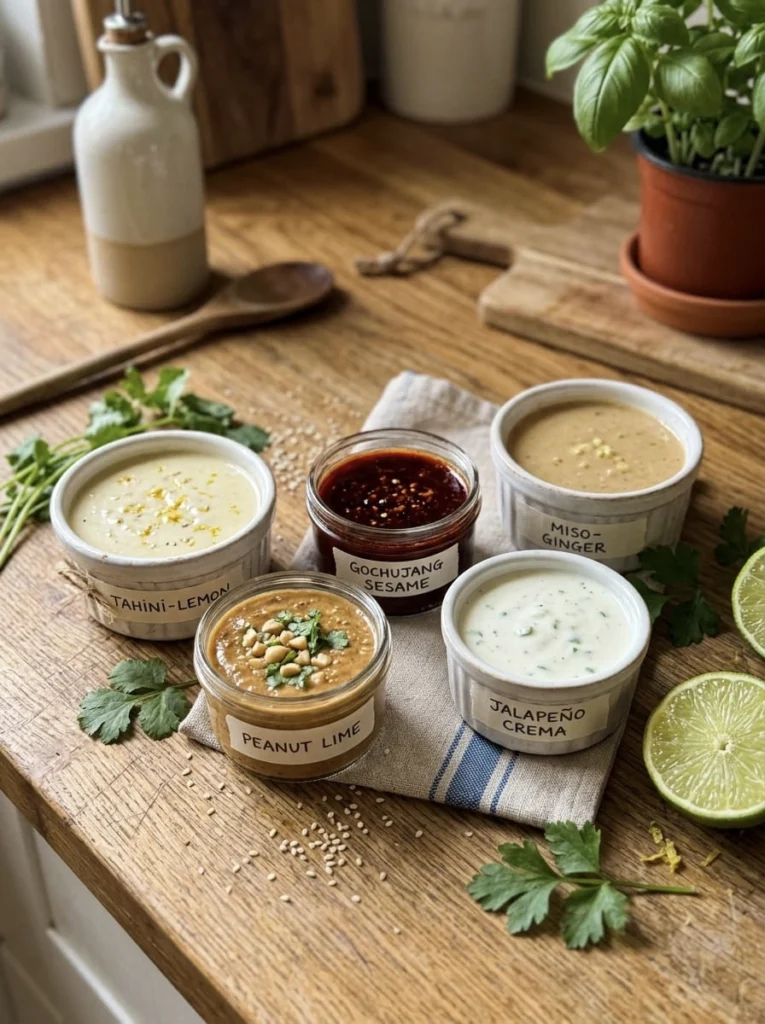
Tahini-Lemon
3 tbsp tahini, 2 tbsp lemon juice, 1 small garlic clove grated, 2 to 4 tbsp water to thin, salt to taste. Whisk together – it will seize up at first, keep adding water a tablespoon at a time and it comes together into a smooth pourable dressing. Works with Mediterranean bowls, roasted vegetables, chickpeas, falafel. Keeps in the fridge for a week.
Miso-Ginger
2 tbsp white miso, 1 tbsp rice vinegar, 1 tsp sesame oil, 1 tsp honey, 1 tsp fresh ginger grated, 1 to 2 tbsp water to thin. Whisk together. Works with salmon, tofu, edamame, soba noodle bowls. The miso makes it quite salty so taste before adding any extra salt.
Gochujang-Sesame
1 tbsp gochujang, 1 tbsp soy sauce, 1 tbsp sesame oil, 1 tbsp rice vinegar, 1 tsp honey. Whisk together. This keeps in the fridge for two weeks and gets better as it sits. Works with Korean beef bowls, crispy tofu, noodle bowls. Spicy – reduce the gochujang to half a tablespoon if you want less heat.
Peanut-Lime
3 tbsp peanut butter, 2 tbsp soy sauce, 1 tbsp lime juice, 1 tsp sesame oil, 1 tsp honey, 1 small garlic clove grated, water to thin. Whisk together. Works with shrimp, chicken, rice noodle bowls, anything with Southeast Asian flavors. Also genuinely good as a dipping sauce for spring rolls or grilled skewers.
Jalapeño-Lime Crema
4 tbsp sour cream or Greek yogurt, 1 tbsp lime juice, 1 small jalapeño finely minced (seeds removed for less heat), 1 small garlic clove grated, salt. Whisk together. Works with taco bowls, shrimp, roasted corn, anything in a Mexican or Tex-Mex direction. Also doubles as the crema for actual tacos so it’s worth making a larger batch.
Recipes to Start With
If you want a proper recipe to follow before you start going fully freeform with the formula, these are the ones I’d suggest starting with. They’re all on the site and they’re all complete bowl builds with the sauce already worked out:
- The Korean ground beef bowl is the fastest one on the site – 20 minutes, deeply flavorful, and most of the ingredients are probably already in your pantry.
- The chicken shawarma bowls are a good one to make when you have time to marinate – the flavor payoff is worth it and it’s a good template for understanding how the Mediterranean bowl formula works.
- The miso and honey glazed salmon works brilliantly as a bowl over soba noodles with edamame and shredded cabbage – the recipe is written as a standalone dinner but the bowl version is how I make it most often now.
- The hot honey garlic butter shrimp is written as a taco recipe but the shrimp and the jalapeño crema over cilantro-lime rice is honestly just as good, and faster to eat.
Want this recipe emailed to you?