Every pumpkin pasta recipe I tried started the same way: halve a squash, roast it for forty-five minutes, scoop it out, blend it. By the time I’d done all that it was half past eight and I’d stopped caring.
So I started using canned pumpkin instead, mostly out of impatience, and it turns out it’s better. Not just faster. It’s already smooth, it’s already concentrated, and it doesn’t water down the sauce the way roasted squash does. The whole thing takes twenty-five minutes and you don’t get the blender out.
The bit that actually matters
Canned pumpkin on its own tastes flat. Sweet, thick, slightly dull. If you stir it into cream and pasta as-is, you get a beige sauce that tastes mostly of nothing.
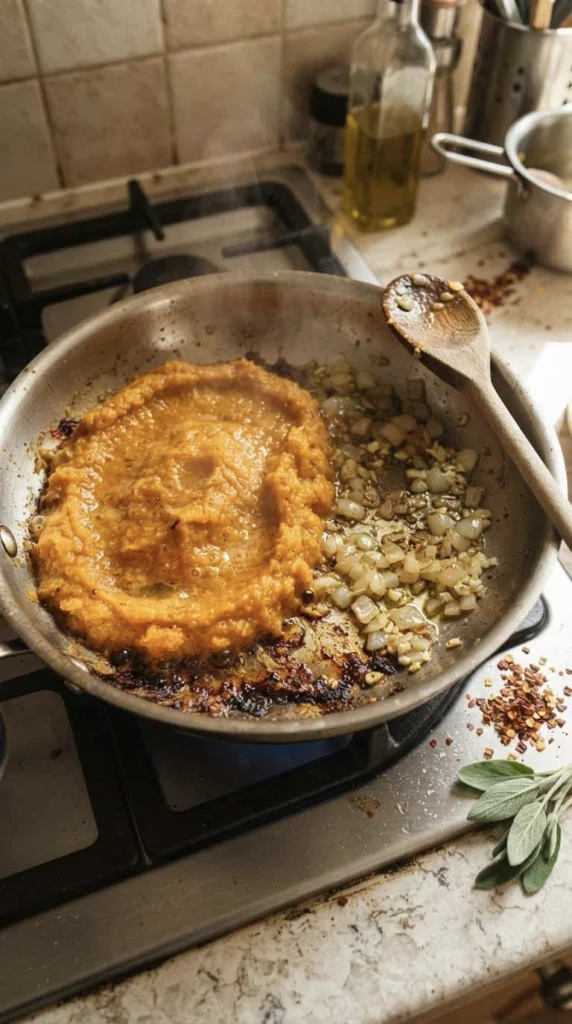
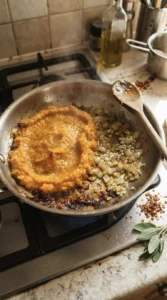
So you fry it. Push everything to one side of the pan, put the pumpkin in the hot fat, and leave it alone for two or three minutes until the bottom catches and goes a shade darker. It smells different when it’s ready, sort of nutty and toasted rather than raw. Then stir it in.
That one step is the difference between this tasting like a proper autumn dinner and tasting like a pumpkin spice latte someone poured over pasta.
The other thing is acid. Pumpkin, cream and parmesan are all soft, round flavours with nothing to push against. A good squeeze of lemon right at the end lifts the whole thing, and you will notice if you skip it.
If you want the same flavours in a completely different shape, my brown butter pumpkin gnocchi with chili crisp and sage is the crispier cousin of this.
What you need
For the sauce
- 3 tbsp butter
- 1 small onion, finely diced
- 4 garlic cloves, minced
- 1 tsp fresh sage, finely chopped, or 1/2 tsp dried
- 1/2 tsp smoked paprika
- 1/4 tsp freshly grated nutmeg
- 1/4 tsp chilli flakes
- 1 cup canned pumpkin purée (not pie filling)
- 3/4 cup heavy cream
- 3/4 cup pasta water, reserved
- 3/4 cup parmesan, finely grated
- Juice of half a lemon
- Salt and plenty of black pepper
For the pasta
- 12 oz rigatoni, penne or shells
- 2 tbsp olive oil
To finish
- More parmesan
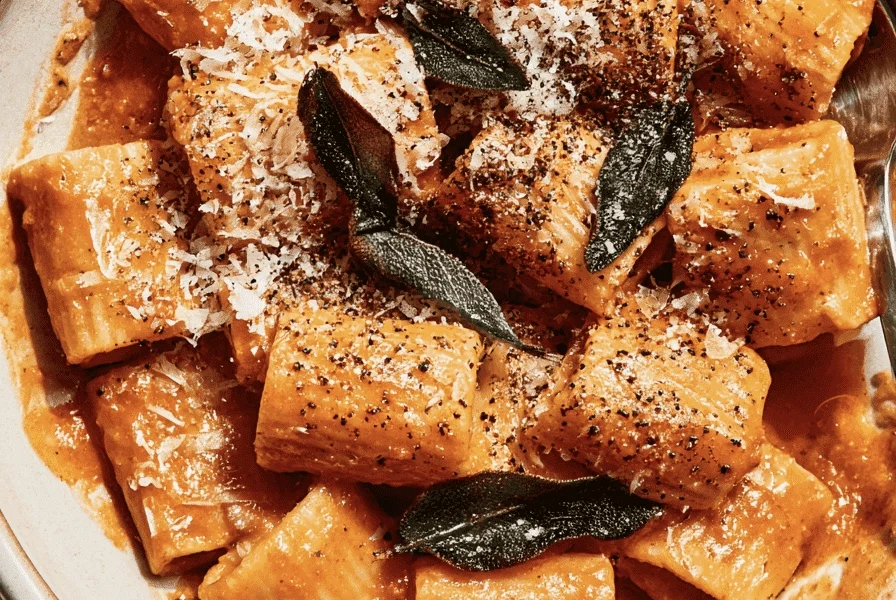
- A few sage leaves, crisped in butter, if you have them
A few notes.
Canned pumpkin purée, not pie filling. Pie filling has sugar and spices already in it and it will ruin this. Check the tin.
Smoked paprika is the secret one. It’s not a pumpkin flavour and that’s the point. It adds a savoury, faintly smoky bottom note that stops the sauce reading as sweet. Quarter teaspoon more if you like.
Shapes with ridges or hollows. Rigatoni, shells, penne. This sauce is thick and it wants somewhere to sit. Spaghetti just slides around in it.
Don’t tip away the pasta water. It’s the only thing that will turn a thick paste into a sauce that coats properly. I have made this mistake more than once.
How to make it
1. Get the pasta on. Salt the water properly and cook to just under the packet time. Before you drain it, scoop out a mugful of the water and put it somewhere you won’t forget it.
2. Soften the onion. Melt the butter in a large deep pan over medium heat. Onion in, 5 minutes, until soft and translucent.
3. Add the aromatics. Garlic, sage, smoked paprika, nutmeg and chilli flakes. Stir for about a minute until it smells good.
4. Fry the pumpkin. This is the step. Push everything to one side, add the pumpkin purée to the empty half of the pan and spread it thin. Leave it for 2 to 3 minutes without stirring, until the underside darkens and it starts to smell toasted rather than raw. Then stir everything together.
5. Make it a sauce. Pour in the cream and half the pasta water. Bring to a gentle simmer and let it bubble for 2 minutes.
6. Cheese off the heat. Take the pan off the hob, then add the parmesan a handful at a time, stirring until each one disappears. Doing this off the heat stops it going grainy.
7. Bring it together. Drained pasta into the sauce, back on a low heat, and toss for a minute so everything coats. Add more pasta water a splash at a time until it moves the way you want. It should coat the pasta and pool slightly, not sit in a lump.
8. Lemon last. Off the heat, squeeze in the lemon and taste. Then salt and a lot of black pepper.
Things I learned the hard way
Don’t boil the sauce once the cream is in. A hard boil splits it. Gentle simmer only.
The sauce thickens as it stands. If you’re not eating immediately, hold back some of the pasta water and stir it through just before serving.
Grate your own parmesan. The pre-grated stuff has anti-caking agents in it that stop it melting smoothly, and in a sauce this simple you notice.
More pepper than you think. It’s the other thing pushing back against the sweetness. Be generous.
Still have pumpkin puree in the can? Turn it into my brown butter pumpkin banana bread with maple pecan streusel for an easy fall bake.
Ways to change it
With sausage. Brown 8 oz of Italian sausage in the pan first, take it out, build the sauce in the same pan and stir it back in at the end. This is the version I make most often.
With bacon. Six slices, crisped, half stirred through and half on top.
Vegan. Olive oil instead of butter, full fat coconut milk instead of cream, nutritional yeast instead of parmesan. It works and it’s genuinely good, though it tastes faintly of coconut.
With spinach. Two big handfuls wilted in at the end. Makes it look less relentlessly orange.
Spicier. Double the chilli flakes and add a spoonful of chilli crisp on top.
How I like to eat it
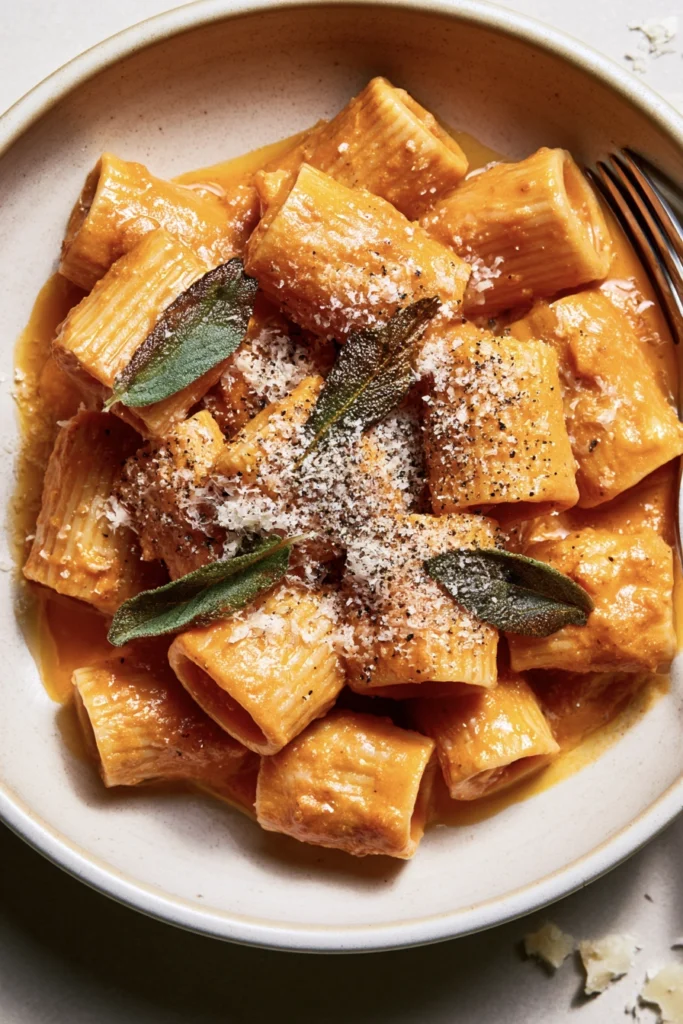
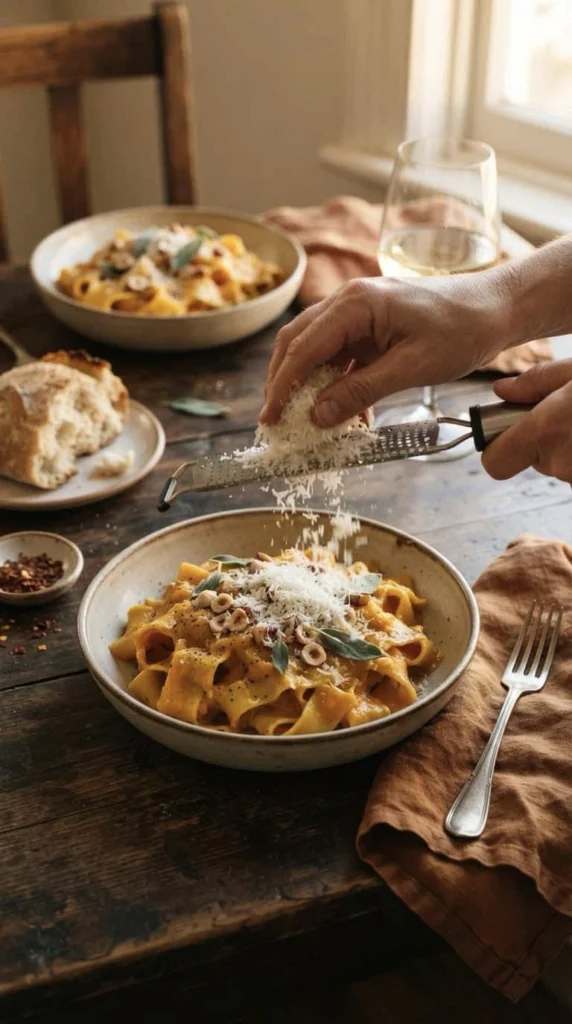
In a shallow bowl with far too much parmesan and a few sage leaves crisped in butter, which takes ninety seconds and makes it look like you tried.
Bread on the side for the sauce left in the bowl, which is the best part.
And it’s very good the next day, cold, standing at the fridge. I’m not going to pretend otherwise.
Keeping it
Three days in the fridge. It’ll thicken considerably as it sits.
Reheat gently in a pan with a splash of milk or water, stirring, rather than in the microwave where the sauce tends to split.
The sauce alone freezes well for three months. Freeze it before the pasta goes in, then defrost and toss through freshly cooked pasta. Frozen cooked pasta comes back mushy.
The other autumn pasta I make on repeat is creamy butternut squash alfredo, which is sweeter and milder if that’s more your thing.
Questions people ask me
Can I use fresh pumpkin? Yes, but roast it first and drain it well. Fresh squash holds a lot more water and it’ll thin the sauce. This recipe is built around canned specifically.
Is butternut squash purée the same? Close enough. Slightly sweeter and a bit thinner, so go easy on the pasta water.
My sauce went grainy. The parmesan went in over heat. Take the pan off the hob first and add it gradually.
Can I make it ahead? Make the sauce ahead, up to three days. Cook the pasta fresh and combine.
It tastes too sweet. More smoked paprika, more pepper, more lemon. If you accidentally used pie filling, start again.
Does it actually taste of pumpkin? It tastes savoury and nutty rather than of pumpkin pie. If you want it more pronounced, fry the purée a little longer at step 4.
It’s one of my quick pasta recipes ready in 30 minutes or less, if you want more like it.
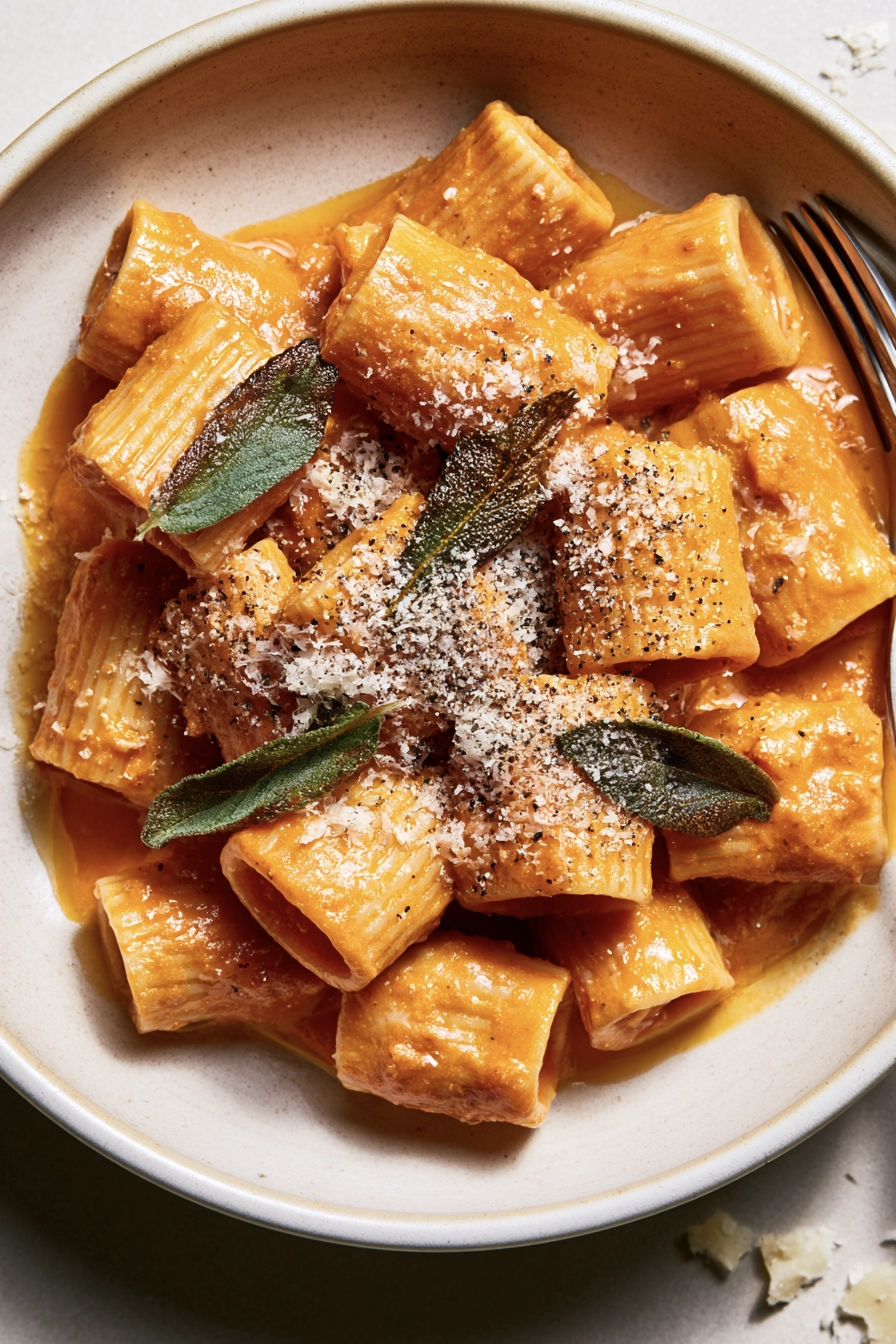
Ridiculously Easy Creamy Pumpkin Pasta,
Love it? Click to rate
Ingredients
Method
- Get the pasta on. Salt the water properly and cook to just under the packet time. Before you drain it, scoop out a mugful of the water and put it somewhere you won’t forget it.
- Soften the onion. Melt the butter in a large deep pan over medium heat. Onion in, 5 minutes, until soft and translucent.
- Add the aromatics. Garlic, sage, smoked paprika, nutmeg and chilli flakes. Stir for about a minute until it smells good.
- Fry the pumpkin. This is the step. Push everything to one side, add the pumpkin purée to the empty half of the pan and spread it thin. Leave it for 2 to 3 minutes without stirring, until the underside darkens and it starts to smell toasted rather than raw. Then stir everything together.
- Make it a sauce. Pour in the cream and half the pasta water. Bring to a gentle simmer and let it bubble for 2 minutes.
- Cheese off the heat. Take the pan off the hob, then add the parmesan a handful at a time, stirring until each one disappears. Doing this off the heat stops it going grainy.
- Bring it together. Drained pasta into the sauce, back on a low heat, and toss for a minute so everything coats. Add more pasta water a splash at a time until it moves the way you want. It should coat the pasta and pool slightly, not sit in a lump.
- Lemon last. Off the heat, squeeze in the lemon and taste. Then salt and a lot of black pepper.
Nutrition
Notes
Tried this recipe?
Let us know how it was!Want this recipe emailed to you?