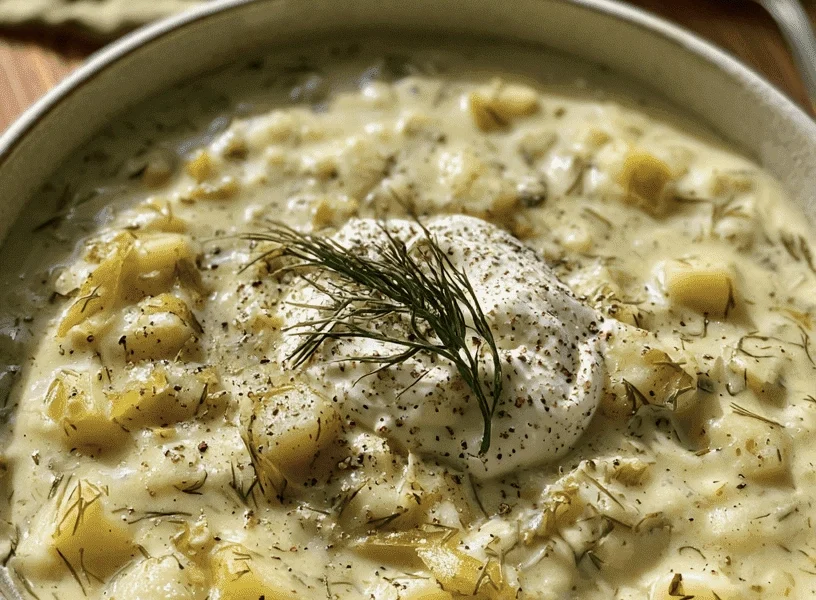
The first two times I made this it came out as potato soup with something vaguely sour going on in the background. Which is what most dill pickle soup tastes like, and I could not work out why, because I’d put half a jar of brine in.
Then it clicked. I’d been putting the brine in early and simmering it for twenty minutes. Vinegar and fresh dill are both fragile. Cook them and they go soft and dull and mostly disappear. So now the brine goes in at the very end, off the heat, and the difference is not subtle.
This is the third thing I’ve made this year that started as a jar of pickle brine I couldn’t bring myself to pour away, after the dill pickle pasta salad and the creamy dill pickle dip.
Why the brine goes in last
Acid mellows when you heat it. That’s genuinely useful when you’re building a long-simmered sauce and want the sharp edges rounded off. It’s the opposite of what you want here, where the sharp edge is the entire point.
Same story with the dill. Fresh dill has a bright, almost grassy thing going on that survives about ninety seconds of simmering before it turns into that flat dried-herb flavour.
So the soup gets built and cooked like any creamy potato soup, and then right at the end, heat off, in goes half a cup of cold brine and a fistful of fresh dill. It tastes like you’ve just bitten into a pickle, in a bowl of something warm and creamy. That contrast is the whole dish.
The other thing worth doing is grating the pickles rather than chopping them. Grated pickle disappears into the soup and seasons every spoonful. Diced pickle gives you occasional cold lumps, which is not the same experience at all.
It’s the exact opposite of what I do in the double-brined dill pickle chicken salad, where the whole point is getting the brine into warm chicken so it soaks right in. Heat helps you there and works against you here.
What you need, and why
The base
- 3 tbsp butter
- 1 onion, finely diced
- 2 carrots, coarsely grated
- 2 celery ribs, finely diced
- 3 tbsp all-purpose flour
- 6 cups chicken stock
- 1 1/2 lb Yukon gold potatoes, cut into small cubes
- 1 tsp dried dill
- 1/2 tsp freshly ground black pepper
The pickle part
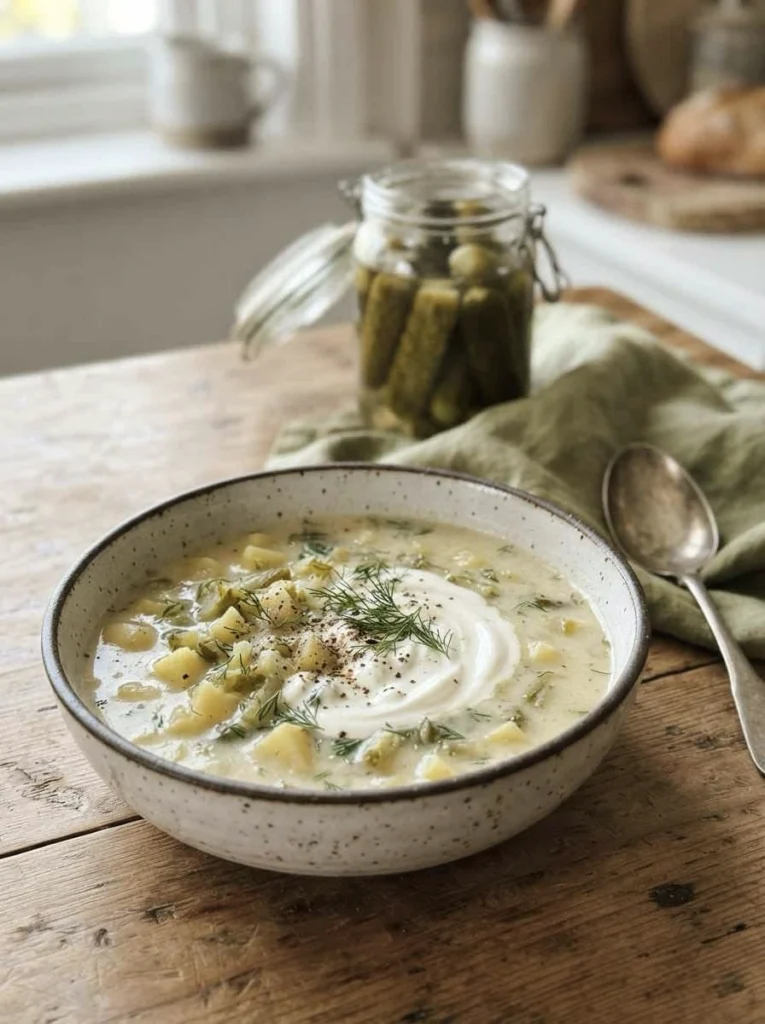
- 2 cups dill pickles, coarsely grated, about 7 or 8 spears
- 1/2 cup sour cream
- 1/2 cup heavy cream
- 1/2 cup dill pickle brine, cold, straight from the jar
- 3 tbsp fresh dill, chopped
A few notes on the choices.
Yukon golds, not russets. Russets break down into the liquid and you end up with something closer to a thick puree. Yukons hold their shape and keep a bit of bite, which you want against all that creaminess.
Same reasoning as my 30-minute creamy potato soup, where the potato needs to hold together rather than dissolve into the liquid.
Grate the carrots. Same logic as the pickles. Grated carrot melts into the base and adds sweetness underneath the tang instead of sitting there in orange cubes.
Both dried and fresh dill again. I know I go on about this, but they do different jobs. The dried goes in early and tastes like the inside of the jar. The fresh goes in at the end and tastes green. You want both, and using only fresh is why a lot of versions taste like herby potato soup.
Sour cream and heavy cream. All heavy cream is too rich and flattens the tang. The sour cream keeps it lively.
How to make it
1. Build the base. Melt the butter in a large pot over medium heat. Add the onion, carrot and celery and cook gently for 6 or 7 minutes until everything has softened and the onion has gone translucent. You’re not looking for colour here.
2. Make the roux. Stir in the flour and let it cook for a minute, stirring the whole time. It’ll look like a thick paste and that’s right.
3. Add the liquid. Pour in the stock a cup at a time, stirring after each addition so it stays smooth. Add the potatoes, dried dill and pepper.
4. Simmer. Bring it up to a gentle simmer and cook uncovered for 15 to 18 minutes, until the potatoes give easily to a fork but haven’t started falling apart.
5. Add the pickles. Stir in the grated pickles and give it another 5 minutes. They only need warming through.
6. Temper the dairy. Whisk the sour cream and heavy cream together in a bowl, then ladle in a cup of the hot soup and whisk it in. Now pour that back into the pot. Doing it this way stops the sour cream splitting, which it absolutely will if you drop it in cold.
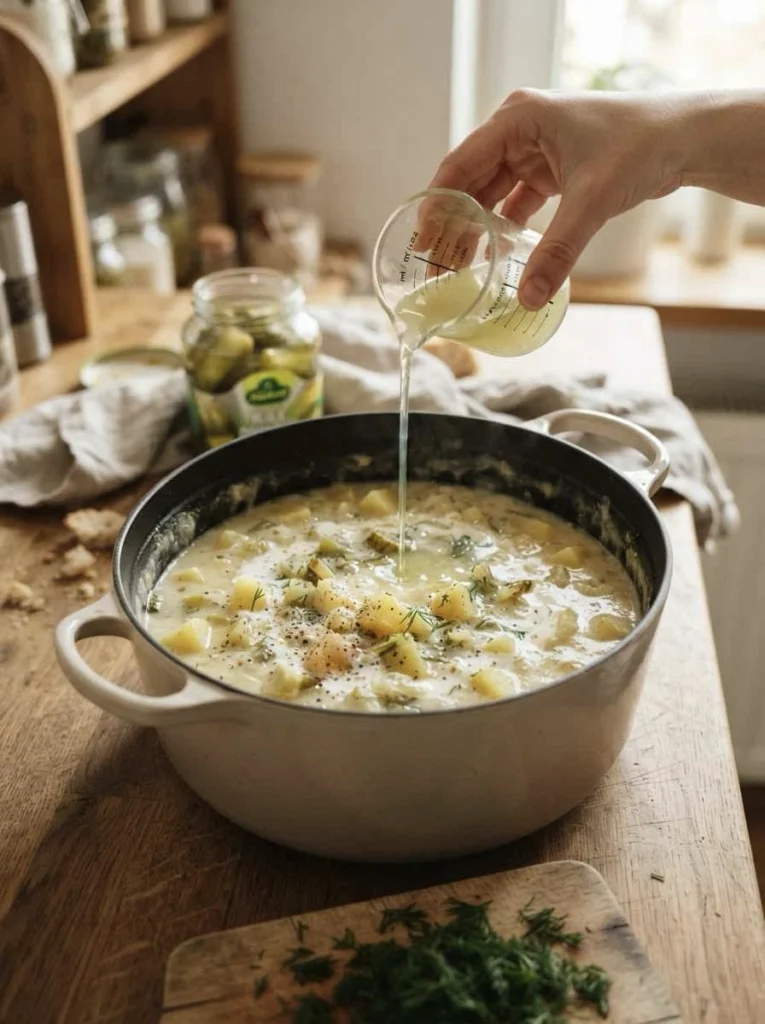
7. Off the heat. Take the pot off the hob completely. Now stir in the cold brine and the fresh dill. Taste it. It should be properly tangy, not gently sour.
8. Salt last. Between the stock, the pickles and the brine there’s a lot of salt in here already. Taste before you add any.
Things I learned the hard way
Don’t boil it once the cream is in. It’ll split, and there’s no coming back from that. Gentle warming only from step 6 onward.
Squeeze the grated pickle. Not bone dry, just a light squeeze over the sink. Otherwise you’re adding a surprising amount of extra liquid and the soup goes thin.
Taste before the second half of the brine. Pickle brands vary enormously in how sharp they are. Add a quarter cup, taste, then decide.
If it’s too tangy, a spoonful more sour cream pulls it back. If it’s not tangy enough, more brine, still off the heat.
Ways to change it
With bacon. Six slices, crisped and crumbled, half stirred through and half on top. This is the version people ask for.
With sausage. Brown a pound of smoked kielbasa in the pot before you start and add it back at the end. Closer to the Polish original this is loosely based on.
Vegetarian. Vegetable stock and it works fine, though I’d add an extra tablespoon of butter for body.
Lighter. Swap the heavy cream for whole milk and up the sour cream to three quarters of a cup.
Chunkier. Hold back half the potatoes and add them in the last 8 minutes so they stay firmer.
How I like to eat it
With a lot of black pepper and more fresh dill on top than seems reasonable. Rye bread and butter on the side, which suits it better than anything else I’ve tried. A grilled cheese if I’m feeding people who need feeding properly.
Extra grated pickle on top is good if you like it sharp, and a spoonful of sour cream on top if you don’t.
Keeping it
Four days in the fridge. The tang fades a little each day, which you can fix with a splash more brine when you reheat.
Reheat gently, low heat, stirring. Don’t let it boil or the dairy will split.
I wouldn’t freeze it. Cream soups with potato in them come back grainy.
Questions people ask me
Is this the Polish one? Loosely. Zupa ogórkowa is the original and it’s usually thinner, often with barley or rice in it. This is the creamy potato version, which is what most people are picturing.
Which pickles? Refrigerated kosher dill spears, and use their brine. Claussen if you want the easy supermarket answer. Not sweet or bread and butter, they’ll fight the dairy.
Can I use pickle juice from a jar I’ve finished? Yes, that’s exactly what it’s for. Keep the jar.
Mine split, what happened? The dairy went in too hot or the soup boiled afterwards. Temper it properly and keep the heat low from that point.
Can I make it ahead? Yes, but hold back the fresh dill and half the brine, and add those when you reheat. The flavour stays much brighter that way.
And if you’ve reached the point where you’re buying pickles specifically to cook with rather than to eat, I have a lot more pickle recipes here. No judgement.
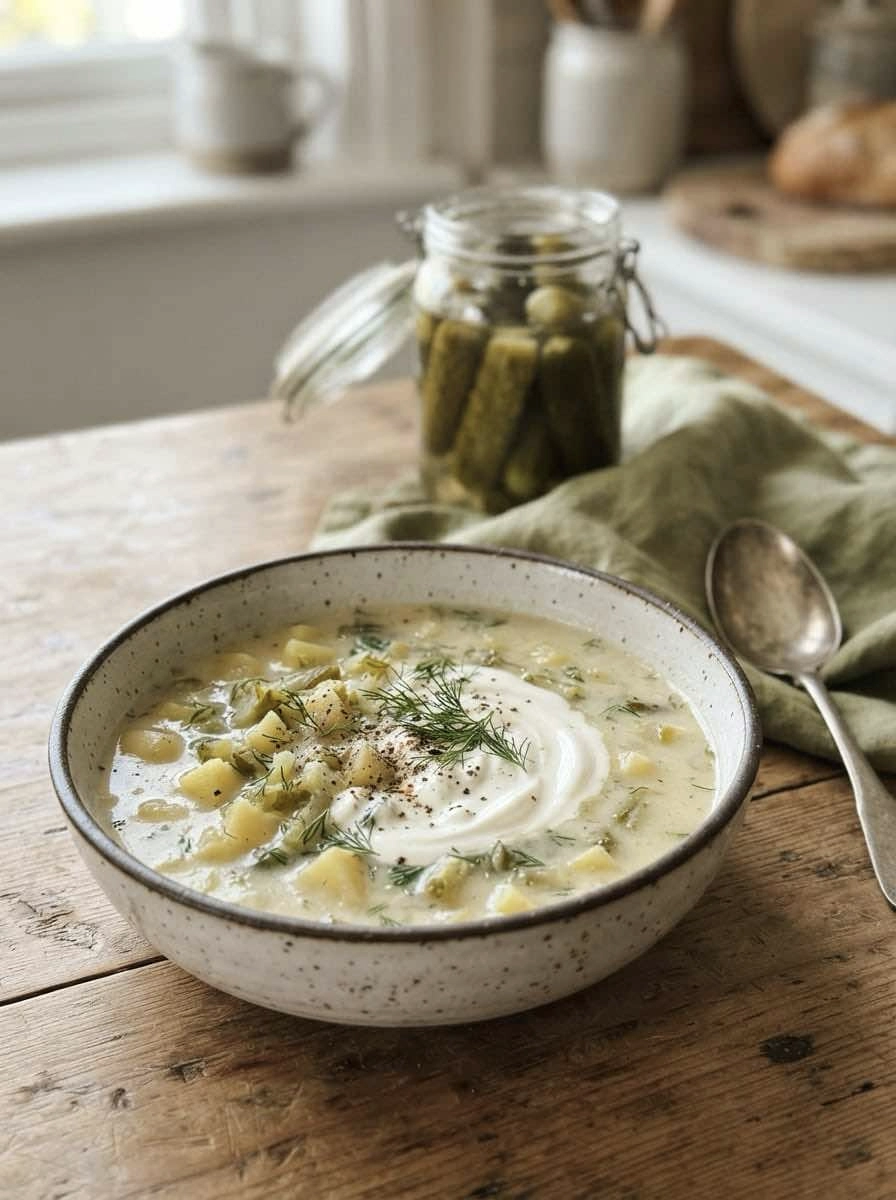
Dill Pickle Soup That Actually Tastes Like Pickles
Love it? Click to rate
Ingredients
Method
- Build the base. Melt the butter in a large pot over medium heat. Add the onion, carrot and celery and cook gently for 6 or 7 minutes until everything has softened and the onion has gone translucent. You’re not looking for colour here.
- Make the roux. Stir in the flour and let it cook for a minute, stirring the whole time. It’ll look like a thick paste and that’s right.
- Add the liquid. Pour in the stock a cup at a time, stirring after each addition so it stays smooth. Add the potatoes, dried dill and pepper.
- Simmer. Bring it up to a gentle simmer and cook uncovered for 15 to 18 minutes, until the potatoes give easily to a fork but haven’t started falling apart.
- Add the pickles. Stir in the grated pickles and give it another 5 minutes. They only need warming through.
- Temper the dairy. Whisk the sour cream and heavy cream together in a bowl, then ladle in a cup of the hot soup and whisk it in. Now pour that back into the pot. Doing it this way stops the sour cream splitting, which it absolutely will if you drop it in cold.
- Off the heat. Take the pot off the hob completely. Now stir in the cold brine and the fresh dill. Taste it. It should be properly tangy, not gently sour.

- Salt last. Between the stock, the pickles and the brine there’s a lot of salt in here already. Taste before you add any.
Nutrition
Notes
Things I learned the hard way
Don’t boil it once the cream is in. It’ll split, and there’s no coming back from that. Gentle warming only from step 6 onward. Squeeze the grated pickle. Not bone dry, just a light squeeze over the sink. Otherwise you’re adding a surprising amount of extra liquid and the soup goes thin. Taste before the second half of the brine. Pickle brands vary enormously in how sharp they are. Add a quarter cup, taste, then decide. If it’s too tangy, a spoonful more sour cream pulls it back. If it’s not tangy enough, more brine, still off the heat.Tried this recipe?
Let us know how it was!Want this recipe emailed to you?
Recommended:
 10 Creative Pickle Recipes That Go Way Beyond the Burger
 Dill Pickle Birthday Cake – The Outrageous Layer Cake Everyone Begs For the Recipe After
 Double-Brined Dill Pickle Chicken Salad, Crazy Creamy and Seriously Tangy
 Dill Pickle Ice Cream with a Honey Drizzle
 Crispy Dill Pickle-Brined Fried Chicken Sandwiches