A Perfect Balance of Sweet, Tangy, and Savory
Pork tenderloin is one of those cuts that sounds more demanding than it is. It looks impressive on a plate, takes on flavors beautifully, and cooks in under 30 minutes – but because it’s not chicken or beef, people treat it like a special-occasion-only ingredient. I’m not sure why that happened, but I’d like to reverse it.
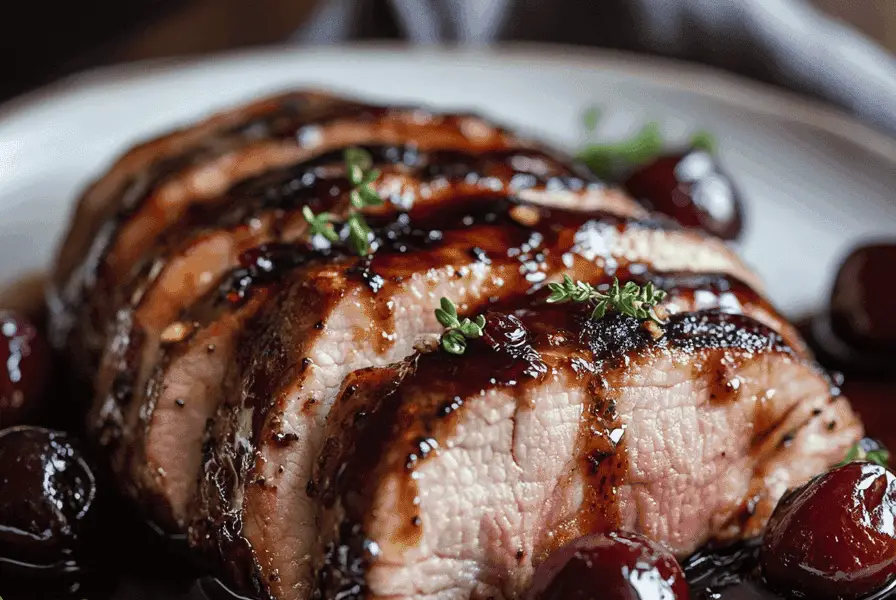
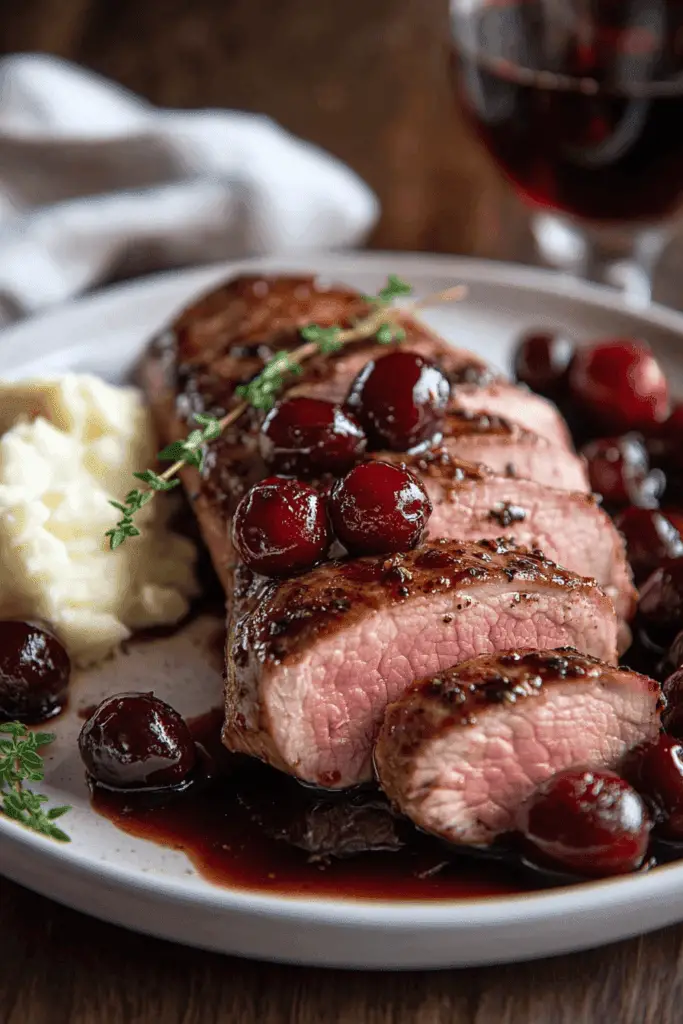
This version uses a cherry balsamic glaze that comes together in the same pan you sear the pork in. Tart cherries, aged balsamic, a little honey, garlic, and shallots – it reduces into something glossy and deeply savory-sweet that makes the pork taste like you’ve been cooking for much longer than you have. The whole thing is on the table in 35 minutes.
I started making this in late summer when cherries are cheap and everywhere, but frozen cherries work just as well so it’s genuinely a year-round recipe. The glaze is the kind of thing that makes people ask what restaurant you ordered from, which is always a satisfying answer to give.
One thing worth saying upfront: use a meat thermometer. Pork tenderloin goes from perfectly juicy to dry very quickly past 145°F, and because it’s a lean cut there’s no fat to save it if you overshoot. A cheap instant-read thermometer is the single best investment for this recipe.
If you want another glazed dinner that uses the same sear-and-roast method, the maple bourbon-glazed pork loin with apple cider Brussels sprouts is worth bookmarking alongside this one.
Why This Works
The sear is not optional. Two to three minutes per side in a very hot pan does two things: it builds the deep brown crust that gives the pork flavor, and it leaves all those caramelized bits in the pan that become the base of the glaze. Don’t skip it and don’t do it in a cold pan – the pork will steam instead of sear and you’ll lose both the crust and the flavor foundation for the sauce.
Cherries and balsamic are a natural pair. Both are fruit-forward with a natural acidity, but they work differently – balsamic brings depth and a mellow sweetness while the cherries add brightness and a slight jamminess as they break down. Together they reduce into a glaze that’s complex in a way that doesn’t require a long ingredient list.
One pan, start to finish. The pork sears in the skillet, comes out while you build the glaze in the same pan, then goes back in to finish in the oven. You’re not washing multiple pans and you’re not losing any of the flavor that builds up during the sear – it all goes into the sauce.
Resting the meat matters here more than usual. Because pork tenderloin is so lean, the juices redistribute during resting in a way that makes a noticeable difference to the texture. Five minutes under a loose tent of foil is the difference between juicy slices and slightly stringy ones. It’s not a long wait.
If the maple-glazed chicken thighs are already in your weeknight rotation, the crispy maple-glazed chicken thighs use the same logic – bold glaze, high heat, quick finish.
Choosing the Best Ingredients
Pork Tenderloin: Fresh vs. Frozen?
Fresh is ideal but frozen works fine – just thaw overnight in the fridge rather than on the counter. Size matters more than people think: a standard tenderloin is around 1 to 1.25 lbs. If yours is significantly larger, add 5 minutes to the roasting time and check the temperature early rather than late.
Cherry Selection: Fresh, Frozen, or Dried?
All three work. Fresh cherries (when in season) give the cleanest flavor and the most vibrant color in the glaze. Frozen work just as well out of season – no need to thaw, just add them straight to the pan and simmer a minute or two longer. Dried cherries are a good pantry option; soak them in warm water for 10 minutes first so they rehydrate and plump up as the sauce reduces rather than staying chewy.
If you have leftover cherries after making this and want to use them in something sweet, the cherry almond amaretto cake is a genuinely good use of them.
Balsamic Vinegar: Does Quality Matter?
Yes, more than for most recipes. A cheap balsamic is thin and sharp and will make the glaze taste harsh. You don’t need to buy the expensive aged stuff in the tiny bottle – a mid-range balsamic (aged at least 3-5 years, usually marked on the label) is all you need. It will be noticeably thicker and mellower and the difference in the finished glaze is significant.
Equipment You’ll Need
✔ Cast-iron skillet or oven-safe pan (for searing & roasting)
✔ Saucepan (for reducing the glaze)
✔ Meat thermometer (to ensure perfect doneness)
✔ Sharp knife (for slicing the tenderloin cleanly)
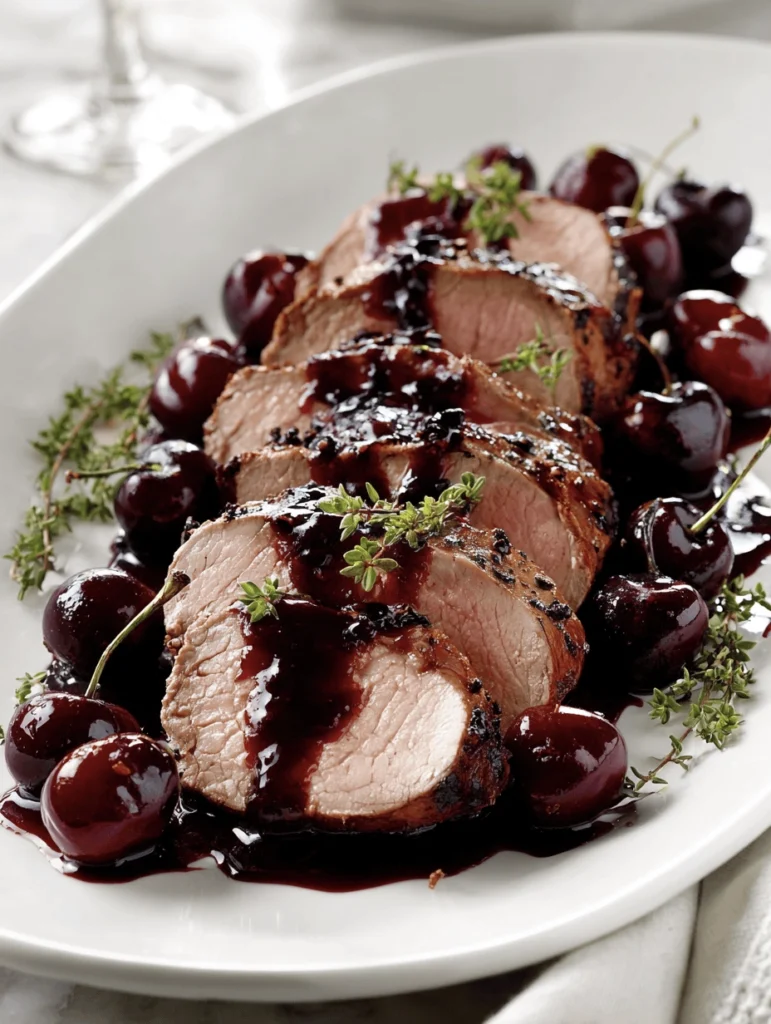
Cherry Balsamic Glazed Pork Tenderloin Recipe
Servings & Timing Summary
- Servings: 4
- Prep Time: 10 minutes
- Cook Time: 25 minutes
- Total Time: 35-40 minutes
Ingredients
For the Pork Tenderloin:
- 1 (1.25 lb) pork tenderloin
- 1 tbsp olive oil
- 1 tsp salt
- ½ tsp black pepper
- ½ tsp garlic powder
- ½ tsp smoked paprika
For the Cherry Balsamic Glaze:
- 1 cup fresh or frozen cherries, pitted and halved
- ⅓ cup balsamic vinegar (aged preferred)
- 2 tbsp honey (or maple syrup)
- 1 tbsp Dijon mustard
- 1 shallot, finely minced
- 1 garlic clove, minced
- 1 tbsp butter (for finishing)
- ¼ tsp salt
- ¼ tsp black pepper
For Garnish (Optional):
- Fresh thyme or rosemary
- Extra cherries (halved)
Step-by-Step Instructions
Step 1: Preheat & Prepare the Pork
- Preheat oven to 400°F (200°C).
- Pat the pork tenderloin dry with paper towels to help it sear properly.
- Season all over with salt, pepper, garlic powder, and smoked paprika.
Step 2: Sear the Pork
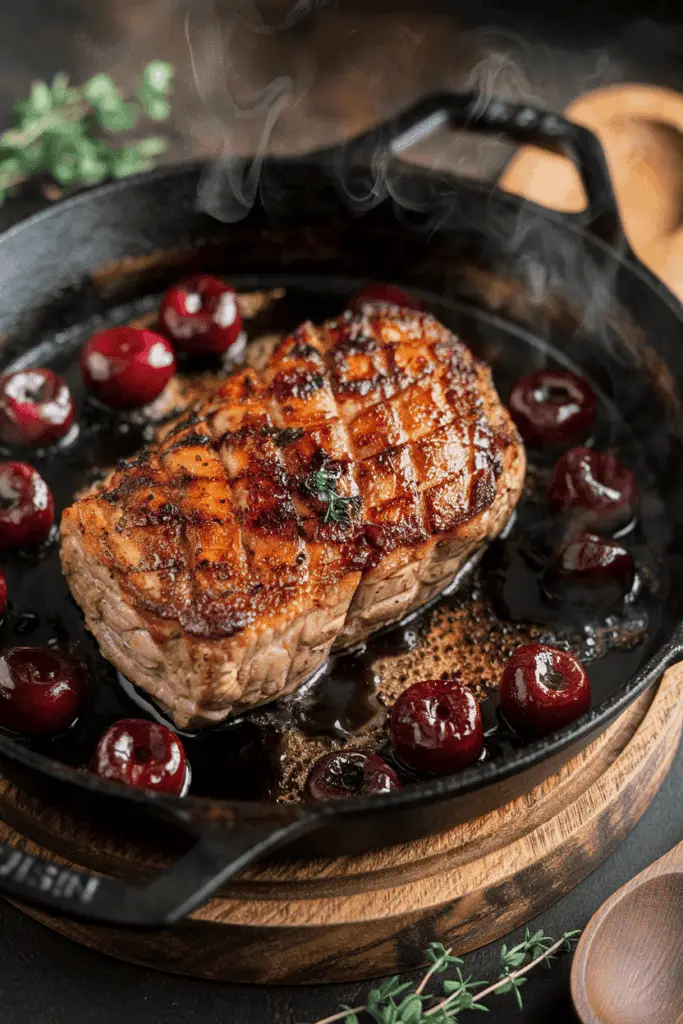
- Heat 1 tbsp olive oil in a cast-iron skillet over medium-high heat.
- Sear the pork for 2-3 minutes per side, until golden brown.
- Transfer to a plate while you make the glaze.
Step 3: Make the Cherry Balsamic Glaze
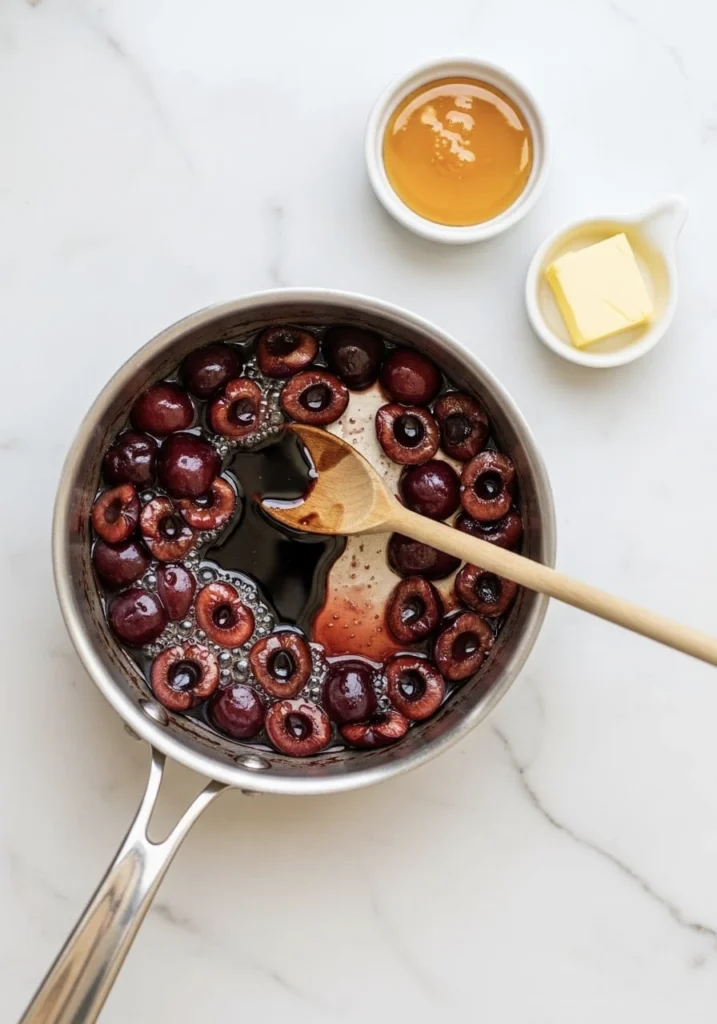
- In the same skillet, reduce heat to medium and add a little extra oil if needed.
- Sauté shallots and garlic for 1-2 minutes, until fragrant.
- Add cherries, balsamic vinegar, honey, Dijon mustard, salt, and black pepper.
- Simmer for 5-7 minutes, stirring occasionally, until the mixture thickens into a syrupy glaze.
- Stir in butter to create a silky finish.
Step 4: Roast the Pork with Glaze
- Return the seared pork to the skillet and spoon half of the glaze over the top.
- Transfer the skillet to the preheated oven and roast for 12-15 minutes, or until the internal temperature reaches 140-145°F (60-63°C) for medium doneness.
- Let the pork rest 5-10 minutes before slicing (this helps keep it juicy).
Step 5: Serve & Garnish
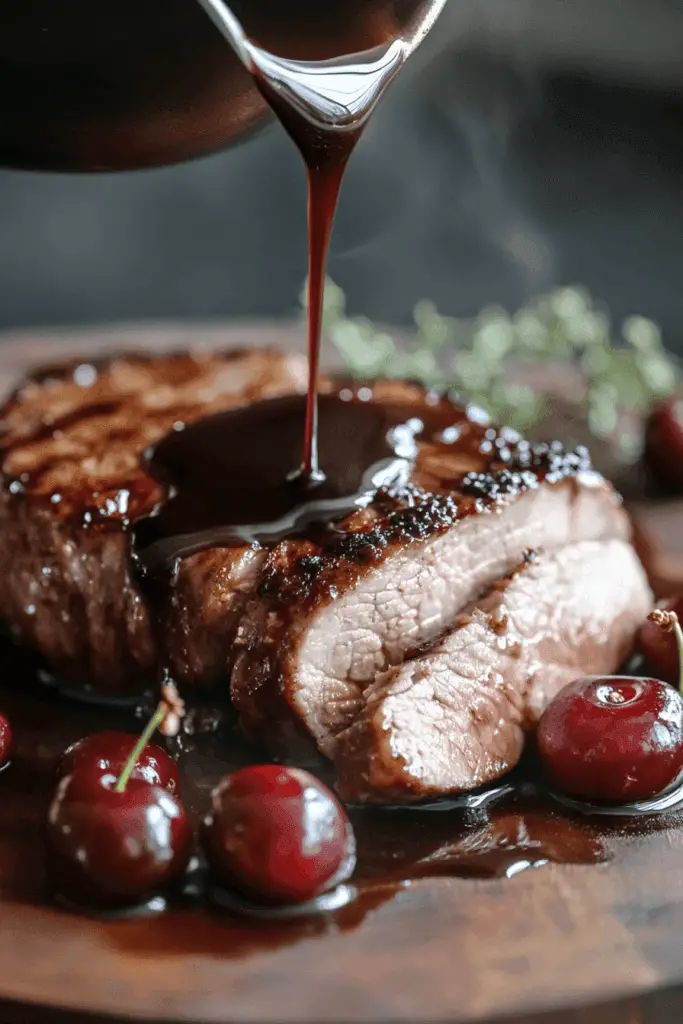
- Slice the pork into medallions and drizzle with the remaining glaze.
- Garnish with fresh thyme or rosemary and extra cherries for a beautiful presentation.
Common Mistakes & Troubleshooting
Pork too dry? Almost always means it went past 145°F. Use a thermometer and pull it out on the early side – it will carry-cook slightly during the rest.
Glaze too thin? Keep it at a lively simmer with the pan uncovered and let it reduce a few more minutes. It should coat the back of a spoon before you take it off the heat.
Too tangy? Add an extra teaspoon of honey and stir it in off the heat. Taste before adding more – it comes into balance quickly.
Serving & Storage Tips
Serve with mashed potatoes, roasted vegetables, or a fresh arugula salad.
If you want a light starter before serving this as a main, the cottage cheese and cherry balsamic salad uses the same flavor profile and makes the whole meal feel very intentional.
For a completely different direction with the same level of effort, the one-pot chicken and cherries is worth keeping in the same rotation – cherries in a savory sauce work just as well on chicken as they do on pork.
Leftovers? Store in an airtight container for up to 3 days.
Reheat gently in a pan over low heat with a splash of water to keep the pork moist.
FAQs
Nutritional Information (Per Serving)
(Approximate values based on 4 servings.)
- Calories: ~320 kcal
- Protein: ~32g
- Carbohydrates: ~18g
- Sugars: ~12g
- Fat: ~12g
- Saturated Fat: ~4g
- Sodium: ~450mg
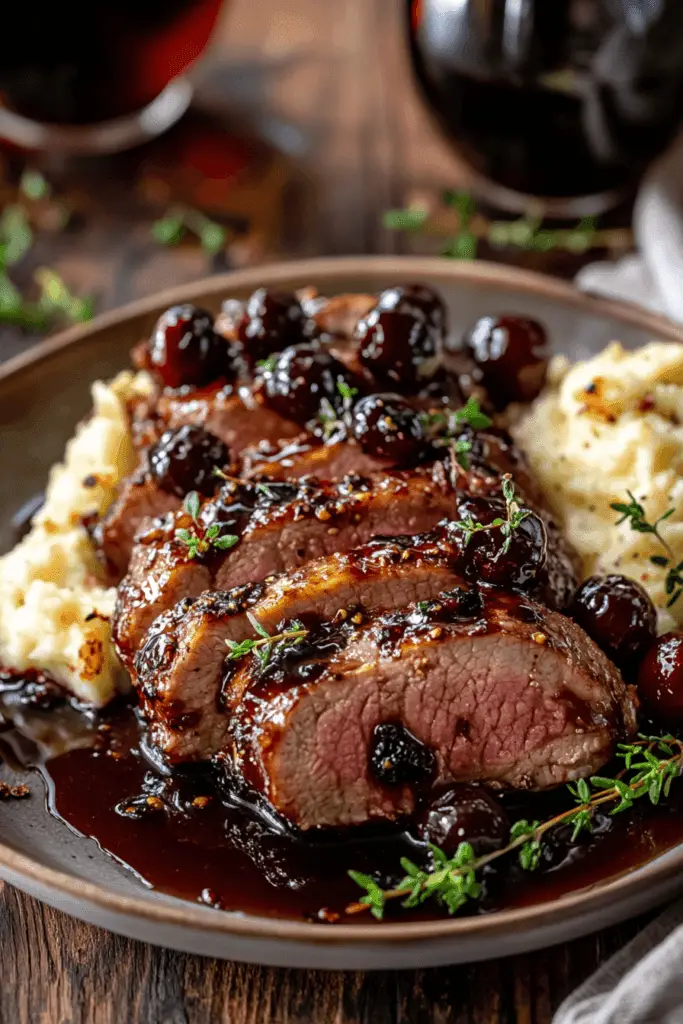
The leftovers – if there are any – are genuinely excellent cold the next day, sliced thin over a salad with any remaining glaze as a dressing. That’s usually how I find out how much of the glaze I actually made the night before.
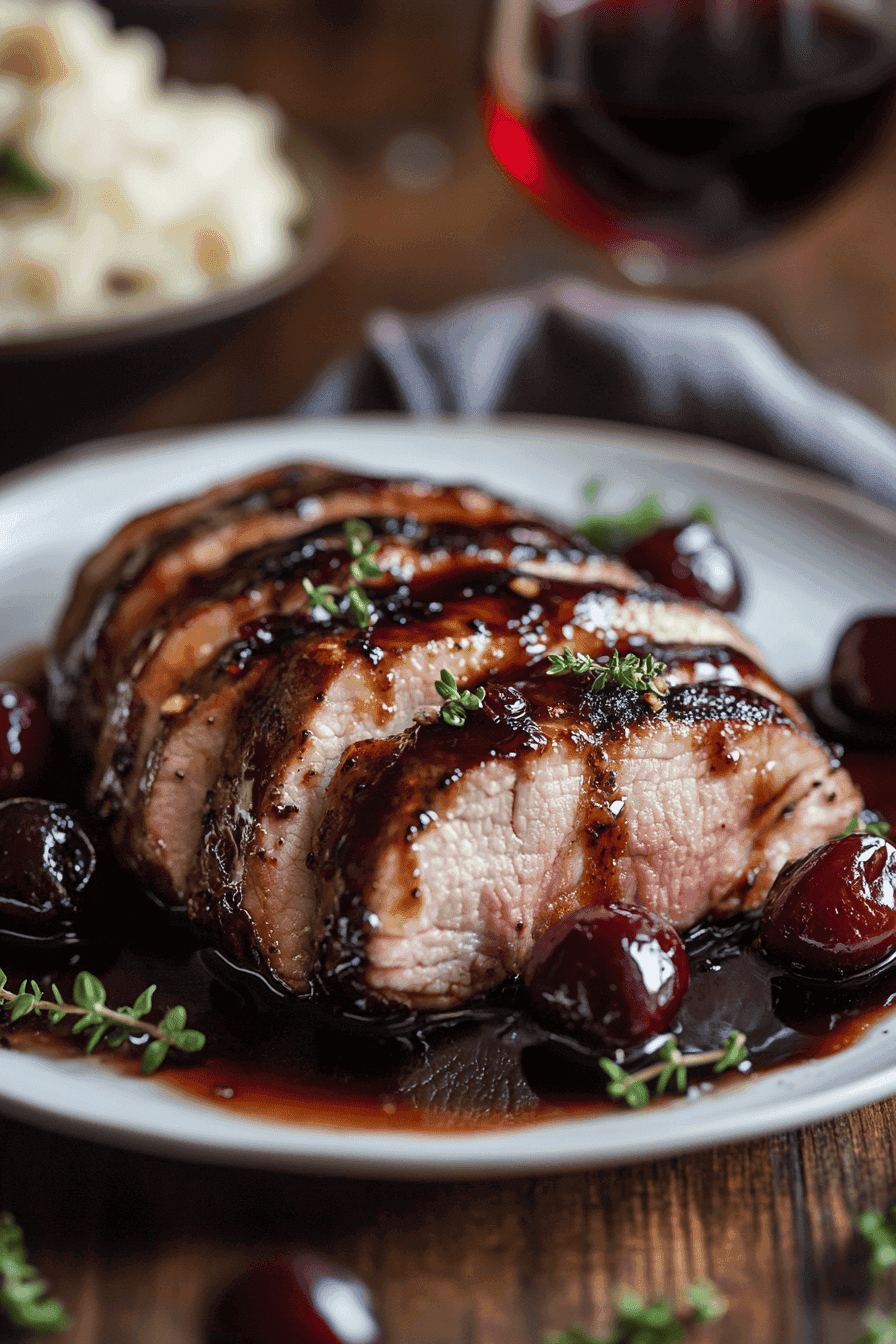
Cherry Balsamic Glazed Pork Tenderloin
Love it? Click to rate
Ingredients
Equipment
Method
- Preheat oven to 400°F (200°C).
- Pat the pork tenderloin dry with paper towels to help it sear properly.
- Season all over with salt, pepper, garlic powder, and smoked paprika.
- Heat 1 tbsp olive oil in a cast-iron skillet over medium-high heat.
- Sear the pork for 2-3 minutes per side, until golden brown.
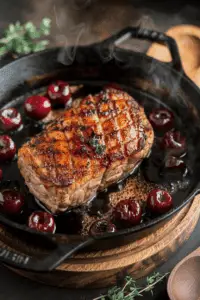
- Transfer to a plate while you make the glaze.
- In the same skillet, reduce heat to medium and add a little extra oil if needed.
- Sauté shallots and garlic for 1-2 minutes, until fragrant.
- Add cherries, balsamic vinegar, honey, Dijon mustard, salt, and black pepper.
- Simmer for 5-7 minutes, stirring occasionally, until the mixture thickens into a syrupy glaze.
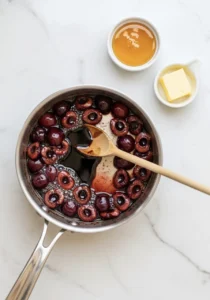
- Stir in butter to create a silky finish.
- Return the seared pork to the skillet and spoon half of the glaze over the top.
- Transfer the skillet to the preheated oven and roast for 12-15 minutes, or until the internal temperature reaches 140-145°F (60-63°C) for medium doneness.
- Let the pork rest 5-10 minutes before slicing (this helps keep it juicy).
- Slice the pork into medallions and drizzle with the remaining glaze.
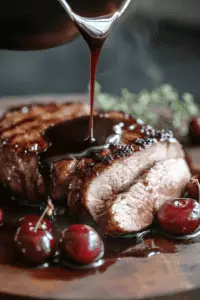
- Garnish with fresh thyme or rosemary and extra cherries for a beautiful presentation.
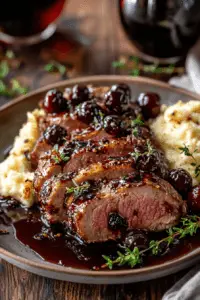
Nutrition
Notes
Common Mistakes & Troubleshooting
✔ Pork too dry? – Don’t overcook! Use a meat thermometer and remove at 140-145°F.✔ Glaze too thin? – Let it simmer a few extra minutes to reduce further.
✔ Too tangy? – Add an extra teaspoon of honey to balance the acidity.
Serving & Storage Tips
Serve with mashed potatoes, roasted vegetables, or a fresh arugula salad.Leftovers? Store in an airtight container for up to 3 days.
Reheat gently in a pan over low heat with a splash of water to keep the pork moist.
FAQs
How do I keep pork tenderloin juicy?Sear it hot and fast, then roast just until the center hits 145°F (63°C). Tent with foil and rest 5–10 minutes before slicing across the grain. Fresh, frozen, or dried cherries—what’s best?
All work. Fresh or frozen give a jammy texture (simmer 1–2 minutes longer if frozen). Dried cherries should be soaked 10 minutes in warm water or stock, then added to the pan to plump as the sauce reduces. My cherry-balsamic sauce isn’t thickening.
Keep it at a lively simmer with good surface area and minimal stirring. If still thin after 6–7 minutes, reduce a bit longer or whisk in 1 teaspoon cold butter off heat for instant gloss and body. Can I make it ahead?
Yes. Cook pork to about 140°F (60°C), cool and refrigerate whole. Make the sauce up to 3 days ahead. Rewarm sliced pork gently in the sauce over low heat until just hot. What can I substitute for balsamic vinegar?
Use red wine vinegar plus 1–2 teaspoons honey or maple syrup. A splash of dry red wine reduces nicely with the cherries, too. Do I need a cast-iron skillet?
No, but use a heavy, oven-safe pan preheated until just smoking for a fast, deep sear. How do I know when the pork is done without overcooking?
Use an instant-read thermometer in the thickest part: pull at 145°F (63°C). Juices should be slightly rosy-clear; they’ll settle during the rest. What sides pair well?
Lemon-herb couscous, creamy polenta, garlic mashed potatoes, or a peppery arugula salad. Roasted broccolini or green beans add brightness. Can I make this dairy-free or gluten-free?
Yes. The recipe is naturally GF if your stock and vinegar are gluten-free; serve with rice or polenta. For dairy-free, skip any butter finish and use olive oil only. How should I store leftovers?
Refrigerate sliced pork and sauce together up to 3 days. Rewarm gently in a skillet with a splash of water or stock to keep it moist.