Ingredients
Equipment
Method
Step-by-Step Instructions
Step 1: Preheat & Prepare the Pork
- Preheat oven to 400°F (200°C).
- Pat the pork tenderloin dry with paper towels to help it sear properly.
- Season all over with salt, pepper, garlic powder, and smoked paprika.
Step 2: Sear the Pork
- Heat 1 tbsp olive oil in a cast-iron skillet over medium-high heat.
- Sear the pork for 2-3 minutes per side, until golden brown.
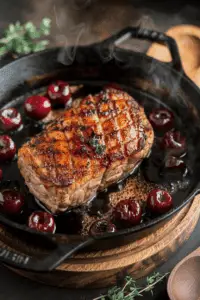
- Transfer to a plate while you make the glaze.
Step 3: Make the Cherry Balsamic Glaze
- In the same skillet, reduce heat to medium and add a little extra oil if needed.
- Sauté shallots and garlic for 1-2 minutes, until fragrant.
- Add cherries, balsamic vinegar, honey, Dijon mustard, salt, and black pepper.
- Simmer for 5-7 minutes, stirring occasionally, until the mixture thickens into a syrupy glaze.
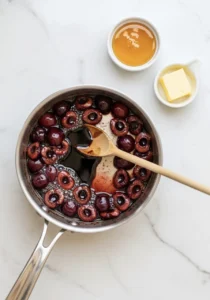
- Stir in butter to create a silky finish.
Step 4: Roast the Pork with Glaze
- Return the seared pork to the skillet and spoon half of the glaze over the top.
- Transfer the skillet to the preheated oven and roast for 12-15 minutes, or until the internal temperature reaches 140-145°F (60-63°C) for medium doneness.
- Let the pork rest 5-10 minutes before slicing (this helps keep it juicy).
Step 5: Serve & Garnish
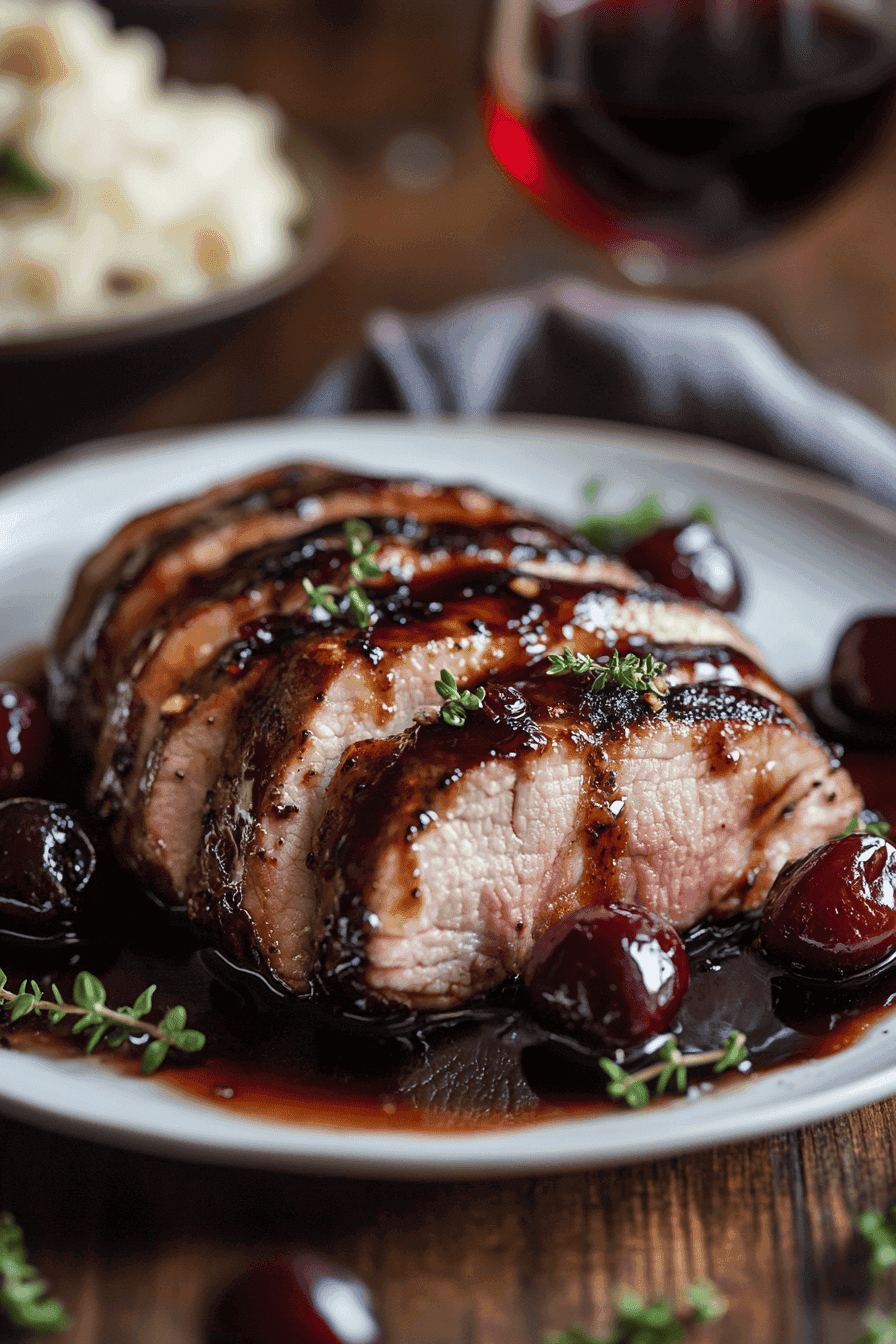
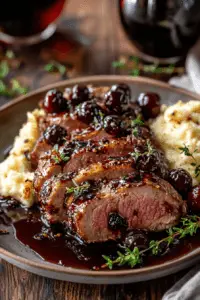
- Slice the pork into medallions and drizzle with the remaining glaze.
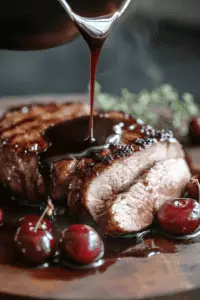
- Garnish with fresh thyme or rosemary and extra cherries for a beautiful presentation.
Nutrition
Notes
Common Mistakes & Troubleshooting
✔ Pork too dry? – Don’t overcook! Use a meat thermometer and remove at 140-145°F.✔ Glaze too thin? – Let it simmer a few extra minutes to reduce further.
✔ Too tangy? – Add an extra teaspoon of honey to balance the acidity.
Serving & Storage Tips
Serve with mashed potatoes, roasted vegetables, or a fresh arugula salad.Leftovers? Store in an airtight container for up to 3 days.
Reheat gently in a pan over low heat with a splash of water to keep the pork moist.
FAQs
How do I keep pork tenderloin juicy?Sear it hot and fast, then roast just until the center hits 145°F (63°C). Tent with foil and rest 5–10 minutes before slicing across the grain. Fresh, frozen, or dried cherries—what’s best?
All work. Fresh or frozen give a jammy texture (simmer 1–2 minutes longer if frozen). Dried cherries should be soaked 10 minutes in warm water or stock, then added to the pan to plump as the sauce reduces. My cherry-balsamic sauce isn’t thickening.
Keep it at a lively simmer with good surface area and minimal stirring. If still thin after 6–7 minutes, reduce a bit longer or whisk in 1 teaspoon cold butter off heat for instant gloss and body. Can I make it ahead?
Yes. Cook pork to about 140°F (60°C), cool and refrigerate whole. Make the sauce up to 3 days ahead. Rewarm sliced pork gently in the sauce over low heat until just hot. What can I substitute for balsamic vinegar?
Use red wine vinegar plus 1–2 teaspoons honey or maple syrup. A splash of dry red wine reduces nicely with the cherries, too. Do I need a cast-iron skillet?
No, but use a heavy, oven-safe pan preheated until just smoking for a fast, deep sear. How do I know when the pork is done without overcooking?
Use an instant-read thermometer in the thickest part: pull at 145°F (63°C). Juices should be slightly rosy-clear; they’ll settle during the rest. What sides pair well?
Lemon-herb couscous, creamy polenta, garlic mashed potatoes, or a peppery arugula salad. Roasted broccolini or green beans add brightness. Can I make this dairy-free or gluten-free?
Yes. The recipe is naturally GF if your stock and vinegar are gluten-free; serve with rice or polenta. For dairy-free, skip any butter finish and use olive oil only. How should I store leftovers?
Refrigerate sliced pork and sauce together up to 3 days. Rewarm gently in a skillet with a splash of water or stock to keep it moist.
