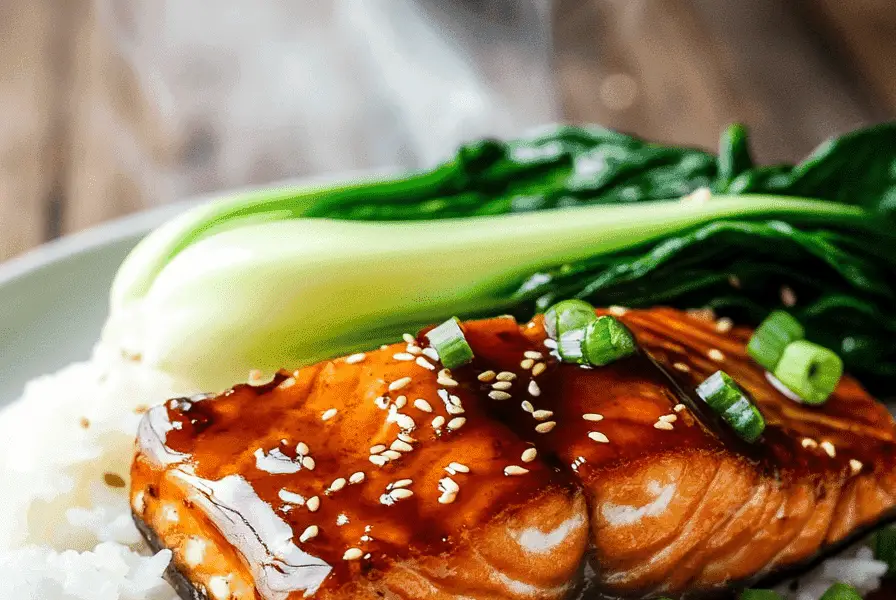
Miso and honey is one of those combinations that sounds more complicated than it is. You whisk four ingredients together, brush it onto the salmon, and the oven does the rest – the glaze caramelizes as it cooks and gives you that sticky, slightly lacquered finish without any real effort. I keep white miso in the fridge pretty much permanently now because of this recipe. Thirty minutes including the marinating time, and it genuinely tastes like something you’d order in a restaurant.
Choosing the Right Ingredients
To make the best miso and honey salmon, ingredient quality is key. Here’s what to look for:
1. Salmon Selection
The type of salmon you choose will impact the flavor and texture:
- Wild-caught salmon (Sockeye, Coho, or King) has a firmer texture and more pronounced flavor.
- Farm-raised salmon is milder and more buttery, often with higher fat content.
- Skin-on fillets help retain moisture and crisp up beautifully when cooked.
For best results, opt for fresh salmon with a vibrant color and minimal fishy smell.
2. Miso Paste: White vs. Red
Miso is a fermented soybean paste that adds a deep umami flavor.
- White miso (shiro miso) is mild and slightly sweet, making it the best choice for this glaze.
- Red miso (aka miso) is more intense and salty, so if you use it, reduce the amount slightly.
3. Honey for Natural Sweetness
Honey balances out the miso’s saltiness while promoting caramelization. If you prefer alternatives, maple syrup or brown sugar work well.
4. Sesame Seeds: White vs. Black
Both white and black sesame seeds work in this recipe, but here’s how they differ:
- White sesame seeds are milder and nuttier when toasted.
- Black sesame seeds have a slightly more bitter, earthy flavor.
Toasting the sesame seeds beforehand enhances their aroma and crunch.
How to Make Miso and Honey Glazed Salmon
Ingredients
For the Salmon:
- 4 salmon fillets (about 6 oz each, skin-on or skinless)
- 1 tbsp neutral oil (avocado, grapeseed, or sesame oil)
- 2 tbsp sesame seeds (white or black, toasted)
- 1 green onion, thinly sliced (for garnish)
For the Miso-Honey Glaze:
- 3 tbsp white miso paste
- 2 tbsp honey
- 1 tbsp soy sauce (or tamari for gluten-free)
- 1 tbsp rice vinegar
- 1 tsp grated ginger
- 1 tsp sesame oil
- 1 garlic clove, minced
- 1 tbsp water (to thin, if needed)
Step-by-Step Instructions
Step 1: Toast the Sesame Seeds
In a dry pan over medium heat, add the sesame seeds and stir frequently for about 2-3 minutes until they turn golden brown and fragrant. Transfer to a small bowl and set aside.
Step 2: Prepare the Miso-Honey Glaze
In a small mixing bowl, whisk together the miso paste, honey, soy sauce, rice vinegar, grated ginger, sesame oil, and garlic until smooth. If the glaze is too thick, add 1 tbsp of water to loosen it.
Step 3: Marinate the Salmon
Pat the salmon fillets dry with a paper towel. Brush the miso-honey glaze generously over each fillet, coating them evenly. Let the salmon marinate for 15-20 minutes at room temperature (or up to 1 hour in the fridge for deeper flavor).
Step 4: Cook the Salmon
There are two ways to cook the salmon, depending on your preference:
Option 1: Broil for a Caramelized Finish
- Preheat the broiler to high (500°F / 260°C) and line a baking sheet with foil.
- Place the salmon fillets skin-side down and broil for 6-8 minutes, until the top is caramelized and slightly charred.
Option 2: Pan-Sear for a Crispier Texture
- Heat 1 tbsp neutral oil in a large skillet over medium-high heat.
- Place the salmon skin-side down and sear for 3-4 minutes until crisp.
- Flip and cook for another 2-3 minutes, brushing on additional glaze in the final minute.
Step 5: Garnish and Serve
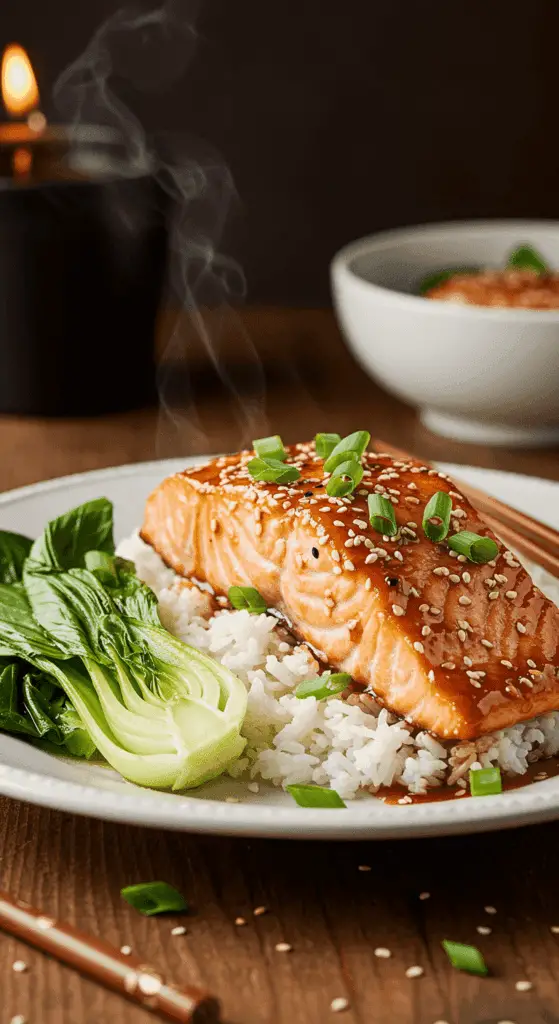
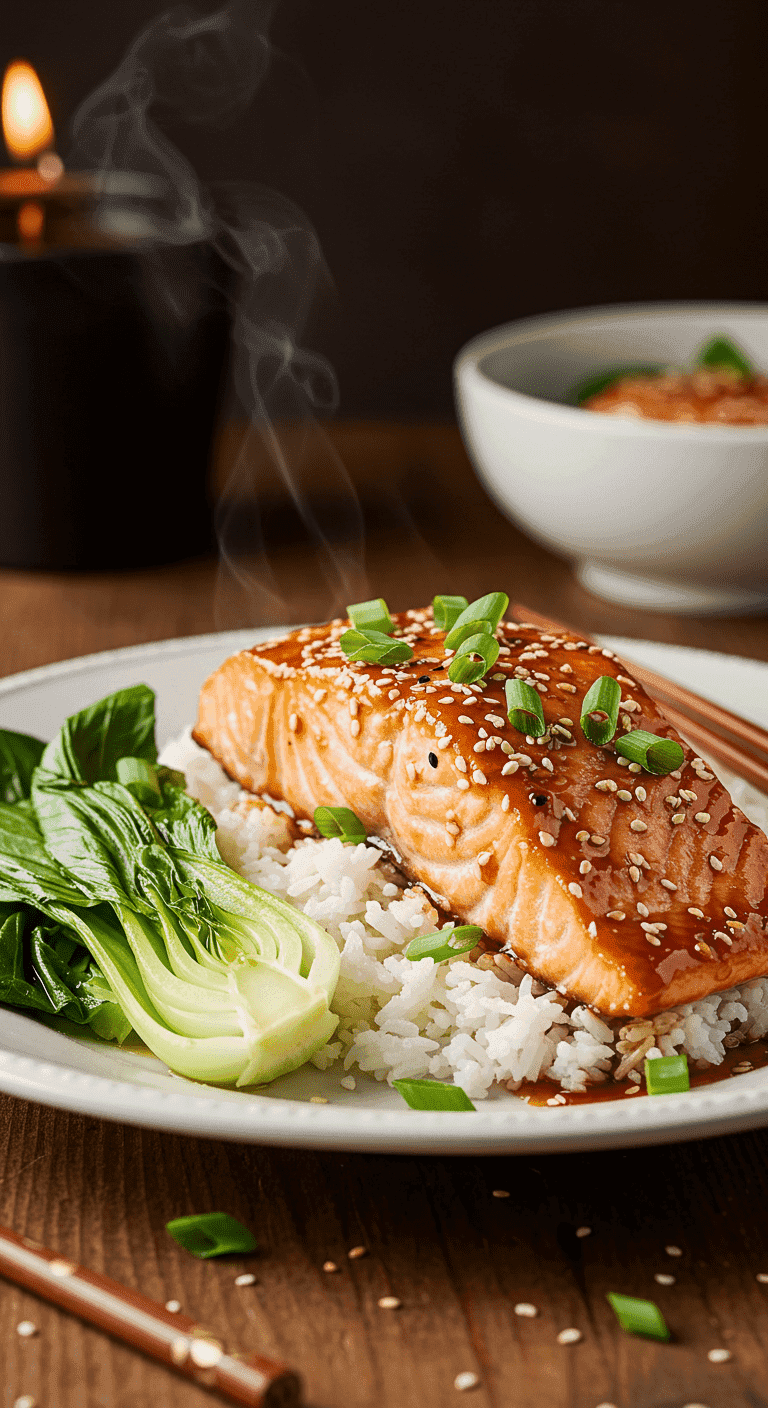
Transfer the cooked salmon to a plate and sprinkle with toasted sesame seeds and sliced green onions. Serve immediately with rice, roasted vegetables, or a fresh salad.
Common Mistakes & Troubleshooting
1. Glaze Not Sticking?
Ensure the salmon is completely dry before applying the glaze. If needed, pat it dry with paper towels.
2. Salmon Overcooked?
Use a thermometer—salmon is perfectly cooked at 125-130°F (52-54°C) for medium and 145°F (63°C) for well done.
3. Burnt Sesame Seeds?
Toast them on low heat and stir constantly to avoid burning.
Serving Suggestions
- Steamed jasmine rice or quinoa – A neutral base to soak up the miso-honey glaze.
- Sautéed bok choy or spinach – Adds a fresh, slightly bitter contrast.
- Pickled cucumbers or kimchi – Cuts through the richness with acidity.
- Miso soup or edamame – Complements the Japanese-inspired flavors.
If you want to turn this into a proper bowl situation, it works really well alongside mango sticky rice as a dessert to follow.
Storage & Reheating Tips
- To Store: Keep leftovers in an airtight container for up to 3 days in the fridge.
- To Reheat: Warm in a skillet over low heat for 2-3 minutes or in the oven at 300°F (150°C) for 10 minutes.
FAQ
What’s the difference between white and red miso – does it matter here?
It does make a difference. White miso is sweeter and milder, which works better with the honey in this recipe. Red miso is saltier and more intense – it won’t ruin the dish but it changes the balance. If red miso is what you have, use about two thirds of the amount the recipe calls for and taste the glaze before you put it on the fish.
Can I cook this in a pan instead of the oven?
Yes – sear the salmon skin-side down in an ovenproof pan for about three minutes, flip, brush with the glaze and cook for another three to four minutes. The glaze caramelizes slightly differently on the stovetop but it still works well. Watch the heat – the honey in the glaze burns quickly if the pan is too hot.
My glaze isn’t sticking to the salmon – what am I doing wrong?
Almost always this comes down to moisture. Pat the fillets completely dry with paper towels before you brush the glaze on. Wet salmon repels the glaze rather than absorbing it.
How do I know when the salmon is done?
Pull it just before it looks done – it carries on cooking for a minute or two off the heat. The flesh should flake when pressed gently at the thickest part and be just barely opaque in the center. If it’s flaking apart on its own it’s gone a bit too far, but it will still taste good.
Can I marinate it longer than 30 minutes?
Up to an hour is fine. More than that and the miso starts to cure the fish slightly, which changes the texture. Thirty minutes is genuinely enough for the flavors to get in.
What goes well alongside it?
Steamed jasmine rice is the obvious one and it works perfectly. Soba noodles with a little sesame oil are good too. For something lighter, it works well over a simple cucumber and edamame salad dressed with rice vinegar.
Miso and honey glazed salmon is a dish that delivers restaurant-quality flavor with minimal effort. The combination of savory miso, sweet honey, and nutty sesame seeds creates a deeply satisfying bite that pairs beautifully with rice, greens, or even noodles. Whether you broil or pan-sear, this recipe guarantees a stunning, flavorful dish that’s sure to impress.
For more quick salmon dinners, the creamy garlic butter Tuscan salmon with lemon Parmesan orzo is completely different in flavor but just as straightforward to make, and the honey-chipotle glazed salmon with avocado mango salsa is worth trying if you like the sweet-heat angle.
Miso and Honey Glazed Salmon
Love it? Click to rate
Ingredients
Equipment
Method
- In a dry pan over medium heat, add the sesame seeds and stir frequently for about 2-3 minutes until they turn golden brown and fragrant. Transfer to a small bowl and set aside.
- In a small mixing bowl, whisk together the miso paste, honey, soy sauce, rice vinegar, grated ginger, sesame oil, and garlic until smooth. If the glaze is too thick, add 1 tbsp of water to loosen it.
- Pat the salmon fillets dry with a paper towel. Brush the miso-honey glaze generously over each fillet, coating them evenly. Let the salmon marinate for 15-20 minutes at room temperature (or up to 1 hour in the fridge for deeper flavor).
- There are two ways to cook the salmon, depending on your preference:
- Preheat the broiler to high (500°F / 260°C) and line a baking sheet with foil.
- Place the salmon fillets skin-side down and broil for 6-8 minutes, until the top is caramelized and slightly charred.
- Heat 1 tbsp neutral oil in a large skillet over medium-high heat.
- Place the salmon skin-side down and sear for 3-4 minutes until crisp.
- Flip and cook for another 2-3 minutes, brushing on additional glaze in the final minute.
- Transfer the cooked salmon to a plate and sprinkle with toasted sesame seeds and sliced green onions. Serve immediately with rice, roasted vegetables, or a fresh salad.
Nutrition
Notes
Sautéed bok choy or spinach – Adds a fresh, slightly bitter contrast.
Pickled cucumbers or kimchi – Cuts through the richness with acidity.
Miso soup or edamame – Complements the Japanese-inspired flavors.
Storage & Reheating Tips To Store: Keep leftovers in an airtight container for up to 3 days in the fridge.
To Reheat: Warm in a skillet over low heat for 2-3 minutes or in the oven at 300°F (150°C) for 10 minutes.