Ingredients
Equipment
Method
Method
- Mix the sauce: Combine soy sauce, gochujang, brown sugar, sesame oil, rice vinegar, and red pepper flakes in a small bowl. Stir until the sugar dissolves. Set aside.
- Soft eggs (if using): Bring a small pan of water to a boil. Lower eggs in gently and cook exactly 6 minutes. Transfer immediately to ice water for 2 minutes, then peel carefully. Set aside.
- Brown the beef: Heat oil in a large skillet over medium-high heat until shimmering. Add ground beef in one layer – don’t touch it for 2 minutes. Let it get some color on the bottom before breaking it up. Cook, breaking apart, until browned and cooked through, about 5-6 minutes total. Drain any excess fat if needed.
- Add aromatics: Push the beef to one side of the pan. Add garlic and ginger to the empty side and cook for 30 seconds until fragrant. Stir into the beef.
- Add the sauce: Pour the sauce over the beef and stir to coat everything evenly. Cook for 1-2 minutes until the sauce reduces slightly and glazes the meat. Taste and adjust – more gochujang for heat, more soy for salt, more sugar to balance.
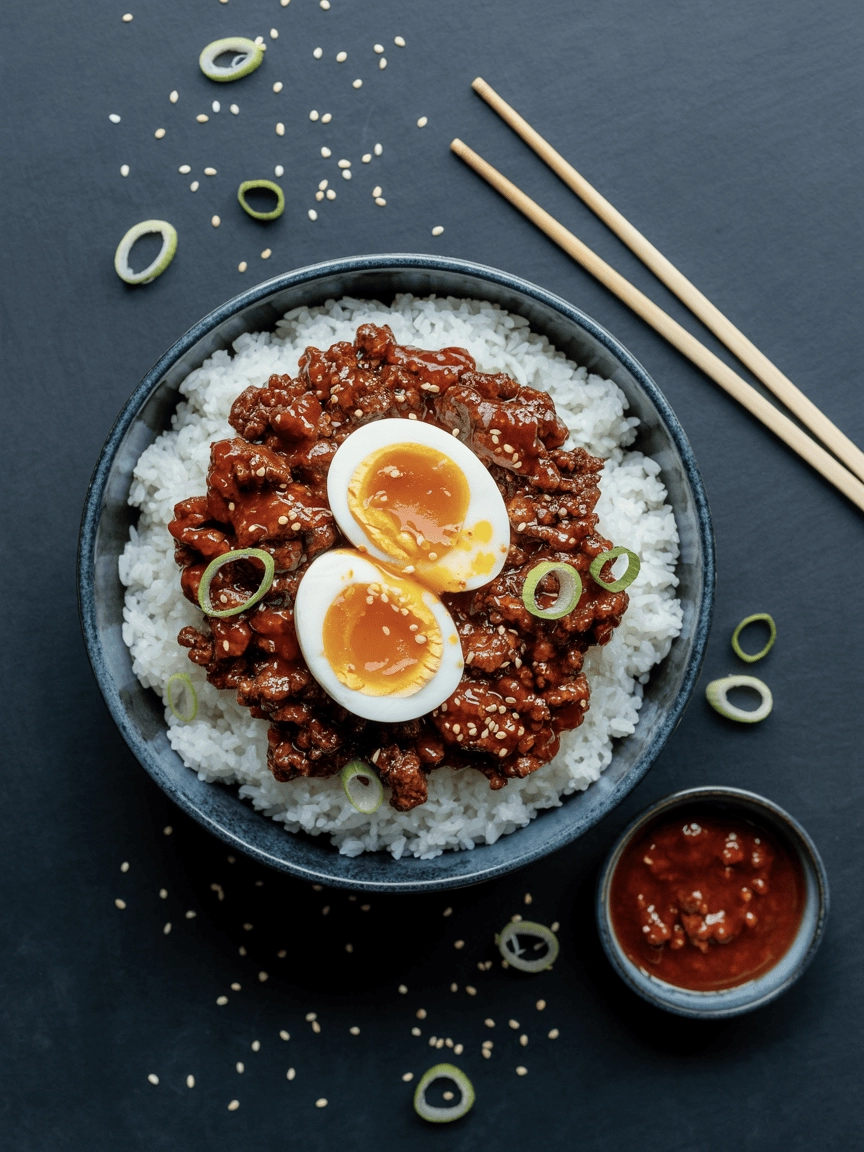
- Assemble: Divide rice between two bowls. Top with the sauced beef. Halve the soft eggs and place on top. Scatter with scallions and sesame seeds. Add any optional toppings.
Nutrition
Notes
Key Tips
- Use 80/20 ground beef. The fat content is what gives you flavor and the caramelization that makes this recipe great. Lean ground beef (90/10 or higher) tends to cook up dry and grainy. If you only have lean beef, add an extra teaspoon of oil to the pan.
- Don’t stir the beef immediately. Add it to a hot pan and leave it alone for at least 2 minutes before breaking it up. The browning that happens on the bottom is where the flavor is. Constantly stirring from the start gives you grey, steamed beef rather than caramelized beef. The difference in flavor is significant.
- The soft egg timing is precise. Six minutes in boiling water gives you a fully set white and a jammy, slightly runny yolk. Five minutes is too loose, seven is fully set. Ice water immediately after stops the cooking. Once you’ve nailed this once you’ll use it for everything.
- Find gochujang once and use it for everything. It’s in the Asian foods aisle of most large supermarkets, or online. A 500g tub lasts months in the fridge. Once you have it you’ll add it to everything – stir fries, marinades, roasted vegetables, noodle sauces. It’s one of those ingredients that makes everything better.
- Use day-old rice if you have it. Freshly cooked rice has more moisture and can make the bowl slightly wet. Day-old rice from the fridge is drier and absorbs the beef sauce better. Not essential – freshly cooked works fine – but worth knowing for meal prep purposes.
- Meal prep this easily. Double the beef recipe and store in an airtight container in the fridge for up to 4 days. Reheat in a pan with a splash of water for 2-3 minutes. Cook fresh rice and a fresh egg for each serving. Four lunches sorted in 20 minutes of active cooking.
Variations Worth Trying
- Ground turkey version: Swap the beef for ground turkey for a lighter bowl. Add an extra teaspoon of sesame oil to compensate for the lower fat content – turkey can dry out quickly.
- Extra vegetables: Add a handful of frozen edamame, sliced snap peas, or shredded zucchini to the pan in the last 2 minutes of cooking. They cook quickly and add color, texture, and nutrition without changing the flavor profile.
- Spicy version: Double the gochujang and add a drizzle of sriracha on top. Serve with extra sliced cucumber on the side to cool things down.
- Noodle bowl version: Swap the rice for cooked ramen noodles or udon. Toss the noodles directly in the pan with the sauced beef for 1 minute so they absorb the sauce.
- Bibimbap-style: Add blanched spinach, julienned carrots, and sliced mushrooms alongside the beef. Each topping placed separately on the rice rather than mixed – the traditional Korean presentation that looks stunning in a bowl.
- Lettuce wrap version: Skip the rice entirely. Serve the beef in butter lettuce cups topped with shredded carrots, cucumber, and sesame seeds. Lower carb, just as satisfying.
Storage & Meal Prep
- Fridge: The cooked beef keeps in an airtight container for up to 4 days. The flavor actually improves as the sauce absorbs overnight. Reheat in a pan over medium heat with a splash of water or soy sauce.
- Freezer: The beef freezes well for up to 3 months. Freeze in portions, defrost overnight in the fridge, and reheat in a pan. Don’t freeze with the rice – cook that fresh.
- Meal prep approach: Make a double batch of beef on Sunday. Portion into containers with rice. Add fresh eggs and toppings at serving time. Four high-protein lunches ready in 20 minutes of cooking.
