
Ingredients
Equipment
Method
Instructions
Preheat and Prep
- Preheat your oven to 350°F (175°C). Grease and line two 8-inch or 9-inch round cake pans with parchment paper.
Mix Dry Ingredients
- In a medium bowl, whisk together flour, baking powder, baking soda, and salt.
Cream Butter & Sugar
- In a large bowl, beat butter and sugar with a hand or stand mixer until light and fluffy (about 3–4 minutes). Add eggs one at a time, mixing well after each.
Mix in lemon zest, lemon juice, and vanilla extract.
Add Dry & Buttermilk
- Add the dry ingredients in three parts, alternating with the buttermilk in two parts — starting and ending with the dry. Mix until just combined — don’t overmix.
Bake
- Divide the batter between the two pans. Smooth the tops and bake for 22–27 minutes, or until a toothpick comes out clean and the top springs back lightly when touched.
- Cool for 10 minutes in the pan, then transfer to wire racks to cool completely.
Make the Frosting
- In a large mixing bowl, beat mascarpone, powdered sugar, and vanilla just until smooth.
- In a separate bowl, whip the heavy cream to soft peaks. Gently fold the whipped cream into the mascarpone mixture until smooth and fluffy. If using food coloring, add a drop and gently swirl it in.
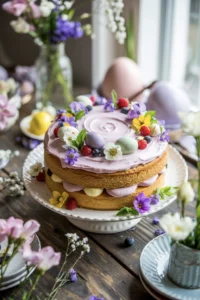
- 💡 Tip: Keep the frosting chilled until ready to use — it holds up best when cold.
Assemble the Cake
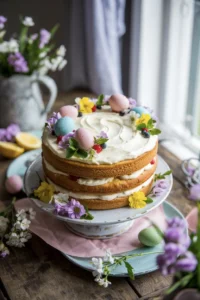
- Place one cooled cake layer on a serving plate or cake stand. Spread a thick layer of whipped frosting on top.
- Add the second cake layer and frost the top and sides as desired — you can go for a smooth finish or a rustic “naked cake” look.
Decorate!
- Now the fun part:
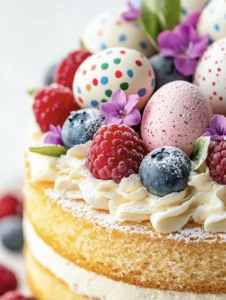
- Arrange fresh berries in the center or in a crescent moon shape on top
- Nestle in some pastel chocolate eggs or jelly beans
- Garnish with lemon zest curls, edible flowers, or mint sprigs
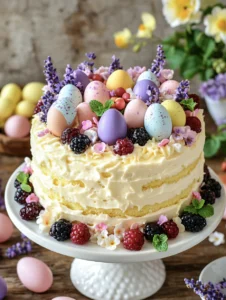
- Optional flair: Dust with powdered sugar for a soft, springtime look.
Nutrition
Notes
Want to take it up a notch?
Yes - the sponge layers are actually better made the day before. Bake, cool completely, then wrap each layer tightly in plastic wrap and store at room temperature overnight. The crumb firms up slightly and slices more cleanly. Make the frosting the day of serving - it holds best when fresh. Assembled and frosted, the cake keeps covered in the fridge for up to 3 days. Take it out 30 minutes before serving so the sponge softens back to room temperature. Q2: Can I use cream cheese instead of mascarpone?
Yes. Use full-fat cream cheese, not low-fat - the lower fat content makes a runnier frosting that won't hold its shape. Beat the cream cheese until completely smooth before folding in the whipped cream, otherwise you'll get lumps. The flavor will be slightly tangier than with mascarpone, which works well alongside the lemon sponge. Q3: What if I don't have buttermilk?
The simplest substitute: measure 1 cup of whole milk, remove 1 tablespoon, and add 1 tablespoon of lemon juice or white wine vinegar. Stir and leave for 5 minutes until it curdles slightly. It won't look appealing but it works exactly like buttermilk in the batter. Using semi-skimmed milk also works but whole milk gives a richer result. Q4: How do I stop my cake layers from doming in the middle?
Two things help: don't overfill the pans (two thirds full maximum), and use bake-even strips wrapped around the outside of the pans if you have them. Alternatively, once the layers are cooled, use a long serrated knife to level off any dome before assembling - it takes 30 seconds and gives you a much neater finished cake. Q5: Can I make this as cupcakes?
Yes - this recipe makes about 18-20 standard cupcakes. Fill the cases two thirds full and bake at 350°F for 15-18 minutes until a toothpick comes out clean. The mascarpone frosting pipes well - use a 1M star tip for a classic swirl. Top each one with a single Mini Egg and a small sprig of mint for a simple Easter finish. Q6: Can I use a 9x13 pan instead of two round pans?
Yes. Pour all the batter into a greased and lined 9x13 pan and bake at 350°F for 30-35 minutes. You won't have layers but you can frost the top generously and decorate across the whole surface. Good option if you're feeding a crowd and want something easier to cut and serve. Q7: What other Easter cakes are worth making?
The Easter poke cake with hidden candy layers is a great option if you want something more relaxed and crowd-pleasing. The carrot cake roll with whipped cream cheese filling is a good alternative if you want something less sweet. For a full Easter dessert table, the Easter desserts roundup covers ten options across different difficulty levels.
- Add a thin layer of lemon curd between the cake layers
- Drizzle white chocolate over the top before decorating
- Sprinkle with toasted coconut for a springy “nest” vibe
Yes - the sponge layers are actually better made the day before. Bake, cool completely, then wrap each layer tightly in plastic wrap and store at room temperature overnight. The crumb firms up slightly and slices more cleanly. Make the frosting the day of serving - it holds best when fresh. Assembled and frosted, the cake keeps covered in the fridge for up to 3 days. Take it out 30 minutes before serving so the sponge softens back to room temperature. Q2: Can I use cream cheese instead of mascarpone?
Yes. Use full-fat cream cheese, not low-fat - the lower fat content makes a runnier frosting that won't hold its shape. Beat the cream cheese until completely smooth before folding in the whipped cream, otherwise you'll get lumps. The flavor will be slightly tangier than with mascarpone, which works well alongside the lemon sponge. Q3: What if I don't have buttermilk?
The simplest substitute: measure 1 cup of whole milk, remove 1 tablespoon, and add 1 tablespoon of lemon juice or white wine vinegar. Stir and leave for 5 minutes until it curdles slightly. It won't look appealing but it works exactly like buttermilk in the batter. Using semi-skimmed milk also works but whole milk gives a richer result. Q4: How do I stop my cake layers from doming in the middle?
Two things help: don't overfill the pans (two thirds full maximum), and use bake-even strips wrapped around the outside of the pans if you have them. Alternatively, once the layers are cooled, use a long serrated knife to level off any dome before assembling - it takes 30 seconds and gives you a much neater finished cake. Q5: Can I make this as cupcakes?
Yes - this recipe makes about 18-20 standard cupcakes. Fill the cases two thirds full and bake at 350°F for 15-18 minutes until a toothpick comes out clean. The mascarpone frosting pipes well - use a 1M star tip for a classic swirl. Top each one with a single Mini Egg and a small sprig of mint for a simple Easter finish. Q6: Can I use a 9x13 pan instead of two round pans?
Yes. Pour all the batter into a greased and lined 9x13 pan and bake at 350°F for 30-35 minutes. You won't have layers but you can frost the top generously and decorate across the whole surface. Good option if you're feeding a crowd and want something easier to cut and serve. Q7: What other Easter cakes are worth making?
The Easter poke cake with hidden candy layers is a great option if you want something more relaxed and crowd-pleasing. The carrot cake roll with whipped cream cheese filling is a good alternative if you want something less sweet. For a full Easter dessert table, the Easter desserts roundup covers ten options across different difficulty levels.
