Ingredients
Equipment
Method
Instructions
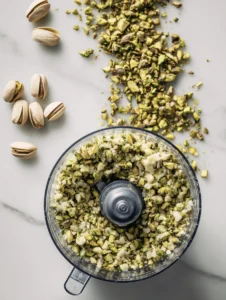
- Blitz the pistachios: Add the shelled pistachios and garlic cloves to a food processor. Pulse until they form a coarse, crumbly paste – about 30 seconds. You want texture rather than a completely smooth paste. Set aside.
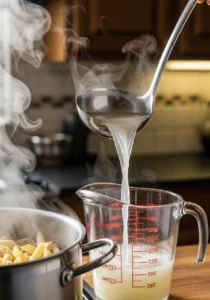
- Cook the rigatoni: Bring a large pot of water to a boil and add the kosher salt. Cook the rigatoni according to package instructions until al dente – usually 10-12 minutes. Before draining, scoop out at least 1 cup of the starchy pasta water and set aside. Drain the pasta.
- Build the sauce: In a large wide skillet or pan, heat the olive oil over medium heat. Add the blitzed pistachio paste and stir for 1-2 minutes until it smells toasty and fragrant. Pour in the heavy cream and stir to combine, scraping up any pistachio bits from the bottom of the pan.
- Add pasta water: Add 1/2 cup of the reserved pasta water to the sauce and stir well. The sauce will look loose at this point – that’s correct. Bring to a gentle simmer and let it reduce for 2 minutes, stirring regularly.
- Add Parmesan: Remove the pan from the heat and stir in the grated Parmesan, lemon zest, and black pepper. The cheese will melt into the sauce and thicken it. Taste and adjust salt.
- Toss the pasta: Add the drained rigatoni to the pan and toss to coat every piece in the sauce. If the sauce feels too thick, add a splash more pasta water and toss again – the starch helps the sauce cling to the rigatoni. The sauce should be silky and coat the pasta rather than pool at the bottom.
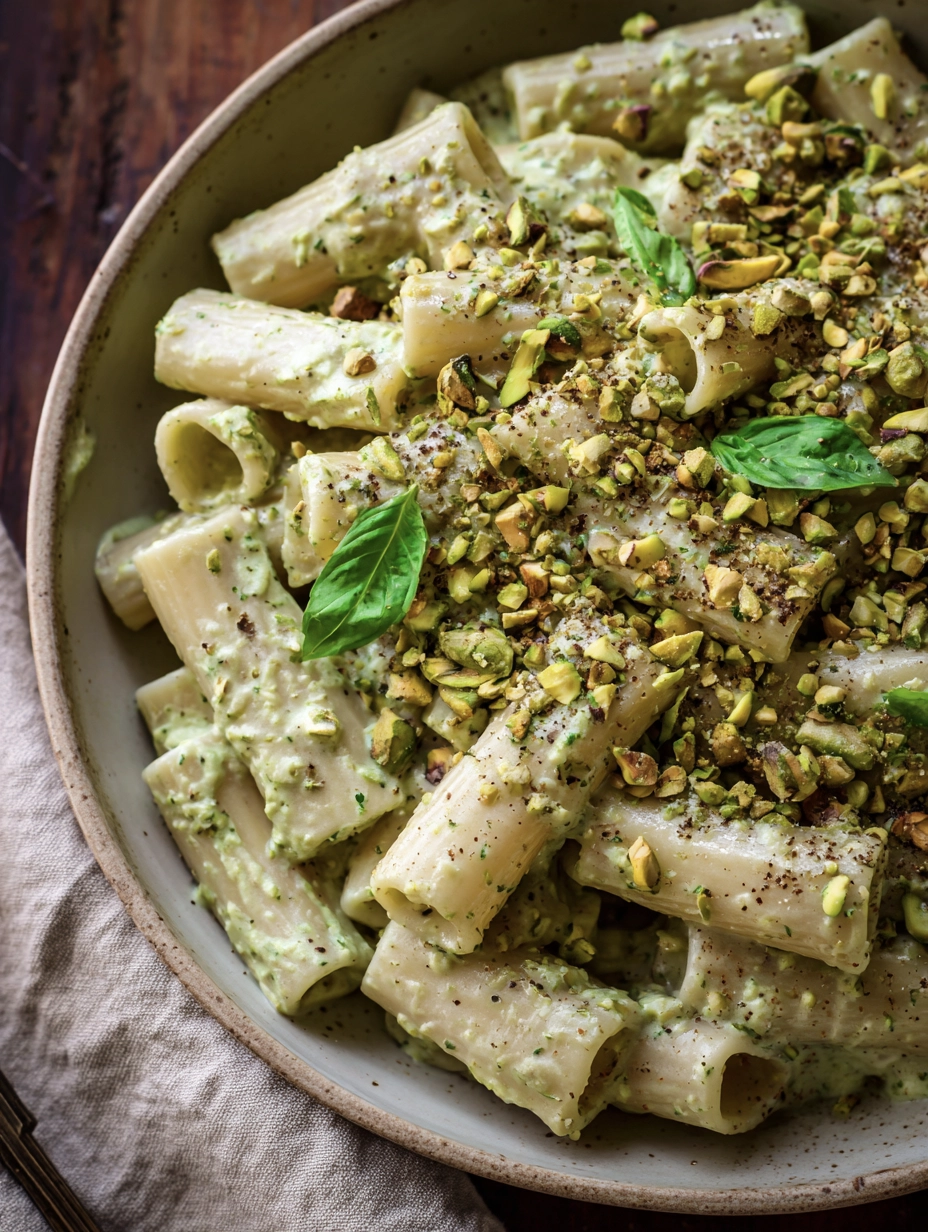
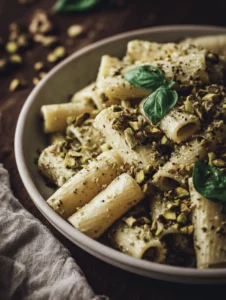
- Serve immediately: Divide between four bowls. Top each with a scatter of roughly chopped pistachios, fresh basil leaves, extra Parmesan, and a drizzle of good olive oil. Serve straight away.
Nutrition
Notes
Recipe Notes
- Pasta water is essential – don’t skip it. The starchy pasta water is what makes the sauce silky and helps it cling to the rigatoni rather than sliding off. Reserve more than you think you need and add it gradually.
- Use unsalted pistachios. Salted pistachios will make the sauce too salty before you’ve had a chance to season it properly. Unsalted gives you full control. Lightly roasted unsalted pistachios add slightly more depth than raw – either works.
- Don’t over-blitz the pistachios. A coarse paste with some texture is better than a completely smooth one – you get more flavor and better visual appeal in the finished dish. 30 seconds of pulsing is usually right.
- Take the pan off the heat before adding Parmesan. Adding cheese to a pan that’s too hot causes it to clump rather than melt smoothly into the sauce. Off the heat, stirring continuously, gives you a silky result every time.
- Make-ahead option: The pistachio paste can be made up to 3 days ahead and stored in an airtight container in the fridge. The full dish is best made fresh and served immediately – pasta dishes don’t reheat as well as the components stored separately.
Key Tips
- Use unsalted pistachios. Salted pistachios will make the sauce aggressively salty before you’ve added parmesan. Unsalted gives you control. If you only have salted, skip adding any additional salt until you’ve tasted the finished sauce.
- Save more pasta water than you think you need. Scoop out at least a full cup before draining – you’ll probably use half but you want the option. Cold pasta water from a drained pot doesn’t work the same way; it needs to be hot and starchy.
- Don’t over-blitz the pistachios. You want a rough, slightly textured paste, not smooth pistachio butter. Pulse rather than blitz continuously, and stop when you still have some small pieces. The texture in the finished sauce is part of what makes it special.
- A squeeze of lemon at the end is not optional. It lifts everything and stops the sauce from tasting heavy. Just half a lemon, added right before serving.
- Finish the pasta in the sauce, not the other way around. Add the drained pasta to the sauce in the skillet with a splash of pasta water and toss over low heat for a minute. This is what gives you that glossy, every-strand-coated finish instead of pasta sitting in a pool of sauce.
- Toast the pistachios before blitzing. Two minutes in a dry pan over medium heat before they go in the food processor deepens the flavor significantly. It’s an extra step that takes 120 seconds and is completely worth it.
- Make it vegan. Swap the parmesan for nutritional yeast (start with 2 tablespoons and taste) and the cream for full-fat coconut cream or a good oat cream. The color changes slightly but the flavor is still excellent.
Variations Worth Trying
- Add crispy prosciutto. Fry thin slices until shatteringly crispy and crumble over the top just before serving. The saltiness against the rich green sauce is extraordinary.
- Add burrata. Tear a ball of burrata over the top of each serving. The creamy interior melts slightly into the hot pasta and takes the whole thing somewhere very special.
- Make it spicy. A pinch of red pepper flakes in the sauce or a drizzle of hot honey over the finished bowl. The sweet heat plays very well with the pistachio richness.
- Add shrimp. Pan-fried in garlic butter for two minutes a side, added on top. Quick, impressive, turns this into a proper dinner party main.
- Use it as a base for baked pasta. Toss cooked pasta in the pistachio cream sauce, tip into a baking dish, top with torn mozzarella and more crushed pistachios, and bake at 400°F for 15 minutes until bubbling and golden.
