Japanese sweet potatoes have been quietly showing up everywhere lately, and if you’ve only been roasting them and eating them plain – which, fair enough, they’re excellent that way – you’re missing the thing they do best. They make an extraordinary cake.
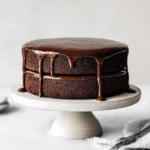
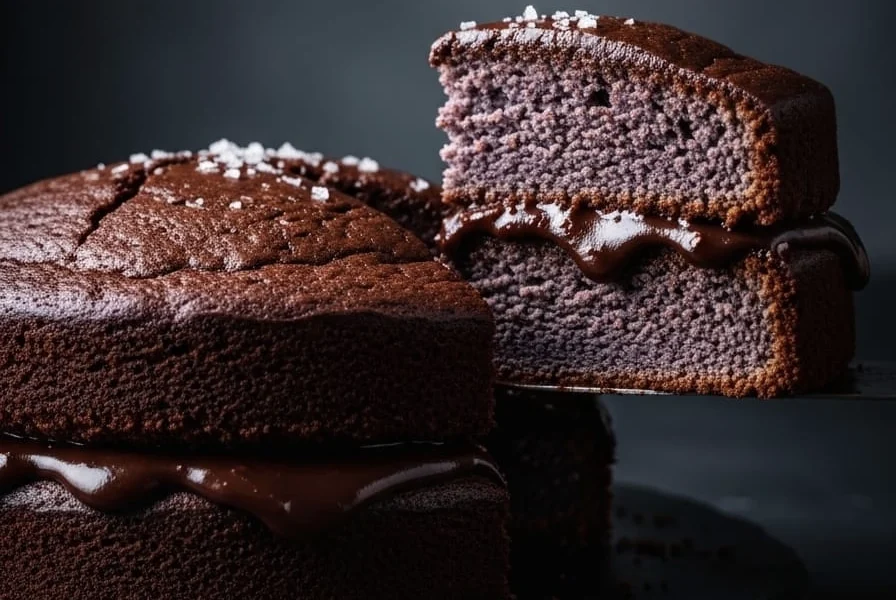
The texture is what gets you first. Japanese sweet potatoes are drier and starchier than their orange counterparts, with a chestnut-like sweetness that isn’t cloying. When you roast and mash them into a chocolate cake batter, they behave almost like a combination of pumpkin and almond flour – adding moisture without heaviness, and a depth of flavor that makes people ask what’s in it. The crumb turns a faint, beautiful purple. The ganache goes on dark and glossy. It’s the kind of cake that looks like it took considerably more effort than it did.
I started making this after noticing how well the sweet potato worked as a partial flour replacement – it reduces the amount of regular flour needed and keeps the cake tender for days longer than a standard chocolate cake. It also makes it naturally a little denser and fudgier, which for a chocolate cake is exactly what you want. My husband, who is suspicious of anything described as “secretly healthy,” asked for a second slice before I’d told him what was in it.

The process is as straightforward as any layer cake: roast the sweet potato ahead of time (this can be done the day before), make the batter, bake two layers, cool completely, ganache. You don’t need a stand mixer. You don’t need any unusual equipment. You do need to let the layers cool fully before ganaching or it will slide, but that’s true of every layer cake and it’s worth the wait.
If you love baking with unexpected ingredients, the Dubai Chocolate Pistachio Bar Cake uses a similar “this shouldn’t work this well” logic and is just as dramatic to look at.
Why This Works
Japanese sweet potato, not regular sweet potato. This matters more than it sounds. Japanese sweet potatoes (the ones with dark purple-red skin and cream to pale purple flesh) are drier, starchier, and sweeter than orange sweet potatoes. That lower moisture content means the cake doesn’t turn dense or wet – it stays light and fudgy. Regular sweet potato will work in a pinch but the result is moister and the flavor is less interesting.
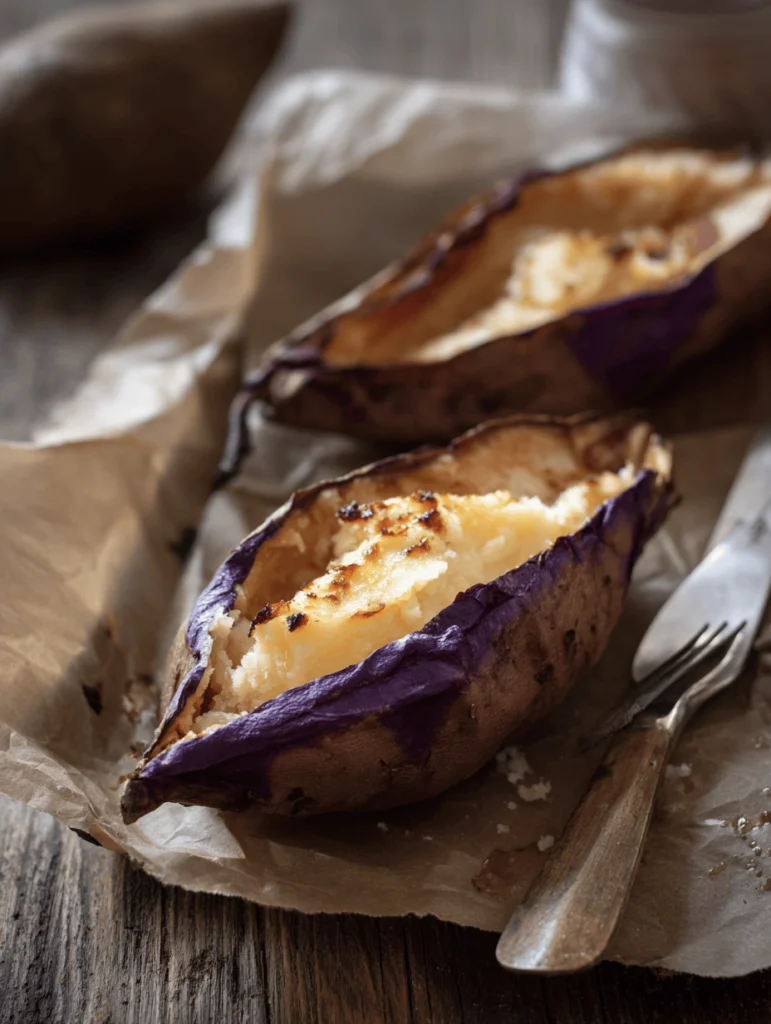
Roasting concentrates the flavor. Don’t boil or microwave the sweet potato for this – roast it. Roasting drives off water and caramelizes the natural sugars, which gives the cake a richer, more complex sweetness. It takes about 45 minutes but you can absolutely do it the day before.
The ganache sets the tone. Dark chocolate ganache (just cream and chocolate, nothing else) is the right finish here. It’s glossy, intensely chocolatey, and the slight bitterness offsets the sweetness of the potato perfectly. A milk chocolate ganache would tip it too sweet; a buttercream would muffle the flavor. Keep it simple and dark.
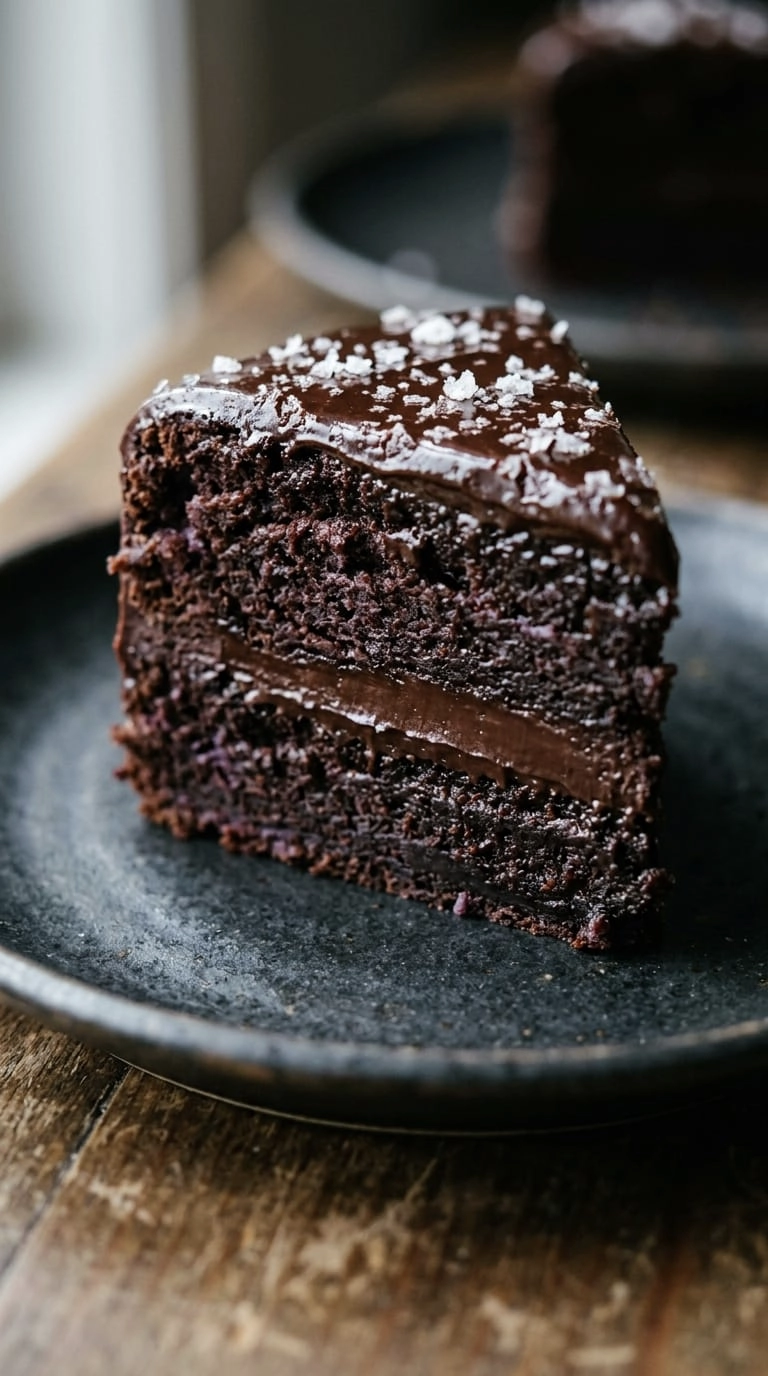
Two thin layers beat one tall one. Splitting the batter between two 8-inch pans gives you a better crumb-to-ganache ratio and a cleaner cross-section reveal. The purple of the crumb against the dark ganache filling is genuinely striking when you cut into it – and that’s the photo you want.
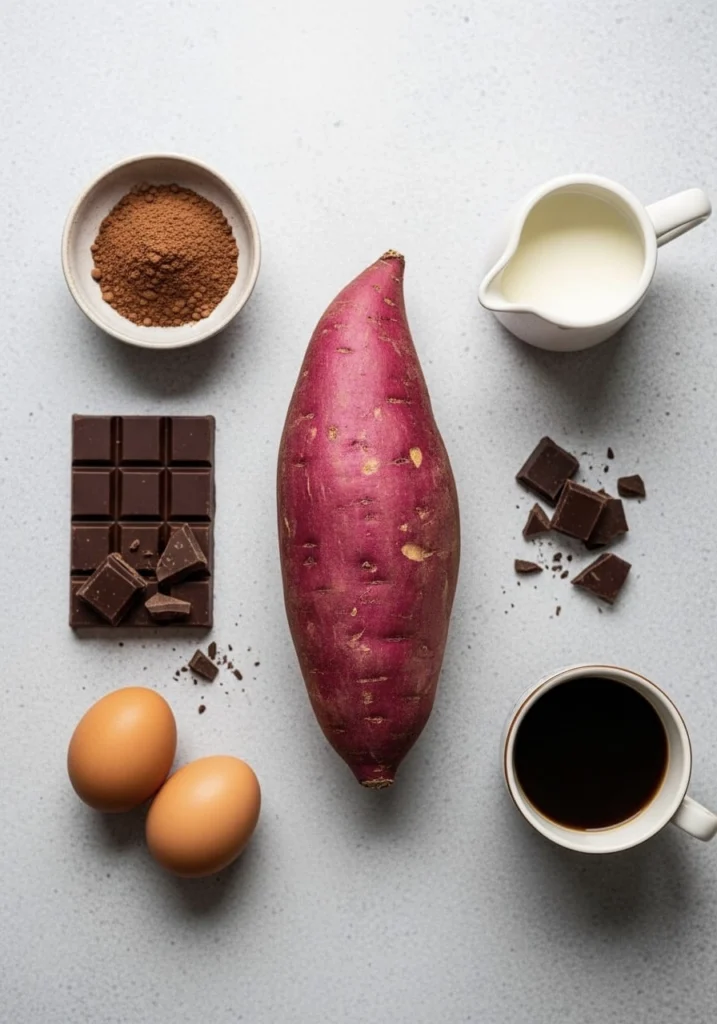
Ingredients — Cake
- 300g (about 2 medium) Japanese sweet potatoes, roasted and mashed
- 200g (1 cup) granulated sugar
- 100g (½ cup) light brown sugar, packed
- 180ml (¾ cup) neutral oil (sunflower or vegetable)
- 3 large eggs, room temperature
- 1 tsp vanilla extract
- 180g (1½ cups) all-purpose flour
- 60g (¾ cup) unsweetened cocoa powder (Dutch process preferred)
- 1½ tsp baking soda
- 1 tsp baking powder
- ½ tsp salt
- 180ml (¾ cup) buttermilk, room temperature
- 180ml (¾ cup) hot strong coffee (or hot water)
Ingredients — Dark Chocolate Ganache
- 300g (10.5 oz) dark chocolate (70%), finely chopped
- 240ml (1 cup) heavy cream
- 1 tbsp unsalted butter
- Pinch of flaky sea salt
Equipment
- 2 x 8-inch (20cm) round cake pans
- Parchment paper
- Large mixing bowl
- Whisk
- Rubber spatula
- Cooling rack
Method
- Roast the sweet potato: Preheat oven to 400°F (200°C). Pierce each sweet potato several times with a fork. Place on a baking sheet and roast for 40-50 minutes until completely soft and slightly caramelized at the edges. Cool, scoop out the flesh and mash until smooth. You need 300g of mashed potato. This can be done the day before and stored in the fridge.
- Prep: Reduce oven to 350°F (175°C). Grease and line two 8-inch round cake pans with parchment.
- Make the batter: In a large bowl, whisk together the mashed sweet potato, both sugars, oil, eggs, and vanilla until smooth and combined. It will look a little curdled at this point – that’s fine.
- Add dry ingredients: Sift in the flour, cocoa, baking soda, baking powder, and salt. Whisk until just combined – don’t overmix.
- Add wet ingredients: Add the buttermilk and hot coffee. Whisk gently until a smooth, fairly liquid batter forms. It will be thinner than a standard cake batter.
- Bake: Divide batter evenly between the two prepared pans. Bake for 28-32 minutes until a toothpick comes out with just a few moist crumbs. Do not overbake – the sweet potato keeps the cake moist but it will dry out if left too long.
- Cool: Leave in pans for 10 minutes, then turn out onto a cooling rack. Cool completely before ganaching – at least 45 minutes. Rushing this will melt the ganache.
- Make the ganache: Place chopped chocolate and butter in a heatproof bowl. Heat cream in a small saucepan until just simmering (don’t boil). Pour over the chocolate, leave for 2 minutes, then stir from the center outward until completely smooth. Add a pinch of flaky salt. Leave to cool at room temperature for 20-30 minutes until it thickens to a pourable but not runny consistency.
- Assemble: Place the first layer on your serving plate. Pour roughly a third of the ganache over the top and spread to the edges, letting it drip slightly. Place the second layer on top. Pour the remaining ganache over, spreading it across the top and down the sides as much as you like. Leave to set for at least 20 minutes before slicing.
Nutrition (per serving, based on 10 slices)
- Calories: 485 kcal
- Carbohydrates: 58g
- Protein: 7g
- Fat: 26g
- Saturated fat: 10g
- Sugar: 38g
- Fiber: 4g
- Sodium: 290mg
Tips
Roast the sweet potato the night before. This is the one step that requires planning and it’s very easy to forget. Roasting takes 45 minutes and the potato needs to cool before you use it. Get this done the evening before and the whole cake comes together in under an hour the next day.
Mash it properly. Lumps of sweet potato in the batter don’t break down during baking. Take a few extra minutes to mash until completely smooth, or push it through a sieve if you want to be thorough. A smooth mash means a smooth crumb.
The batter is meant to be thin. This throws people the first time they make it. The hot coffee and buttermilk make this a much looser batter than a typical cake mix – it pours rather than scoops. That’s correct. It’s what gives the cake its fudgy texture.
Cool completely before ganaching. I know you know this. I’m saying it again because ganache on a warm cake is a disaster every time. If you’re in a hurry, put the layers in the freezer for 20 minutes once they’ve cooled to room temperature.
Let the ganache thicken before pouring. Straight off the heat it’s too liquid and will run straight off. Give it 20-30 minutes at room temperature, stirring occasionally, until it coats the back of a spoon thickly. That’s your pouring window. If it goes too far and firms up, a brief 10-second microwave pulse will bring it back.
Cut it cold, serve it at room temperature. The ganache slices cleanest when the cake is slightly chilled. Run a sharp knife under hot water, wipe dry, and slice. Then let the slices come to room temperature for 15 minutes before eating – the crumb is noticeably better slightly warm.
For more layer cake confidence before you start, the tips in the birthday cakes for men roundup cover the key things that go wrong and how to avoid them.

Variations Worth Trying
Add miso to the ganache. A tablespoon of white miso stirred into the finished ganache adds a subtle savory depth that makes the chocolate taste more complex. It’s one of those additions nobody can identify but everyone notices.
Black sesame filling. For a more distinctly Japanese flavor profile, spread a thin layer of black sesame paste (store-bought is fine) on the bottom cake layer before the ganache goes on. The nutty, slightly bitter sesame against the sweet chocolate and potato is genuinely extraordinary.
If you like the Japanese-inspired flavor direction, the pistachio cream pasta uses a similar ‘unexpected ingredient, unexpected result’ approach in a savory direction.
Make it a sheet cake. Pour the batter into a 9×13 inch pan and bake for 35-38 minutes. Ganache straight on top once cool. Easier to transport and feeds a crowd – perfect if you want the flavor without the assembly.
Add a flaky salt finish. Before the ganache sets, scatter a generous pinch of flaky sea salt over the top. It looks beautiful and the salt-chocolate contrast is worth it every time.
Make-Ahead and Storage
The baked, unfrosted layers keep well wrapped tightly at room temperature for up to 2 days – this actually improves the flavor slightly as the sweet potato and cocoa settle together. The ganache can be made ahead and kept at room temperature for a day, or refrigerated for up to a week and rewarmed gently.
The assembled cake keeps at room temperature under a dome for 3 days. Because Japanese sweet potato adds natural moisture, it stays in better condition longer than a standard chocolate layer cake. If you refrigerate it, the ganache will firm up considerably – bring it back to room temperature for at least 30 minutes before serving and the texture returns.
For freezing, wrap individual slices in plastic wrap and freeze for up to 2 months. Thaw at room temperature for a couple of hours.
The same make-ahead logic applies to the pistachio chocolate cake – both taste better the day after baking once everything has had time to settle.
FAQ
Q1: Where do I find Japanese sweet potatoes?
Asian grocery stores are the most reliable source – they’ll almost always have them. Larger supermarkets are increasingly stocking them, usually near the specialty produce. They have distinctive dark purple-red skin and are generally smaller and more cylindrical than regular sweet potatoes. If you genuinely can’t find them, regular sweet potato works but the crumb won’t have the same color or depth of flavor.
Q2: Can I use canned sweet potato instead of roasting?
Canned sweet potato puree (not pie filling) will work in a pinch, but Japanese sweet potato canned versions are hard to find in most places. If you use regular canned sweet potato puree, reduce the buttermilk by 2 tablespoons as canned puree tends to be wetter. The flavor will be milder and the purple crumb effect will be minimal.
Q3: Why does the batter look so thin?
This is correct and intentional. The hot coffee and buttermilk make this a much more liquid batter than a typical cake mix – it pours rather than scoops. Don’t be tempted to add more flour. The thin batter is what produces the dense, fudgy crumb rather than a dry, cakey texture.
Q4: Can I make this without coffee?
Yes – replace the hot coffee with an equal amount of hot water. You won’t be able to taste the coffee in the finished cake, but it does deepen the chocolate flavor in a way hot water doesn’t quite replicate. If you’d like a non-caffeinated version, decaf coffee works just as well as regular.
Q5: How do I get clean ganache slices?
Chill the assembled cake for 30 minutes before slicing – the ganache cuts much more cleanly when cold. Run a sharp knife under very hot water, wipe it dry, and slice in one clean downward motion without sawing. Wipe the knife between each cut. Then let the slices sit at room temperature for 10-15 minutes before serving – the texture is noticeably better once the crumb warms slightly.
Q6: Can I make this as a single-layer cake or cupcakes?
Single layer: pour all the batter into a 9-inch pan and bake for 38-42 minutes. For cupcakes, fill cases two-thirds full and bake at 350°F (175°C) for 18-20 minutes. The ganache works as a thick frosting on cupcakes if you let it cool until it’s spreadable rather than pourable – about 45-60 minutes at room temperature.
Q7: Does the cake taste like sweet potato?
Not obviously, no. The sweet potato adds a subtle sweetness and depth that people notice without being able to identify – most people assume there’s something different about the chocolate. The main thing it contributes is texture: an unusually moist, dense crumb that stays that way for days. The visual – that faint purple tint in the crumb – is the most visible sign of what’s in it.
Q8: Can I make it gluten-free?
A good 1:1 gluten-free flour blend works well here because the sweet potato adds structure that compensates for the lack of gluten. The texture will be very slightly more dense but still excellent. Make sure your baking powder and cocoa powder are certified GF if you’re baking for someone with coeliac disease.
Japanese Sweet Potato Chocolate Cake (Fudgy, Purple-Crumbed, and Surprisingly Easy)
Love it? Click to rate
Ingredients
Equipment
Method
- Roast the sweet potato: Preheat oven to 400°F (200°C). Pierce each sweet potato several times with a fork. Place on a baking sheet and roast for 40-50 minutes until completely soft and slightly caramelized at the edges. Cool, scoop out the flesh and mash until smooth. You need 300g of mashed potato. This can be done the day before and stored in the fridge.
- Prep: Reduce oven to 350°F (175°C). Grease and line two 8-inch round cake pans with parchment.
- Make the batter: In a large bowl, whisk together the mashed sweet potato, both sugars, oil, eggs, and vanilla until smooth and combined. It will look a little curdled at this point – that’s fine.
- Add dry ingredients: Sift in the flour, cocoa, baking soda, baking powder, and salt. Whisk until just combined – don’t overmix.
- Add wet ingredients: Add the buttermilk and hot coffee. Whisk gently until a smooth, fairly liquid batter forms. It will be thinner than a standard cake batter.
- Bake: Divide batter evenly between the two prepared pans. Bake for 28-32 minutes until a toothpick comes out with just a few moist crumbs. Do not overbake – the sweet potato keeps the cake moist but it will dry out if left too long.
- Cool: Leave in pans for 10 minutes, then turn out onto a cooling rack. Cool completely before ganaching – at least 45 minutes. Rushing this will melt the ganache.
- Make the ganache: Place chopped chocolate and butter in a heatproof bowl. Heat cream in a small saucepan until just simmering (don’t boil). Pour over the chocolate, leave for 2 minutes, then stir from the center outward until completely smooth. Add a pinch of flaky salt. Leave to cool at room temperature for 20-30 minutes until it thickens to a pourable but not runny consistency.
- Assemble: Place the first layer on your serving plate. Pour roughly a third of the ganache over the top and spread to the edges, letting it drip slightly. Place the second layer on top. Pour the remaining ganache over, spreading it across the top and down the sides as much as you like. Leave to set for at least 20 minutes before slicing.

Nutrition
Notes
- Can’t find Japanese sweet potatoes? Look for them in Asian grocery stores or larger supermarkets – they have dark purple-red skin. Regular sweet potatoes work but the flavor is milder and the crumb slightly wetter.
- Make ahead: Baked layers can be wrapped tightly and stored at room temperature for up to 2 days before assembling. Ganache can be made ahead and gently rewarmed.
- Storage: Store assembled cake at room temperature under a cake dome for up to 3 days. Refrigerating will firm up the ganache – bring to room temperature before serving.
- The coffee: You can’t taste it in the finished cake, but it deepens the chocolate flavor significantly. Hot water works if you’d rather skip it.