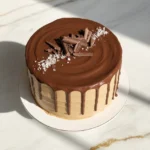
Tangy. Sweet. Totally unexpected. This celebration cake is the ultimate dessert for pickle lovers — and it’s shockingly delicious.
Why a Dill Pickle Cake Actually Works (and Tastes Amazing)
I know. You saw “dill pickle birthday cake” and you had questions. That’s fair. I had questions too the first time I made it.
Here’s what actually happens when you bake with pickles: the vinegar does exactly what lemon does in a lemon drizzle. It cuts through the sweetness, adds a little brightness, and makes the whole cake taste more interesting without ever tasting like a pickle. Think of it as carrot cake’s funnier, sassier cousin – both use something unexpected to create moisture and depth, and both get the same reaction from people when you tell them what’s in it.
The brine goes in the batter and a little into the frosting too. The result is a cake that’s genuinely delicious, holds up beautifully, and gets more table conversation than anything else I’ve ever served. People always ask for the recipe after eating it, which is a good sign considering most of them started out skeptical.
Choosing the Right Pickles – It Matters More Than You Think
Not all pickles are created equal — especially when you’re baking with them. For this recipe, I highly recommend using sweet dill pickles or bread and butter pickles. These offer the tangy-sweet contrast that works best in a cake. Stay away from full-sour or spicy pickles — they’ll overwhelm the dessert.
Tips for the best results:
- Use finely chopped pickles, patted dry with paper towels. You want crunch, not sog.
- Avoid neon-green “fast food” pickles — go for ones with visible dill and garlic specks.
- Save the pickle brine — it’s going in the batter and the frosting.
How to Bake With Pickle Brine Without Overpowering Your Cake
Pickle brine is surprisingly versatile — it’s essentially vinegar, water, salt, and spices. Sound familiar? That’s a marinade base! In this cake, we use just a few tablespoons of brine to cut through the sweetness and balance the flavors. It gives the cake a subtle zing, like the twist of lemon in a lemon loaf, but way more unexpected.
Don’t worry: it won’t taste “pickle-y.” The key is moderation — just enough brine to brighten the cake without taking over.

Frosting That Balances It All – The Secret’s in the Cream Cheese
To complement the tangy undertones of the cake, we go with a cream cheese buttercream frosting that’s smooth, rich, and just barely briny (yes, a touch of brine in the frosting too!). The cream cheese brings depth and richness, while the butter keeps it light. I also add a little lemon zest to echo the acidic tang of the cake and round everything out.
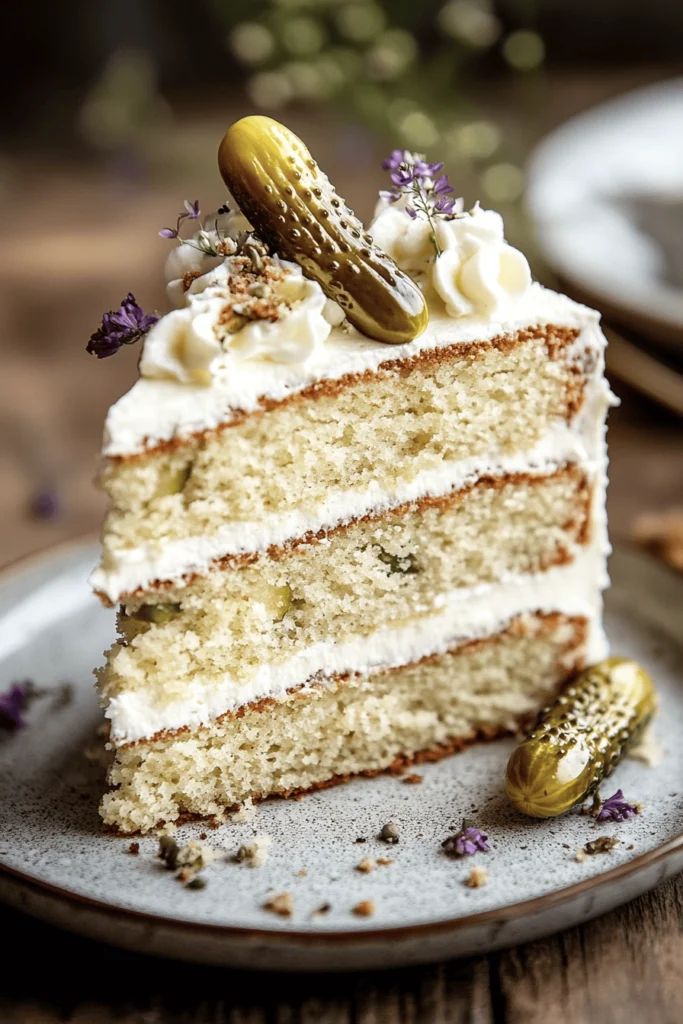
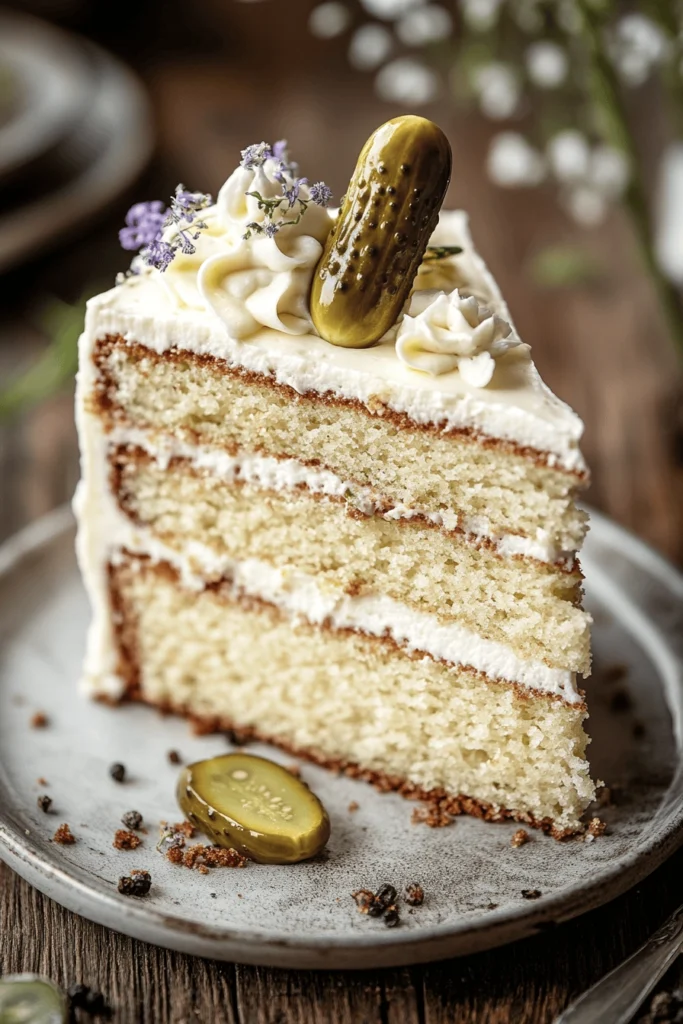
Optional: Add crushed dill pickle chips or candied pickle slices on top for crunch, sparkle, and conversation-starting garnish.
Equipment & Preparation Tips for Perfect Layers
Here’s what you’ll want to have on hand:
- 3 x 8-inch round cake pans
- Stand mixer or handheld electric mixer
- Offset spatula (for frosting)
- Parchment paper (to line pans)
- Wire cooling racks
Prep tip: Pat the chopped pickles dry very well before folding them into the batter. This keeps the texture perfect — we want moist, not soggy!
Flavor Twists: Add-Ins and Toppings That Make It Shine
Want to push the flavor envelope even more?
- Add a tablespoon of fresh chopped dill to the batter for herbal complexity.
- Mix in a ½ cup of white chocolate chips — it pairs surprisingly well.
- Top with a candied dill pickle “rose” (thin slices simmered in sugar and vinegar, then dried).
- Use pickle-flavored potato chips as a crunchy garnish on top.
Troubleshooting & What to Avoid (Because No One Wants a Soggy Cake)
- Don’t skip drying the pickles. Excess moisture = gummy texture.
- Don’t overdo the brine. It should brighten, not dominate.
- Worried it’s too weird? Test it as cupcakes first. If people love it, go big.
Dill Pickle Birthday Cake Recipe
Servings: 12 slices
Total Time: 1 hour 35 minutes
(35 min prep + 40 min baking + cooling + frosting)
Ingredients
For the Cake:
- 2 ½ cups (315g) all-purpose flour
- 2 tsp baking powder
- ½ tsp baking soda
- ½ tsp salt
- ¾ cup (170g) unsalted butter, softened
- 1 ¾ cups (350g) granulated sugar
- 4 large eggs
- 1 tbsp vanilla extract
- ½ cup sour cream
- ¼ cup whole milk
- 3 tbsp dill pickle brine
- ¾ cup finely chopped sweet dill pickles (patted dry)
For the Cream Cheese Pickle Frosting:
- 8 oz (225g) cream cheese, softened
- ½ cup (113g) unsalted butter, softened
- 1 tbsp pickle brine
- ½ tsp lemon zest
- 4 cups (480g) powdered sugar
- Pinch of salt
Optional Garnishes:
- Crushed dill pickle potato chips
- Candied pickle slices
- Fresh dill sprigs
Instructions
1. Prep the pans and oven
Preheat your oven to 350°F (175°C). Grease and line three 8-inch cake pans with parchment paper.
2. Make the cake batter
In a medium bowl, whisk flour, baking powder, baking soda, and salt.
In a large bowl, cream butter and sugar until light and fluffy (3–4 minutes).
Add eggs one at a time, mixing well. Stir in vanilla, sour cream, milk, and pickle brine.
Gradually add dry ingredients. Fold in chopped pickles gently.
3. Bake
Divide batter between pans and smooth tops.
Bake 35–40 minutes or until a toothpick comes out clean.
Cool in pans 10 minutes, then transfer to wire racks to cool completely.
4. Make the frosting
Beat cream cheese and butter until smooth.
Add brine, zest, and salt.
Gradually beat in powdered sugar until fluffy. Taste and adjust brine/zest as needed.
5. Assemble
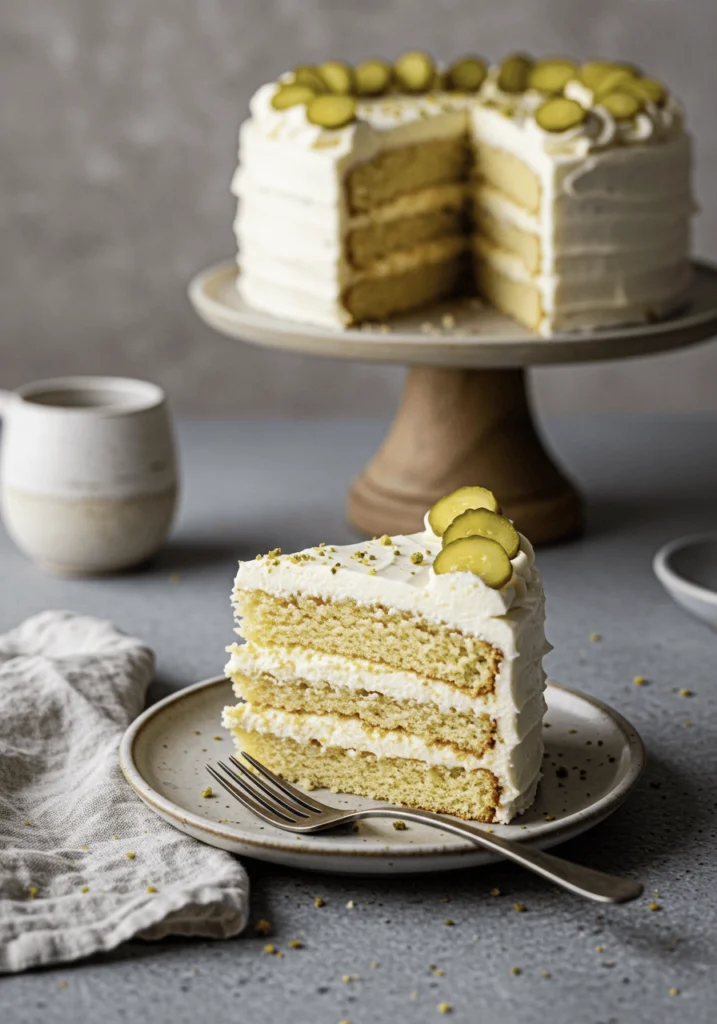
Level cakes if needed. Stack with frosting between each layer, then frost top and sides.
Decorate with crushed chips, candied pickles, or fresh dill.
Nutrition Info (Per Slice)
Approximate, based on 12 servings:
- Calories: 490
- Fat: 24g
- Carbs: 63g
- Sugar: 45g
- Protein: 5g
- Sodium: 380mg
Storage & Make-Ahead
- Store covered at room temp for 1 day, or refrigerated up to 4 days.
- Bring to room temp before serving for best flavor.
- Cake layers can be frozen (unfrosted) up to 2 months.
Substitutions
- Gluten-free: Use a 1:1 GF baking flour. Add 1 tsp xanthan gum if not included.
- Dairy-free: Use plant-based butter, dairy-free cream cheese, and unsweetened almond milk.
- Egg-free: Replace each egg with ¼ cup applesauce or 1 tbsp flax meal + 3 tbsp water.
In Case You Are Wondering
Does this actually taste like pickles?
Not in the way you’re imagining. The pickle brine works like lemon juice in a lemon drizzle – it adds brightness and cuts through the sweetness without the cake tasting savory or tangy in an obvious way. Most people can’t identify what the unusual note is until you tell them. The chopped pickles in the batter give a very subtle crunch and a little herbal flavor from the dill, but the overall experience is sweet cake with an interesting edge, not a jar of Vlasic.
What kind of pickles should I use?
Sweet dill pickles or bread and butter pickles work best – they have a tangy-sweet balance that plays well in a cake. Avoid full-sour or spicy pickles, which will fight with the frosting. The most important thing regardless of which pickles you use is to chop them finely and pat them very dry with paper towels before folding into the batter. Excess moisture will make the crumb gummy.
Can I make this cake in advance?
Yes, and I’d actually recommend it. The cake layers can be baked a day ahead, wrapped tightly in plastic wrap, and kept at room temperature overnight. The frosting can also be made a day ahead and kept refrigerated – just bring it back to room temperature and beat briefly before using. The fully assembled cake keeps refrigerated for up to 4 days and should be brought to room temperature for about 30 minutes before serving for the best flavor and texture.
Can I freeze this cake?
The unfrosted cake layers freeze well for up to 2 months. Wrap each layer tightly in plastic wrap then in foil, and thaw overnight in the fridge before frosting. I wouldn’t freeze the assembled cake – cream cheese frosting doesn’t thaw particularly well and the texture suffers.
Can I make this gluten-free or dairy-free?
For gluten-free, swap the all-purpose flour for a 1:1 gluten-free baking flour – add 1 tsp xanthan gum if it isn’t already included in the blend. For dairy-free, plant-based butter, dairy-free cream cheese, and unsweetened almond milk all work well as direct swaps. The texture is slightly less rich but still very good. I haven’t tested an egg-free version of this one specifically, but ¼ cup applesauce per egg is a reliable substitute in most layer cakes.
How do I get clean, even cake layers?
Weigh your batter and divide it equally between the three pans rather than eyeballing it – it makes a real difference to how even the layers are. Once baked and completely cooled, use a long serrated knife to level off any dome before stacking. A cake turntable makes frosting much easier if you have one, but an offset spatula on its own will get you there.
Will people be put off when I tell them what’s in it?
Some of them, briefly. The best strategy is to let them eat it first and tell them after – the reaction is much better when they’ve already decided they like it. That said, plenty of people are immediately intrigued rather than put off, especially anyone who’s already a pickle fan. Either way it’s the most talked-about cake I’ve ever served at a table.
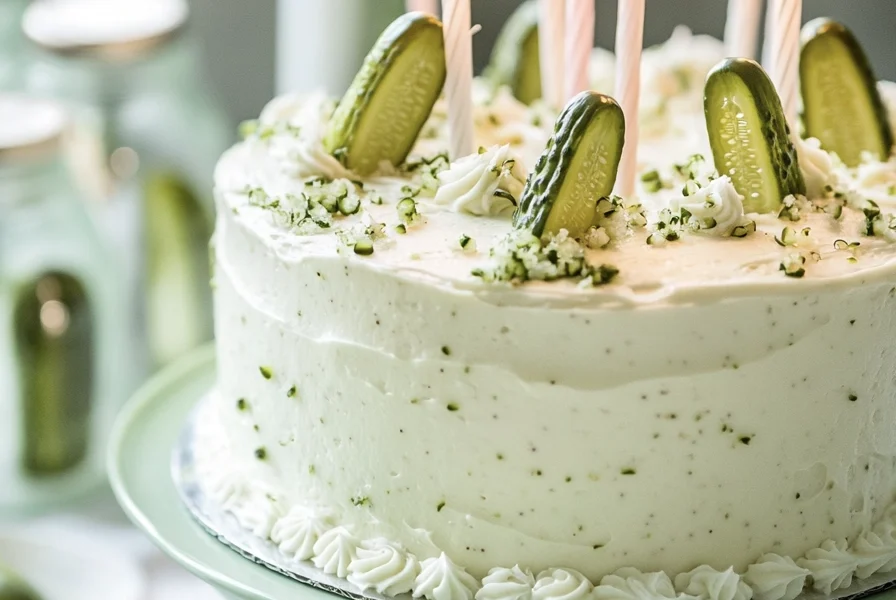
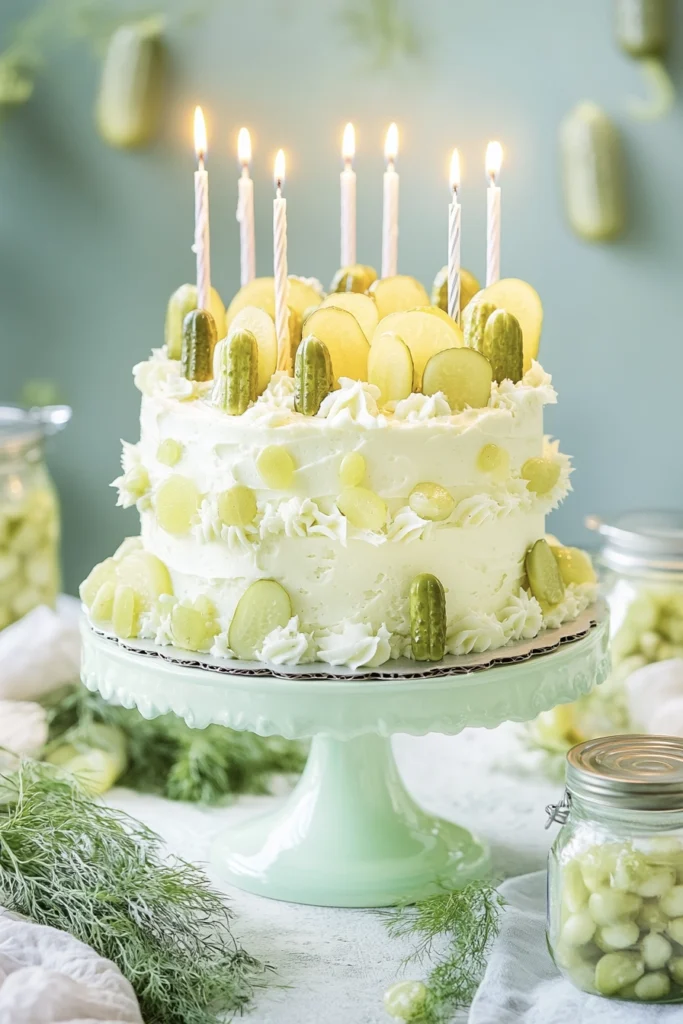
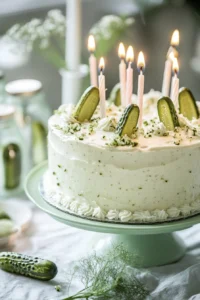
For decoration, I keep it simple. A white or pale cream frosted cake with a handful of fresh dill sprigs on top looks genuinely elegant. If you want to lean into the pickle theme, mini gherkins on toothpicks arranged in a row across the top are a conversation piece without going overboard. Crushed dill pickle chips scattered around the base of the cake add crunch and make the whole thing look intentional rather than chaotic. Green ombre frosting – going from deep sage at the bottom to pale mint at the top – is the best option if you want it to look visually striking in photos.
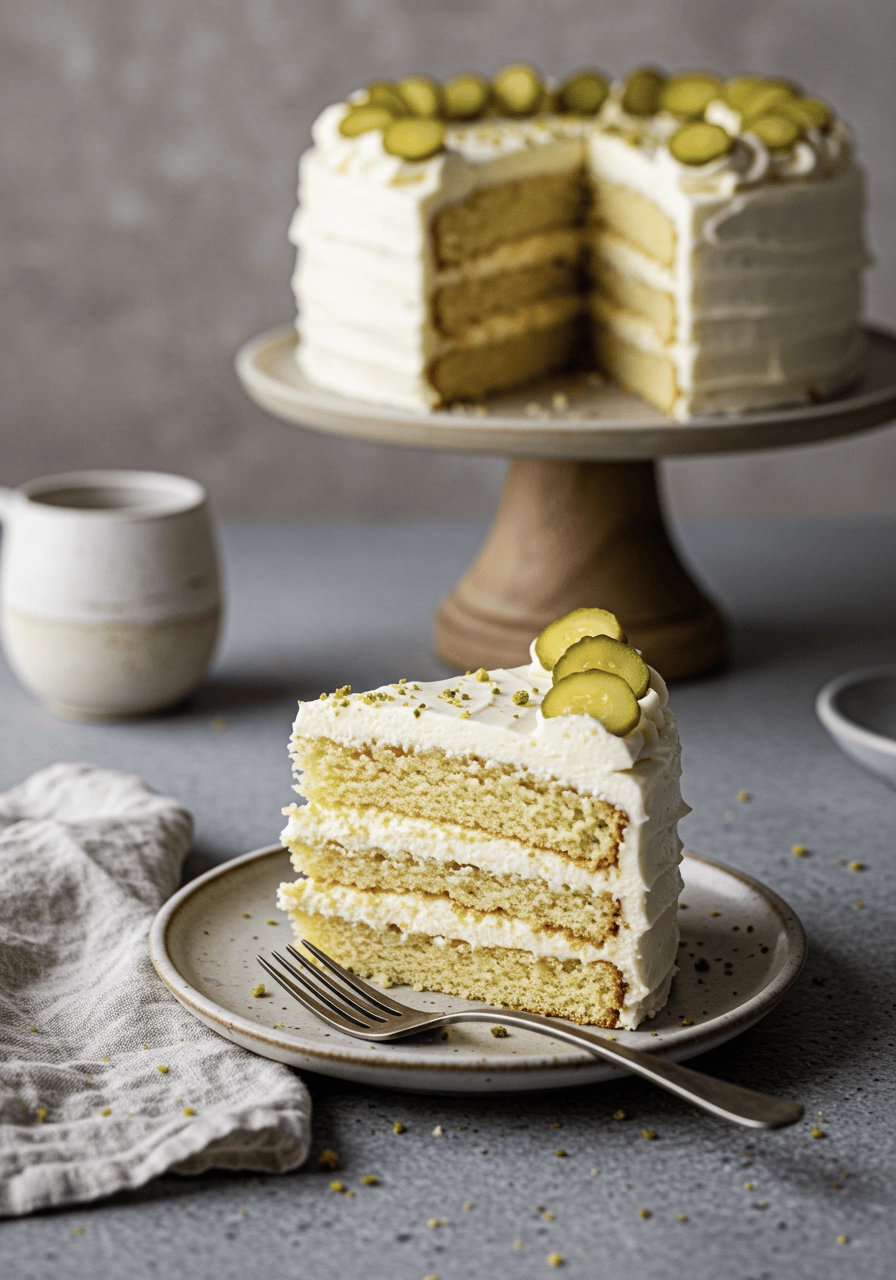
Dill Pickle Birthday Layer Cake. Tangy. Sweet. Totally unexpected
Love it? Click to rate
Ingredients
Equipment
Method
- Preheat your oven to 350°F (175°C). Grease and line three 8-inch cake pans with parchment paper.
- In a medium bowl, whisk flour, baking powder, baking soda, and salt.
- In a large bowl, cream butter and sugar until light and fluffy (3–4 minutes).
- Add eggs one at a time, mixing well. Stir in vanilla, sour cream, milk, and pickle brine.
- Gradually add dry ingredients. Fold in chopped pickles gently.
- Divide batter between pans and smooth tops.
- Bake 35–40 minutes or until a toothpick comes out clean.
- Cool in pans 10 minutes, then transfer to wire racks to cool completely.
- Beat cream cheese and butter until smooth.
- Add brine, zest, and salt.
- Gradually beat in powdered sugar until fluffy. Taste and adjust brine/zest as needed.
- Level cakes if needed. Stack with frosting between each layer, then frost top and sides.
- Decorate with crushed chips, candied pickles, or fresh dill.
Nutrition
Notes
- Gluten-free: Use a 1:1 GF baking flour. Add 1 tsp xanthan gum if not included.
- Dairy-free: Use plant-based butter, dairy-free cream cheese, and unsweetened almond milk.
- Egg-free: Replace each egg with ¼ cup applesauce or 1 tbsp flax meal + 3 tbsp water.
Stick with sweet or mild dill — spice clashes with frosting. Will people actually like this?
YES! It’s surprising but balanced — a must-try for adventurous eaters.