The Soul of Authentic Guacamole
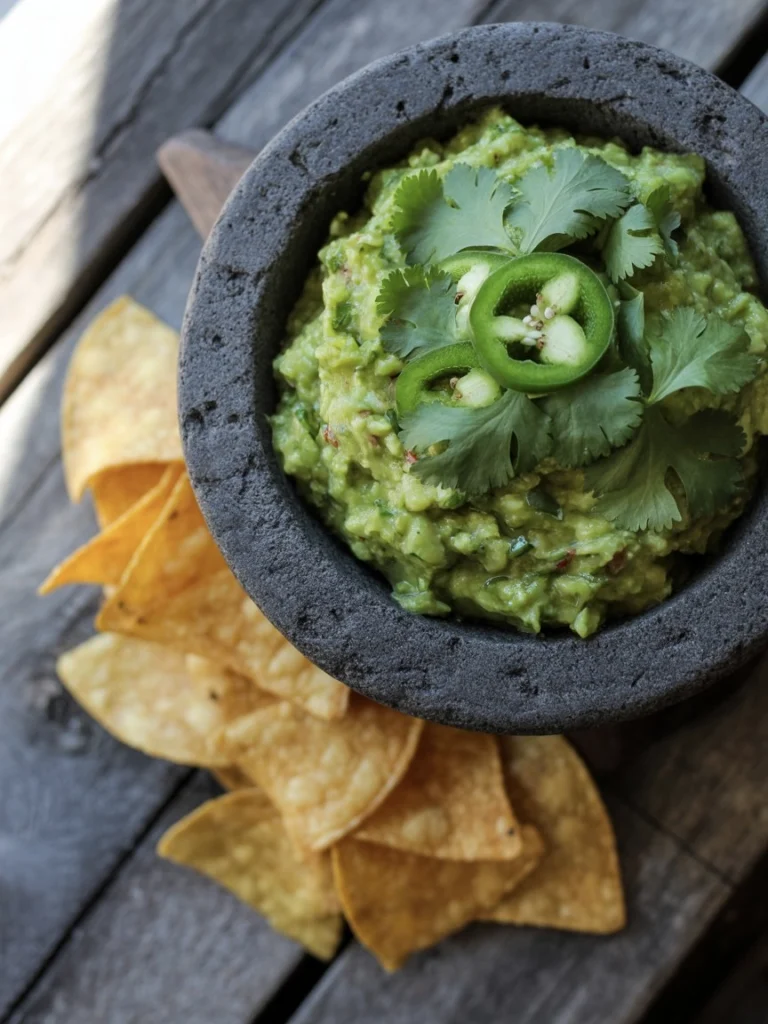
Guacamole has been made the same way since the Aztecs called it āhuacamolli – ripe avocados, lime, white onion, chili, cilantro, salt. That’s it. No sour cream, no cream cheese, no extras. The simplicity is the point.
I’ve brought a bowl of this to enough gatherings to know exactly what happens: before the chips are even out, people are already in it. The bowl gets scraped clean and someone always asks for the recipe.
This is that recipe. The only thing that changes the outcome is the avocado. Underripe and it tastes like nothing; overripe and the texture is wrong. Everything else adjusts to taste.
If you want a spicier riff on this, the jalapeño popper guacamole takes the same base and loads it up with roasted jalapeños and cream cheese – very different result, both worth making.
Avoiding Common Guacamole Mistakes
Let’s be real: it’s easy to mess up guacamole. Even though it’s a simple dish, there are pitfalls that can turn your bowl of fresh green magic into a bland, watery, or overly acidic disappointment. Here are the most common traps — and how to sidestep them:
- Using unripe or overripe avocados – This is the most common issue. Underripe avocados are hard and flavorless, while overripe ones are mushy and brown.
- Over-mashing – A smooth puree loses the chunky, rustic feel of traditional guacamole.
- Too much lime juice – Lime should brighten, not dominate. Start small and taste.
- Adding ingredients too early – Salt and lime juice can break down avocado texture if added too early. Timing matters.
- Overloading with extras – Adding too much tomato, garlic, or spice can mute the avocado’s flavor.
Choosing the Best Ingredients
For avocados, Hass is the right choice – the dark pebbly skin and high fat content give the best flavor and texture. They should give slightly when pressed but not feel mushy. If they need a day or two, put them in a paper bag with a banana at room temperature.
White onion is the traditional choice over red or yellow – it’s sharper but mellows once minced, and a 5-minute soak in cold water takes the raw edge off if you want it milder.
Fresh lime juice only – bottled lime juice tastes noticeably different and flattens the whole dip.
For chili, a jalapeño with seeds removed gives gentle heat; leave the seeds in or swap for a serrano if you want more.
If you use tomato, Roma works best because it’s less watery – remove the seeds before dicing so they don’t make the guacamole wet.
This post contains affiliate links. I only recommend products I genuinely use and love at no extra cost to you.
Essential Tools for the Perfect Texture
Good tools make a real difference in achieving guacamole with the right texture. Here’s what you’ll want to have on hand:
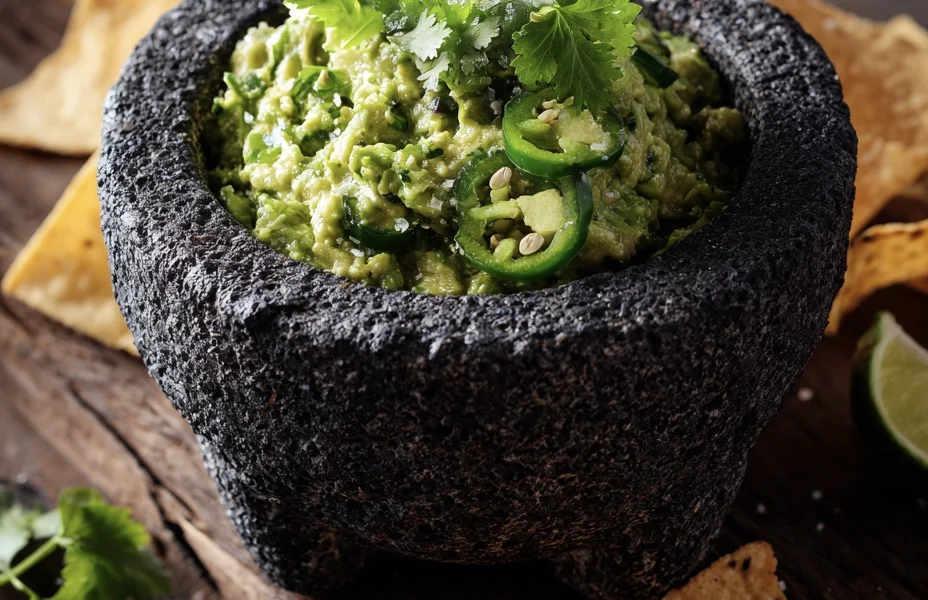
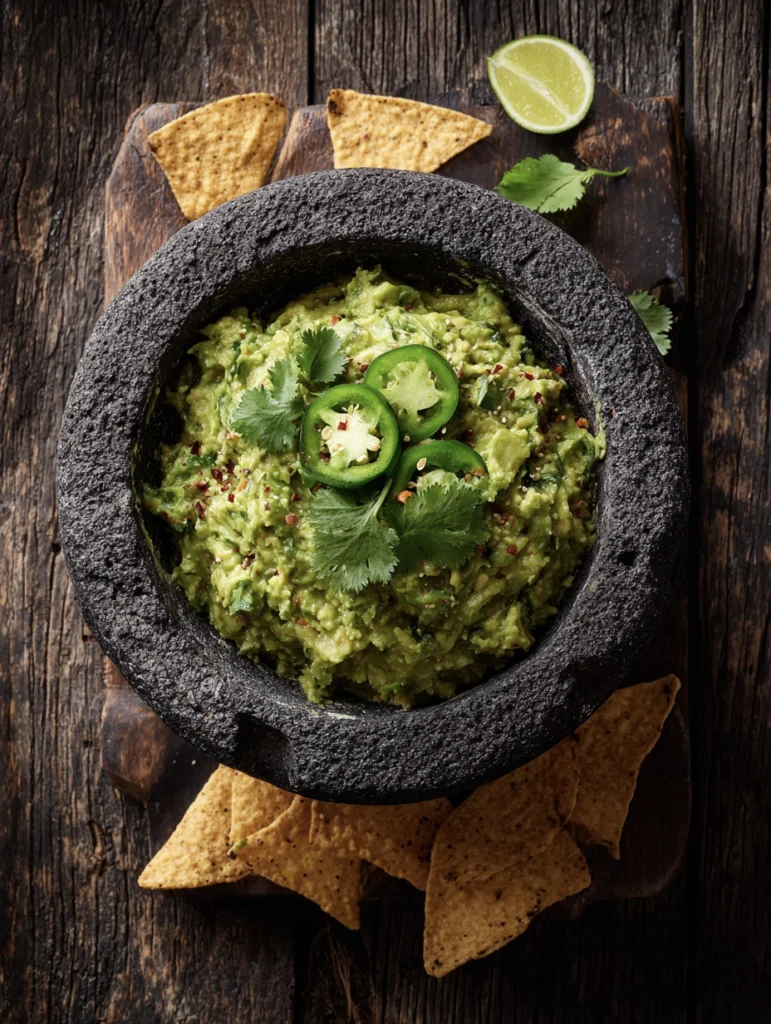
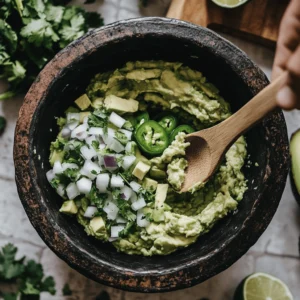
- Molcajete (Traditional Mortar & Pestle): This is the most authentic tool, made from volcanic stone. It releases natural oils from herbs and gives an unbeatable rustic texture.
- Fork or Potato Masher: A solid alternative for those without a molcajete. Avoid using a blender — it makes the guac too smooth.
- Sharp Knife: For finely dicing onion, chili, and herbs.
- Citrus Juicer: A handheld press ensures you extract all the juice and none of the seeds.
How to Customize for Your Palate
While traditional guacamole is minimalist, there’s nothing wrong with tweaking it to suit your tastes — as long as avocado still shines.
- For more heat: Add serrano peppers, a dash of cayenne, or even a hint of chipotle powder.
- For a fruity twist: Mix in finely chopped mango or pineapple (great with grilled meats).
- For umami depth: A tiny splash of soy sauce or Worcestershire (non-traditional, but interesting).
- For creaminess: A swirl of Greek yogurt or crème fraîche if you’re venturing from tradition.
- For texture: Add roasted corn, black beans, or pepitas for a hearty dip.
Preparation & Storage Strategies
Guacamole is best served fresh, but here’s how to keep it green and tasty if you need to prep ahead:
- Make it up to 4 hours in advance. Cover it tightly with plastic wrap pressed directly against the surface to prevent oxidation.
- Add the pit: Old trick, but it does help minimize browning in the bowl.
- Layer of lime juice: A thin layer on top before sealing keeps oxygen out. Just stir before serving.
- Leftovers: Store in an airtight container in the fridge for up to 2 days. A bit of browning is normal — scrape off the top if needed.
Flavor Boosters: Elevate Your Guac Game
Want to take it to the next level while still keeping the spirit of authenticity? Try one of these ideas:
- Roasted garlic – A mellow, nutty twist that doesn’t overpower.
- Charred poblano or jalapeño – Smoky and slightly sweet.
- Pickled red onions – Add a tangy crunch on top, not mixed in.
- Toasted cumin seeds – Crushed and stirred in for earthy complexity.
- Zest of lime – A pop of citrus aroma without added acidity.
Ingredients
Basic Guacamole (Serves 4)
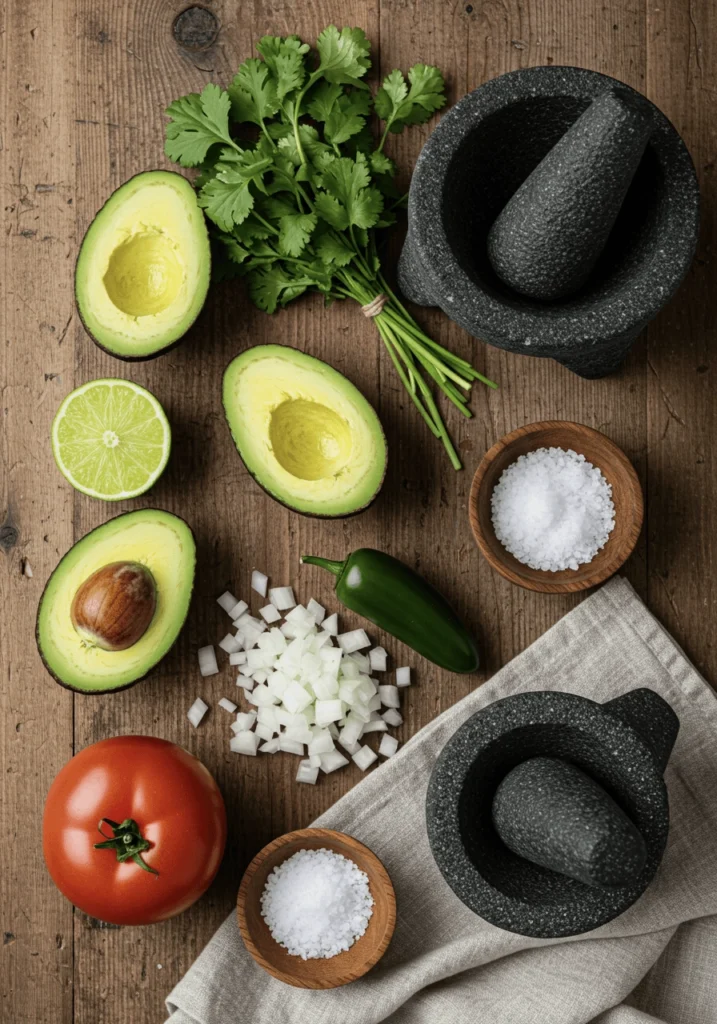
- 3 ripe Hass avocados
- 1 small white onion, finely chopped (about ¼ cup)
- 1 jalapeño pepper, seeded and finely minced (or to taste)
- ¼ cup fresh cilantro, chopped
- Juice of 1 lime (start with half, add more to taste)
- ½ tsp kosher salt (adjust to taste)
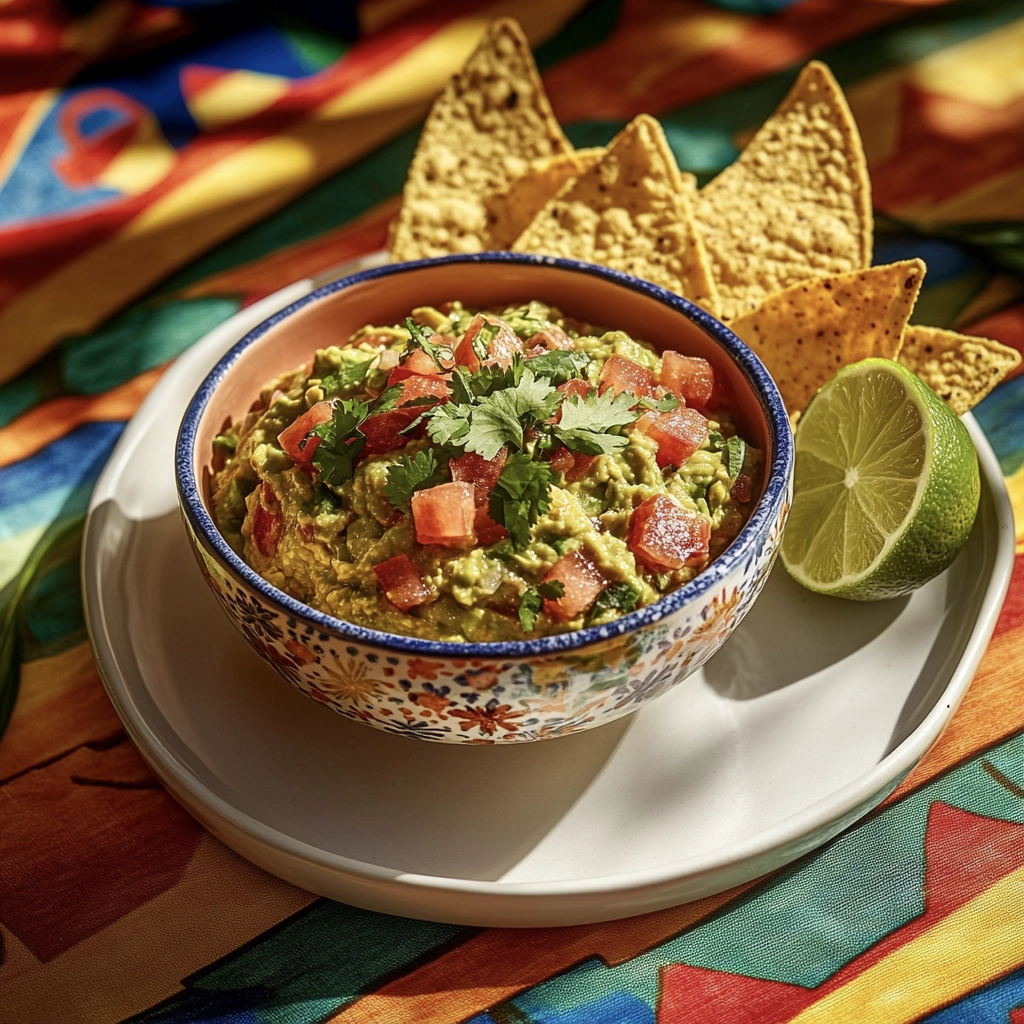
- 1 small Roma tomato, seeds removed and diced (optional)
Step-by-Step Instructions
1. Prep the Vegetables
Start by finely chopping your white onion, jalapeño, and cilantro. If using tomato, remove seeds and dice. Set everything aside. If you want to mellow the onion, soak it in cold water for 5 minutes and drain well.
2. Cut and Scoop the Avocados
Slice each avocado in half, remove the pit, and scoop the flesh into a bowl or molcajete.
3. Mash Avocados
Using a fork, potato masher, or the pestle of a molcajete, mash the avocado to your desired consistency. For authentic guac, aim for slightly chunky, not smooth.
4. Mix in Flavor Elements
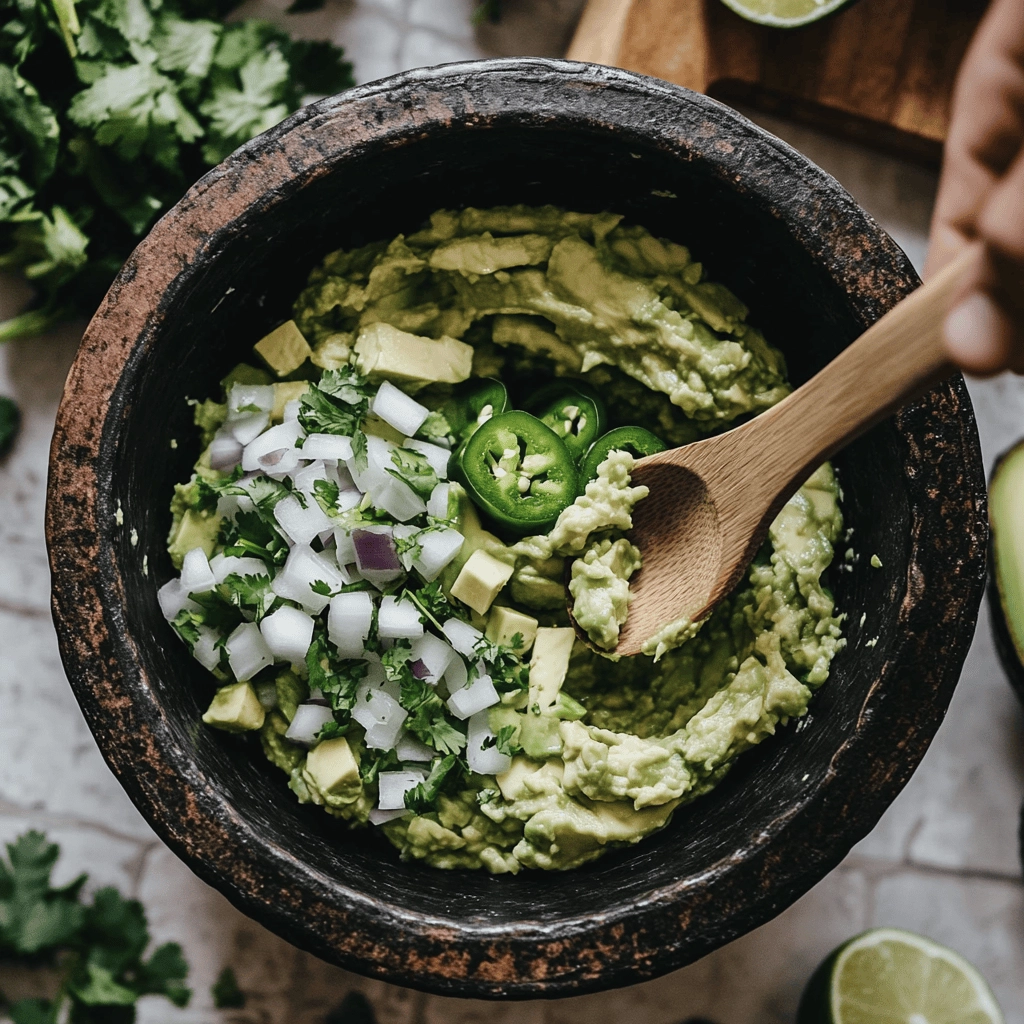
Add the onion, jalapeño, cilantro, and salt. Squeeze in half the lime juice and stir gently. Taste and adjust lime and salt as needed. If using tomato, fold it in last to preserve its shape.
5. Let It Rest
Let the guacamole sit for 5–10 minutes at room temperature before serving to let flavors meld. This step isn’t mandatory but really deepens the flavor.
FAQs & Troubleshooting
Why is my guacamole turning brown?
Browning happens because avocado flesh oxidises when exposed to air – the same process that browns a cut apple. The most effective prevention is pressing plastic wrap directly against the surface of the guacamole so there’s no air gap at all. A thin layer of lime juice on top before sealing also helps. The avocado pit trick is a popular one but it only prevents browning in the small area directly under the pit – it doesn’t help the rest of the bowl. If the top layer browns, scrape it off and the green guacamole underneath is usually fine.
Can I make guacamole ahead of time?
Yes – up to 4 hours ahead works well. Press plastic wrap directly onto the surface (no air gaps), seal tightly, and refrigerate. For anything longer than 4 hours the texture starts to degrade even if the color stays green. If making it the morning of a party, it’s worth adding a little extra lime juice to compensate for any flavor loss from sitting. Give it a stir and a taste before serving – it will often need a small adjustment of salt or lime.
It tastes bland – what’s missing?
Almost always salt. Avocado needs more salt than most people expect – taste and add a pinch more, stir, and taste again. If salt doesn’t fix it, the second most likely culprit is lime juice – add a few more drops and stir. If it’s still flat, the avocado itself may be underripe and there’s not much that can fix that beyond adding more of everything else to compensate. Fresh cilantro added at the end rather than stirred through also makes a noticeable difference to the brightness of the flavor.
How do I know when an avocado is ripe enough?
The skin of a ripe Hass avocado turns from bright green to dark green or almost black. More reliably, press the avocado gently with your thumb – it should give slightly, like pressing a firm mattress, but not feel soft or mushy. The area around the stem is a useful check: remove the small stem nub and look at the color underneath. Green means not yet ripe, yellow-green means perfect, brown means overripe. Avoid avocados with soft spots or very mushy areas as these will have brown patches inside.
Can I use a food processor or blender?
You can but you’ll end up with a smooth, airy puree rather than guacamole. The texture is completely different – it loses the chunky, slightly rough quality that makes guacamole satisfying to scoop. A fork gives you the most control and is the right tool for the job. Mash just until the avocado breaks down but pieces are still visible – about 10-15 seconds of active mashing. If you have a molcajete (volcanic stone mortar and pestle) it’s worth using for the same reason: it crushes rather than purees.
Serving Suggestions
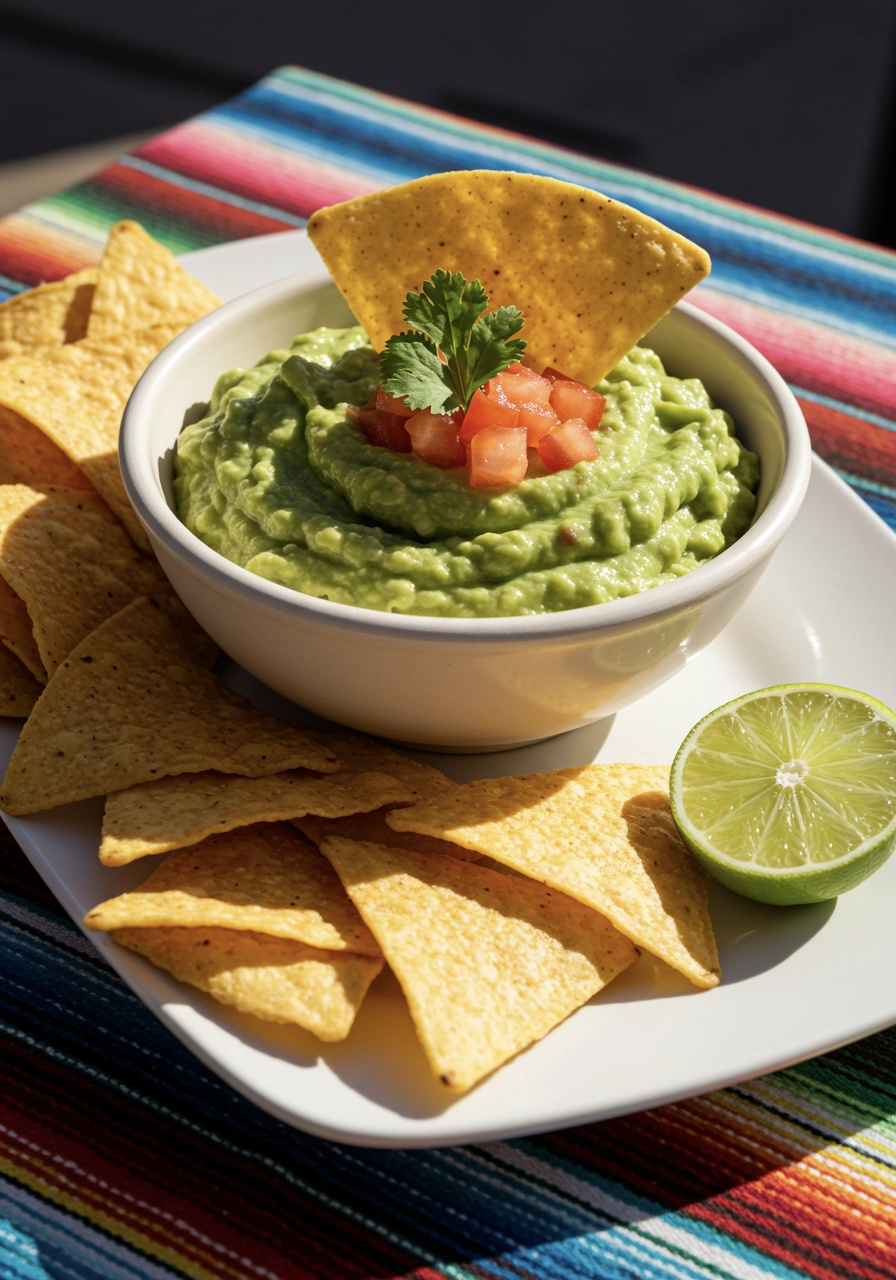
Guacamole is endlessly versatile. Try serving it:
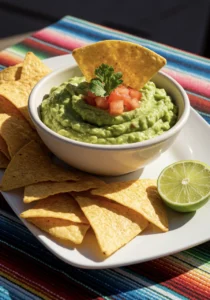
- With tortilla chips (classic)
- As a topping for tacos, enchiladas, or fajitas
- Alongside grilled meats or fish
- Spread on toast with a poached egg
- As part of a mezze or appetizer board
This also works as part of a full party dip spread – the party dips roundup has everything you’d need to build a table around it.
Here’s everything you’ll need for optimal texture, flavor, and ease:
Basic Equipment
- Cutting board – Preferably wood or plastic
- Sharp knife – Essential for clean, fine dicing
- Mixing bowl – Medium-sized, ceramic or glass preferred
- Fork or potato masher – For classic chunky mashing
- Spoon – To scoop out avocado flesh
- Citrus juicer (optional) – A handheld lime press makes juicing easier and faster
Traditional Equipment (Optional but awesome)
- Molcajete (Mexican mortar & pestle) – The most authentic method with incredible texture and flavor release
- Microplane or zester – If you’re adding lime zest for an aromatic twist
Nutrition Notes:
- Avocados are a great source of healthy monounsaturated fats, potassium, and fiber.
- Naturally vegan, gluten-free, dairy-free, and keto-friendly.
Storage & Reheating
Guacamole doesn’t like heat, so never reheat it. For storage:
- Place leftovers in a small airtight container.
- Smooth the surface, press plastic wrap against it, and close the lid.
- Use within 24–48 hours for best quality.
Bonus: Guac vs. Avocado Salsa vs. Avocado Crema
| Feature | Guacamole | Avocado Salsa | Avocado Crema |
|---|---|---|---|
| Texture | Chunky | Thin, pourable | Smooth, creamy |
| Ingredients | Avocado, lime, onion, chili | Avocado, tomatillo, garlic, cilantro | Avocado, lime, sour cream or yogurt |
| Uses | Dip, topping | Tacos, grilled meats | Fish, salads, tacos |
The pimento cheese dip is a good contrast on the same party table – completely different flavor direction but the same casual scoop-and-eat format.
The Ultimate Authentic Homemade Guacamole Recipe
Love it? Click to rate
Ingredients
Equipment
Method
- Start by finely chopping your white onion, jalapeño, and cilantro. If using tomato, remove seeds and dice. Set everything aside. If you want to mellow the onion, soak it in cold water for 5 minutes and drain well.
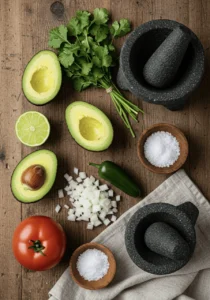
- Slice each avocado in half, remove the pit, and scoop the flesh into a bowl or molcajete.
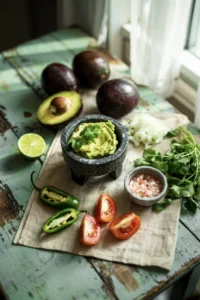
- Using a fork, potato masher, or the pestle of a molcajete, mash the avocado to your desired consistency. For authentic guac, aim for slightly chunky, not smooth.
- Add the onion, jalapeño, cilantro, and salt. Squeeze in half the lime juice and stir gently. Taste and adjust lime and salt as needed. If using tomato, fold it in last to preserve its shape.
- Let It Rest (Optional)
- Let the guacamole sit for 5–10 minutes at room temperature before serving to let flavors meld. This step isn’t mandatory but deepens the flavor.
Nutrition
Notes
- With tortilla chips (classic)
- As a topping for tacos, enchiladas, or fajitas
- Alongside grilled meats or fish
- Spread on toast with a poached egg
- As part of a mezze or appetizer board