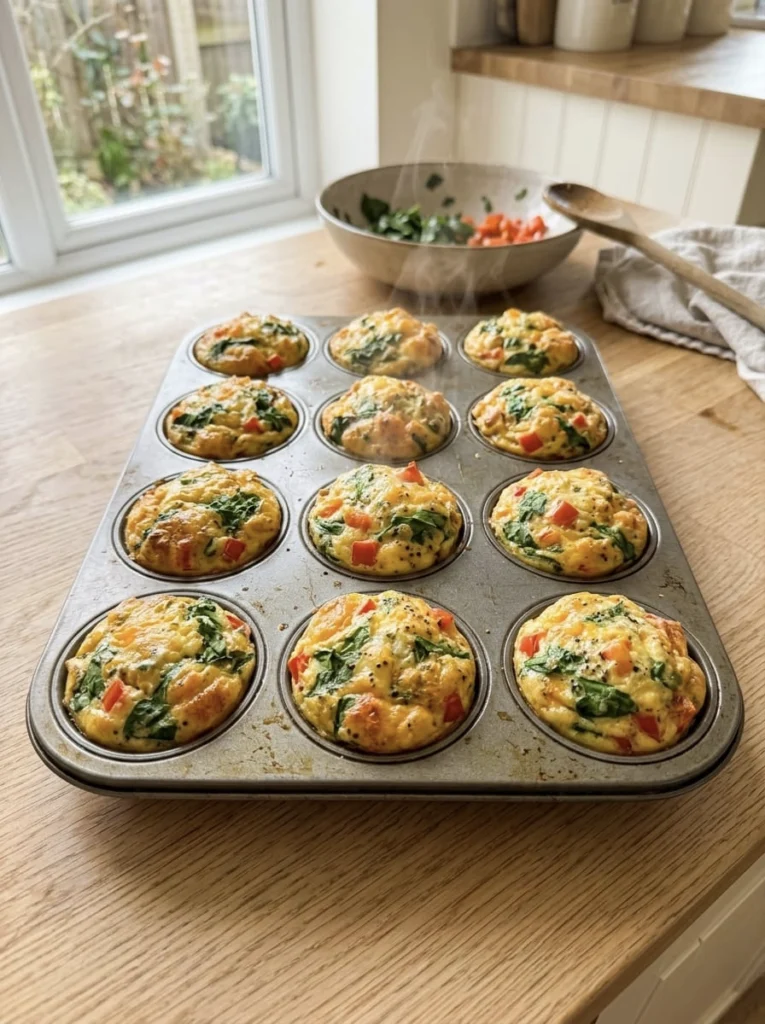
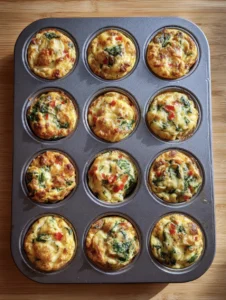
I started adding cottage cheese to my egg muffins almost by accident – I had half a tub that needed using and not enough eggs to fill the tin properly. The result was noticeably better than my usual version: lighter, fluffier, and with significantly more protein per muffin. I have made them this way ever since. Twelve muffins, 35 minutes, and they keep in the fridge all week so the hardest part of breakfast on a Tuesday morning is opening the container. Three muffins comes in at 26 grams of protein, which is more than most protein bars and considerably more enjoyable.
Why Cottage Cheese Makes These Better
Most egg muffin recipes are just whisked eggs poured into a tin with some fillings. They work but they can come out a bit dense and rubbery, especially if they go even slightly overbaked. Cottage cheese changes the texture completely. The extra moisture keeps the eggs from drying out, and the protein in the cottage cheese works with the eggs to give you a lighter, almost souffle-like result. You don’t taste the cottage cheese as a distinct flavor – it just makes everything better.
The protein numbers are the other reason I keep making these. Eggs and cottage cheese are both high-protein ingredients and they stack well together. Three muffins from this recipe gives you 26 grams of protein, which is a genuinely filling breakfast that holds you through to lunch. If you are trying to hit higher protein targets, these are one of the most efficient ways to do it at breakfast without making something complicated.
Note: Full-fat cottage cheese gives the best texture here. Low-fat versions have more water in them and the muffins can end up slightly wet in the middle. If you only have low-fat, drain it briefly through a fine mesh strainer before using.
Timings
- Prep – 10 mins
- Bake – 22-25 mins
- Total – 35 mins
Makes 12 muffins
What You Need
Everything here is standard supermarket territory. The vegetables are flexible – I’ve listed what I use most often but the recipe works with almost any combination of cooked or raw vegetables that aren’t too watery. More on that in the variations section.
- 8 large eggs
- 1 cup (226g) full-fat cottage cheese
- 1 cup (113g) cheddar cheese, shredded (plus a little extra for topping)
- 1 medium red bell pepper, finely diced
- 2 cups (60g) baby spinach, roughly chopped
- 3 spring onions, thinly sliced
- 1 tsp Dijon mustard
- 1/2 tsp garlic powder
- 1/2 tsp salt
- 1/4 tsp black pepper
- Cooking spray or a little butter for the tin
Equipment
- Standard 12-hole muffin tin – non-stick is ideal. If yours sticks even with greasing, silicone muffin liners are the easiest fix.
- Large mixing bowl and whisk
- Ladle or large spoon for filling the holes evenly – a ladle makes this considerably less messy than pouring
- Cooling rack – let the muffins cool in the tin for 5 minutes before trying to remove them or they will fall apart
How to Make Them
- Heat the oven to 375°F (190°C). Grease every hole of the muffin tin generously – top edges included, as the egg mixture puffs up and sticks to the rim if you’re stingy with the greasing.
- Whisk the eggs. Crack the eggs into a large bowl and whisk until the yolks and whites are fully combined. Add the cottage cheese, Dijon mustard, garlic powder, salt and pepper and whisk again until everything is incorporated. The cottage cheese won’t blend completely smooth and that’s fine – small curds in the mixture are normal and they disappear during baking.
- Add the fillings. Stir in the shredded cheddar, diced bell pepper, chopped spinach and spring onions. The spinach will look like too much at first – it wilts down significantly once it hits the hot egg mixture in the oven.
- Fill the tin. Use a ladle or large spoon to divide the mixture evenly between the 12 holes, filling each one about three quarters full. The mixture will puff up slightly during baking so don’t overfill. Scatter a little extra cheddar over the top of each one if you like a cheesier finish.
- Bake for 22 to 25 minutes until the muffins are set in the center, puffed and golden on top. They should feel firm when you press the center gently – not wobbly. A toothpick inserted in the middle should come out clean.
- Cool for 5 minutes in the tin before running a thin knife around the edges and lifting them out. They firm up as they cool and are much easier to remove cleanly after a few minutes of resting.
Sticking problem? Even with greasing, egg muffins have a habit of sticking if the tin is old or the coating is worn. Silicone liners solve this completely – the muffins drop straight out. Worth having a set if you make these regularly.
Storing and Reheating
This is where the meal prep case for these muffins really pays off. Once cooled completely:
- Fridge: Store in an airtight container for up to 5 days. To reheat, microwave for 45 to 60 seconds from fridge temperature. They come out almost as good as fresh.
- Freezer: Freeze individually on a baking sheet first, then transfer to a zip-lock bag or container. They keep for up to 3 months. Reheat from frozen in the microwave for 90 seconds, or wrap in foil and bake at 350°F for 15 minutes.
- Meal prep tip: Make a batch on Sunday and you have breakfast ready for the whole week. Three muffins per morning takes about 60 seconds to reheat.

Variations
The base recipe (eggs, cottage cheese, cheddar) is a template. The fillings are almost entirely flexible. A few combinations I make regularly:
- Bacon and cheddar: Swap the spinach and pepper for 4 strips of cooked bacon, crumbled. Classic combination and universally popular.
- Sun-dried tomato and feta: Use feta instead of cheddar and add a handful of chopped sun-dried tomatoes and some fresh basil. Mediterranean flavors, goes well with the cottage cheese base.
- Chorizo and jalapeño: Diced cooked chorizo, thinly sliced jalapeño and a pinch of smoked paprika. Bold and slightly spicy.
- Mushroom and gruyere: Sautéed mushrooms (dried out properly in a hot pan first – raw mushrooms release too much water), gruyere in place of cheddar, a little fresh thyme.
- Broccoli and cheddar: Very finely diced raw broccoli florets work well – they cook through in the oven. Classic flavor combination, good for kids.
Vegetable rule: Avoid vegetables with high water content – raw tomatoes, zucchini, mushrooms – unless they have been pre-cooked and dried out first. Watery vegetables make the muffins wet in the middle regardless of baking time. Spinach is the exception because it wilts to almost nothing and the water content is low enough not to cause problems.
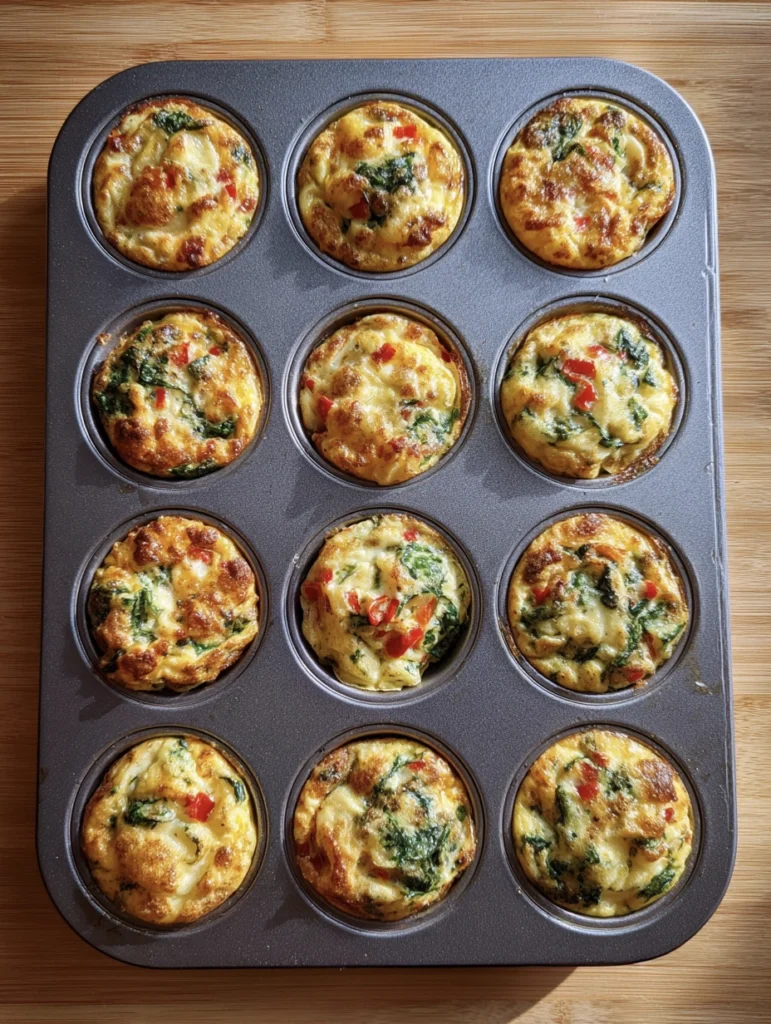
More High Protein Breakfasts
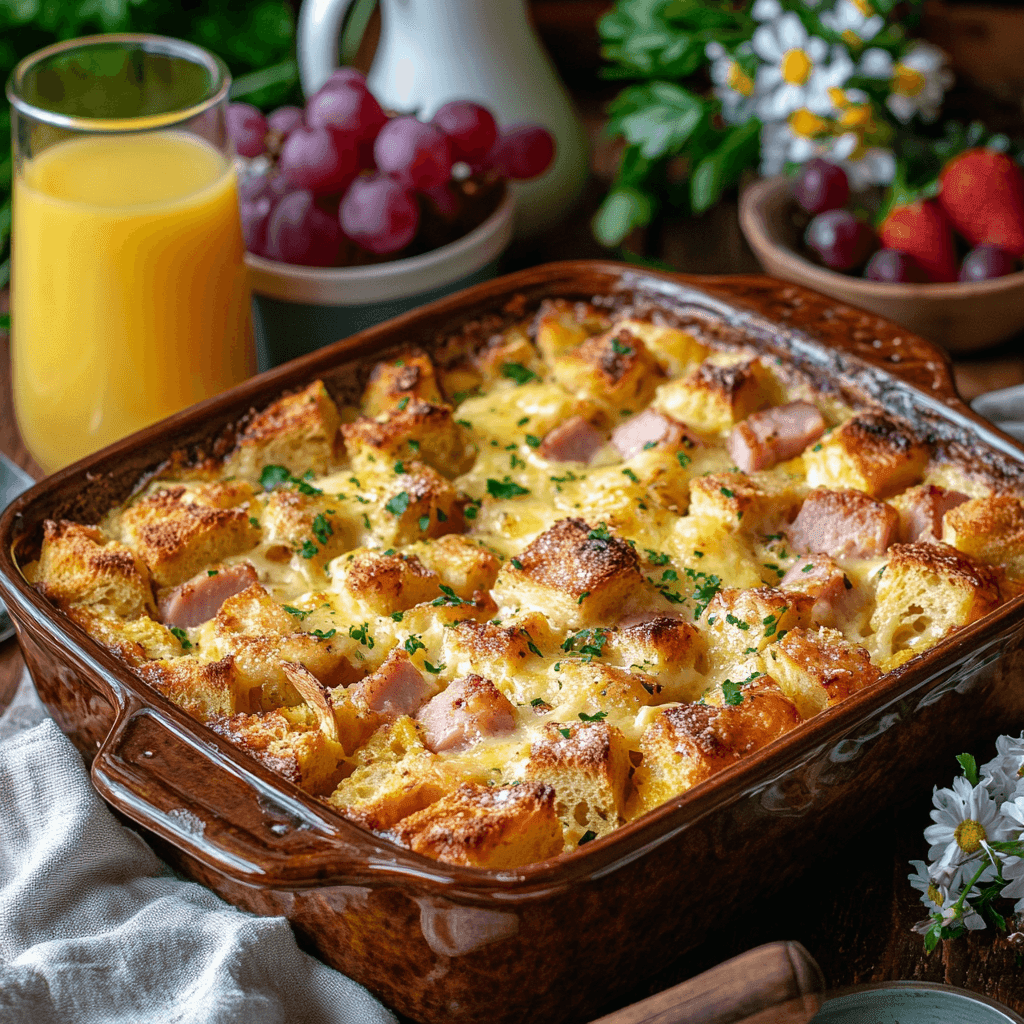
Ham and Cheese Breakfast Strata - The Ultimate Make-Ahead Brunch
Get the Recipe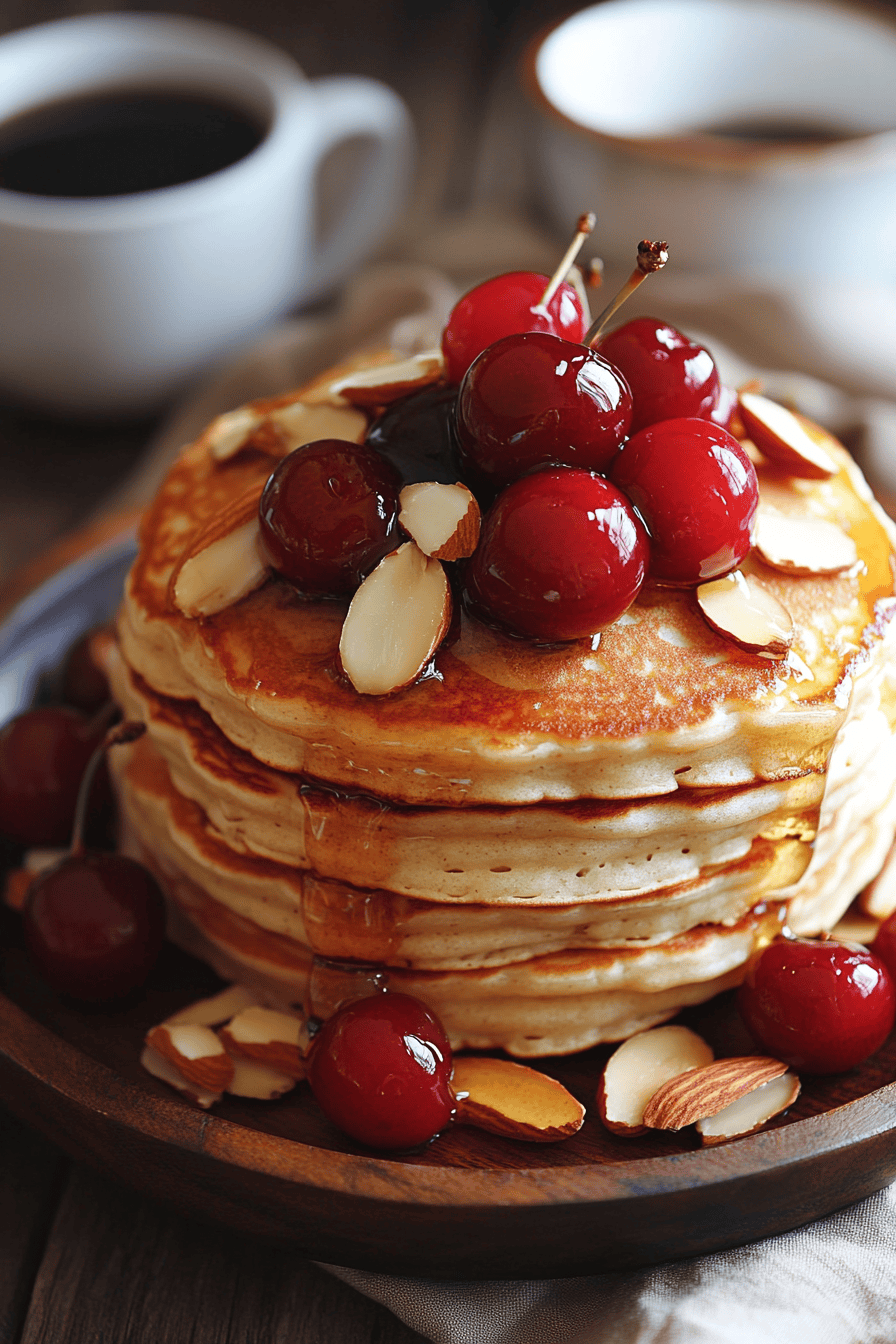
Cherry Almond Cottage Cheese Pancakes
Get the Recipe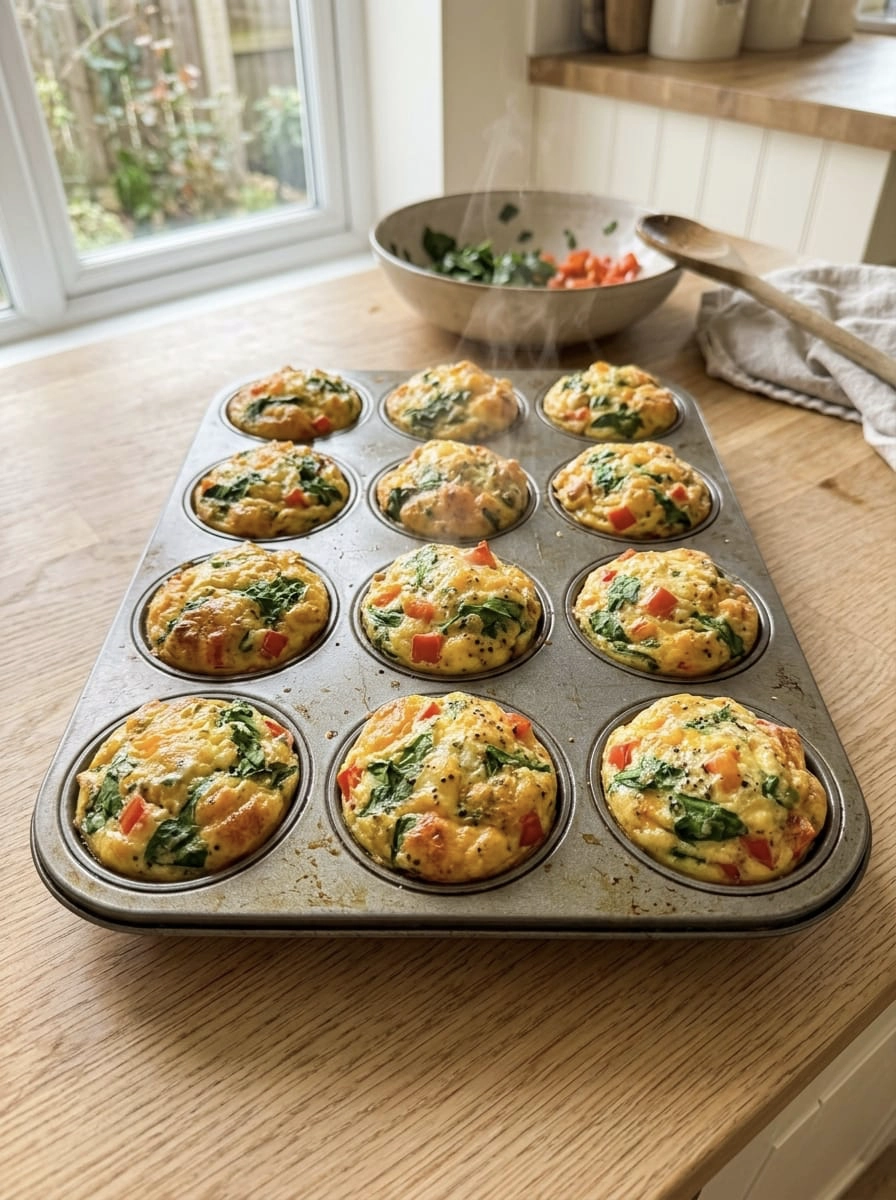
Cottage Cheese Egg Muffins - High Protein Make-Ahead Breakfast
Get the RecipeFrequently Asked Questions
Can I use low-fat or fat-free cottage cheese?
You can but the texture is noticeably different. Low-fat cottage cheese has more water in it which can make the muffins wet in the center even when they look done on top. Full-fat gives a creamier, fluffier result. If low-fat is what you have, drain it briefly through a fine mesh strainer for about 10 minutes before using and the texture will be much closer to the full-fat version.
My muffins collapsed when I took them out of the oven – what happened?
This is normal and nothing to worry about. Egg muffins puff up in the oven from the steam and then settle back down as they cool. They will look impressively tall in the oven and then deflate a bit within a few minutes of coming out. They will still taste exactly right. The deflating is not a sign of underbaking.
Can I make these dairy-free?
The cottage cheese is the tricky one to replace – its role is both texture and protein, and most substitutes don’t do both. Silken tofu blended smooth is the closest dairy-free substitute for texture. Nutritional yeast can add some of the savory depth that cheddar provides. The protein count will be lower without the dairy but the muffins will still work.
How do I know when they are done?
The tops should be golden and slightly puffed, and a toothpick inserted in the center should come out without wet egg on it. They should feel firm when you press the center gently, not soft and jiggly. If the edges are done but the center feels wet, give them another 3 minutes and check again. Every oven runs slightly differently.
Can I make these without a muffin tin?
Yes – pour the mixture into a greased 8×8 inch baking dish and bake at the same temperature for 25 to 30 minutes until set in the center. Slice into squares to serve. It’s essentially a frittata baked in the oven rather than on the stovetop.
Can I add meat to these?
Yes, and it works really well. Any cooked meat is fine – bacon, sausage, ham, chorizo, shredded rotisserie chicken. The key word is cooked – raw meat won’t cook through properly in the 22 minutes the muffins need. Cook and cool any meat first before adding it to the mixture.
Why does my version taste bland?
Almost always underseasoning. Eggs need more salt than most people expect, and the cottage cheese adds sodium but not enough on its own. Taste the raw mixture before it goes into the tin and adjust the salt if needed. Adding the Dijon mustard is also important – it doesn’t make the muffins taste of mustard but it adds a background savory depth that makes everything else taste more interesting.

High Protein Egg Muffins with Cottage Cheese
Love it? Click to rate
Ingredients
Equipment
Method
- Heat oven to 375°F (190°C). Grease all 12 holes of the muffin tin generously, including the top edges.
- Whisk eggs in a large bowl until yolks and whites are fully combined. Add cottage cheese, Dijon mustard, garlic powder, salt and pepper. Whisk again until incorporated. Small cottage cheese curds in the mixture are normal.
- Stir in shredded cheddar, diced bell pepper, chopped spinach and spring onions.
- Divide evenly between the 12 muffin holes, filling each about three quarters full. Scatter a little extra cheddar on top of each if desired.
- Bake for 22 to 25 minutes until set in the center, puffed and golden on top. A toothpick inserted in the center should come out clean.
- Cool in the tin for 5 minutes before running a knife around the edges and removing. Serve warm or cool completely before storing.