
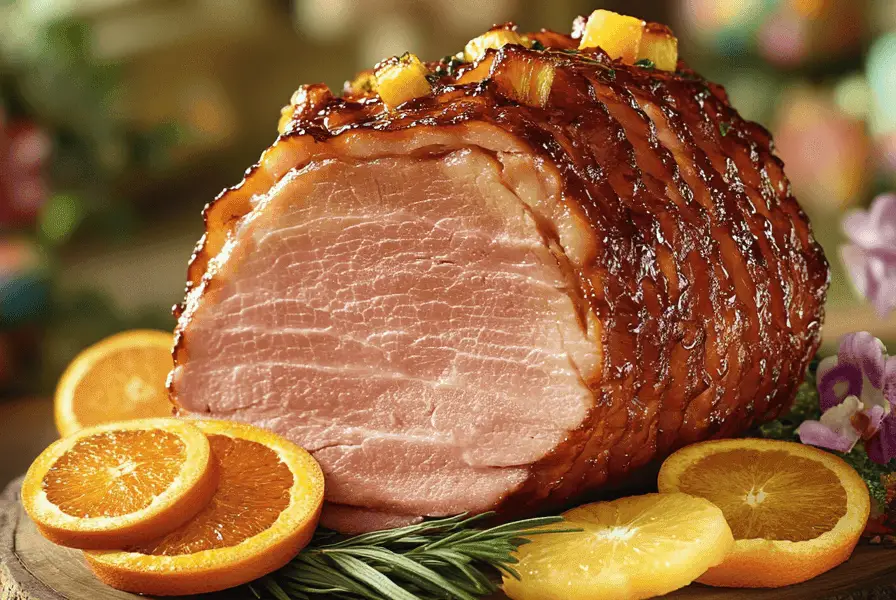
The make-ahead Easter centerpiece that earns its own moment at the table, slow-roasted, deeply glazed, and better than anything pre-cooked
There is a particular silence that happens when you carry a glazed ham to the table. Not the polite “oh how lovely” response – the actual quiet, where people stop mid-sentence because something genuinely impressive just arrived and everyone knows it.
I’ve been making this ham for Easter for years and it never stops getting that reaction. It’s slow-roasted from scratch rather than starting with a pre-cooked ham, which means you control the seasoning and moisture from start to finish. The glaze – brown sugar, honey, pineapple juice, Dijon, a little warmth from cloves and cinnamon – turns glossy and deeply caramelized in the oven and smells extraordinary while it’s cooking.
It takes time. Low and slow for most of the cooking, then a blast of heat at the end to get the glaze bubbling and caramelized properly. But the active effort is minimal – it’s mostly the oven doing the work while you get everything else ready. And the result is a tender, flavor-packed centerpiece that tastes intentional rather than reheated.
If you’re hosting Easter this year and want one recipe you can rely on completely, this is it.
If you’re planning a lighter Easter menu, my Blueberry-Glazed Salmon With Lemon Herb Couscous is another beautiful spring centerpiece.
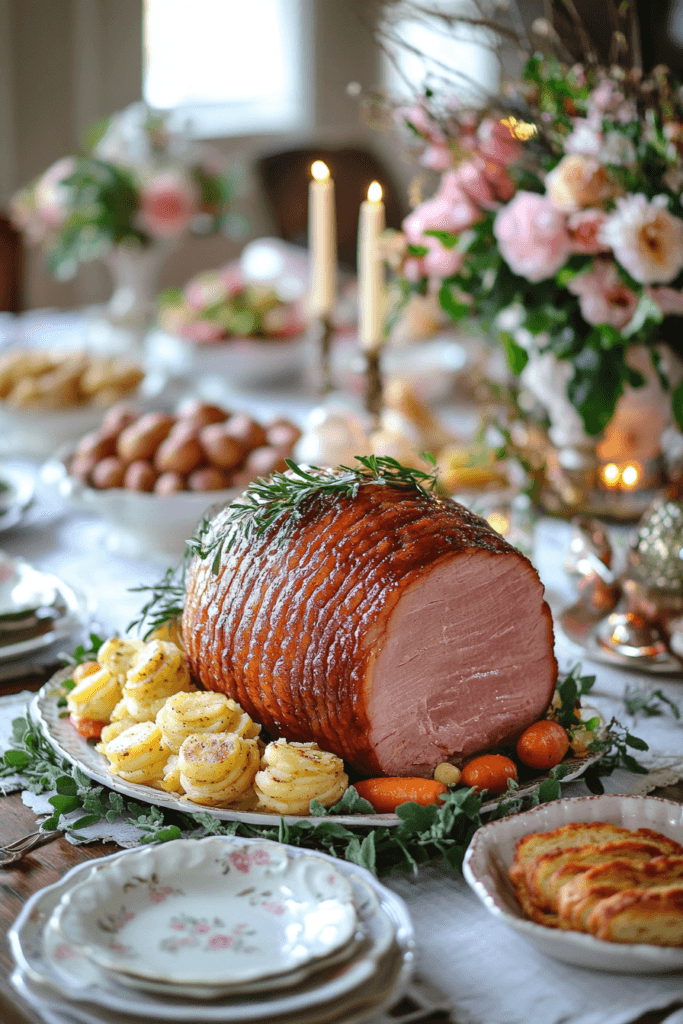
Why I Use a Fresh Ham Instead of Pre-Cooked
Most Easter ham recipes start with a pre-cooked ham, which is convenient, but you’re really just reheating and glazing it. A fresh, uncooked ham gives you far more control over the flavor and texture from the beginning.
Because it’s roasted slowly from raw, the seasoning actually penetrates the meat, and the texture stays juicy rather than slightly firm or processed. It takes longer, but the result feels more homemade and less “holiday shortcut.”
If you’ve only ever baked a pre-cooked ham before, this version might feel like a step up — but it’s a manageable one. You’re simply roasting it low and slow, then finishing with a proper glaze. The payoff is a tender, flavor-packed centerpiece that tastes intentional rather than reheated.
Selecting the Best Fresh Ham
Bone-In vs. Boneless
- Bone-In Ham: The best option for superior juiciness and flavor. Plus, you can use the bone for soups or stews later.
- Boneless Ham: Easier to carve but may be slightly less moist than bone-in.
Skin-On vs. Skinless
- Skin-On Ham: Highly recommended! The skin helps retain moisture during roasting and crisps up beautifully.
- Skinless Ham: Will still be delicious, but you’ll miss out on that crispy, golden exterior.
Best Size for a Holiday Ham
- An 8 to 12-pound bone-in ham is ideal for feeding 8-12 people with leftovers.
- For a smaller gathering, a 5-7 pound ham works well, though roasting times will be shorter.
Essential Tools for Roasting a Fresh Ham
To ensure even cooking and the best texture, you’ll need:
✔️ Roasting Pan with a Rack – Elevates the ham so it roasts evenly.
✔️ Meat Thermometer – Essential for perfect doneness (pork should reach 145°F).
✔️ Basting Brush or Spoon – Helps apply layers of flavorful glaze.
✔️ Sharp Knife – For scoring the skin and making slicing easier.
✔️ Aluminum Foil – Prevents drying out during the long roasting process.
The Secret to a Perfectly Glazed Ham
The glaze is what takes this ham to the next level, creating that gorgeous sticky, caramelized coating. Our glaze combines:
✔️ Brown sugar – Deep molasses flavor for richness.
✔️ Honey – Floral sweetness that helps create a glossy finish.
✔️ Pineapple juice – Adds brightness and acidity to cut through the fat.
✔️ Dijon mustard – A tangy contrast that enhances the sweetness.
✔️ Apple cider vinegar – Balances flavors and keeps the glaze from being too sweet.
✔️ Cloves & cinnamon – Warm spices that bring depth to every bite.
This glaze transforms the ham into a holiday-worthy masterpiece, locking in moisture while delivering an irresistible balance of sweet, tangy, and savory flavors.
How to Make the Best Baked Easter Ham (From Scratch!)
Ingredients:
For the Ham:
- 1 bone-in fresh ham (8-12 lbs), skin on
- 2 tablespoons kosher salt
- 1 tablespoon black pepper
- 1 tablespoon garlic powder
- 1 tablespoon paprika
- 1 teaspoon ground cloves
- 2 cups chicken broth or water (for roasting)
For the Glaze:
- 1 cup brown sugar
- ½ cup honey
- ½ cup pineapple juice
- 2 tablespoons Dijon mustard
- 1 tablespoon apple cider vinegar
- 1 teaspoon ground cinnamon
- ½ teaspoon ground cloves
Step-by-Step Instructions
1. Prepare the Ham
- Remove the ham from the refrigerator 1-2 hours before cooking to let it come to room temperature. This ensures even cooking.
- Preheat your oven to 325°F (163°C).
- Pat the ham dry with paper towels.
2. Score the Skin for Maximum Flavor
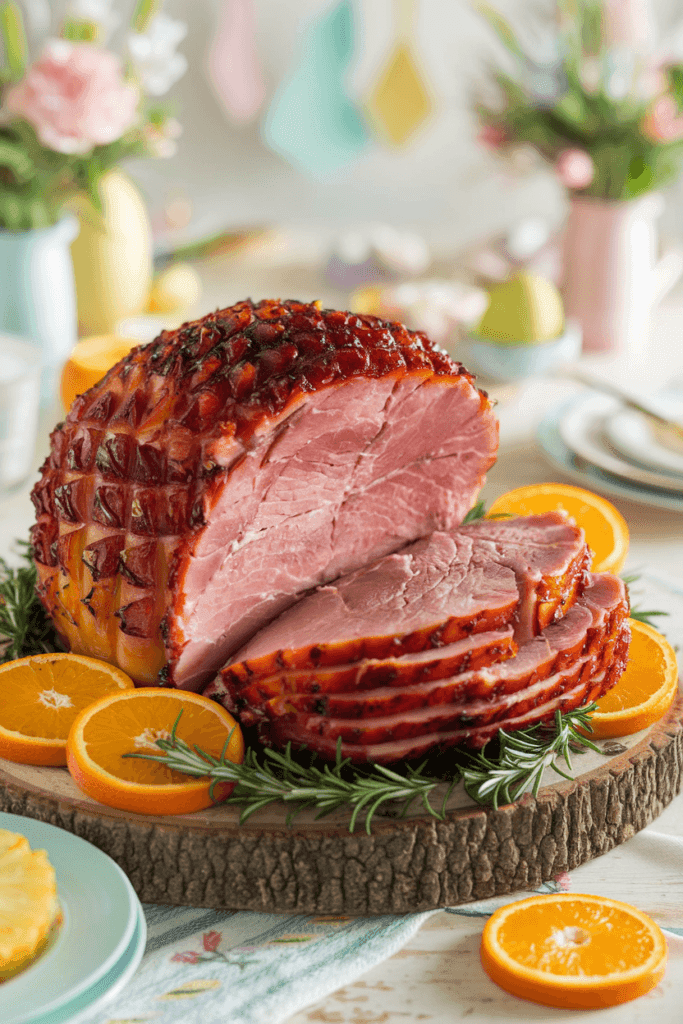
- Using a sharp knife, score the ham’s skin and fat in a diamond pattern, making shallow cuts (about ¼ inch deep). This allows the seasoning and glaze to penetrate the meat.
3. Season the Ham
- In a small bowl, mix kosher salt, black pepper, garlic powder, paprika, and ground cloves.
- Rub the seasoning mixture all over the ham, making sure to get into the scored cuts.
4. Slow-Roast the Ham
- Place the ham skin-side up on a roasting rack in a large pan. Pour 2 cups of chicken broth or water into the bottom of the pan (this keeps the ham moist).
- Cover loosely with foil and roast for 18-20 minutes per pound (about 3.5-4.5 hours for a 10-lb ham), until the internal temperature reaches 130°F (54°C).
5. Make the Glaze
- While the ham is roasting, combine brown sugar, honey, pineapple juice, Dijon mustard, apple cider vinegar, cinnamon, and cloves in a saucepan.
- Simmer over medium heat for 5-7 minutes until thickened. Remove from heat.
6. Glaze & Finish Roasting
- Once the ham reaches 130°F, remove the foil and brush the ham generously with the glaze.
- Increase the oven temperature to 425°F (218°C).
- Return the ham to the oven, uncovered, and continue roasting for 30-45 minutes, basting every 10 minutes, until the glaze is bubbling and caramelized.
- The ham is done when it reaches an internal temperature of 145°F (63°C).
7. Rest & Serve
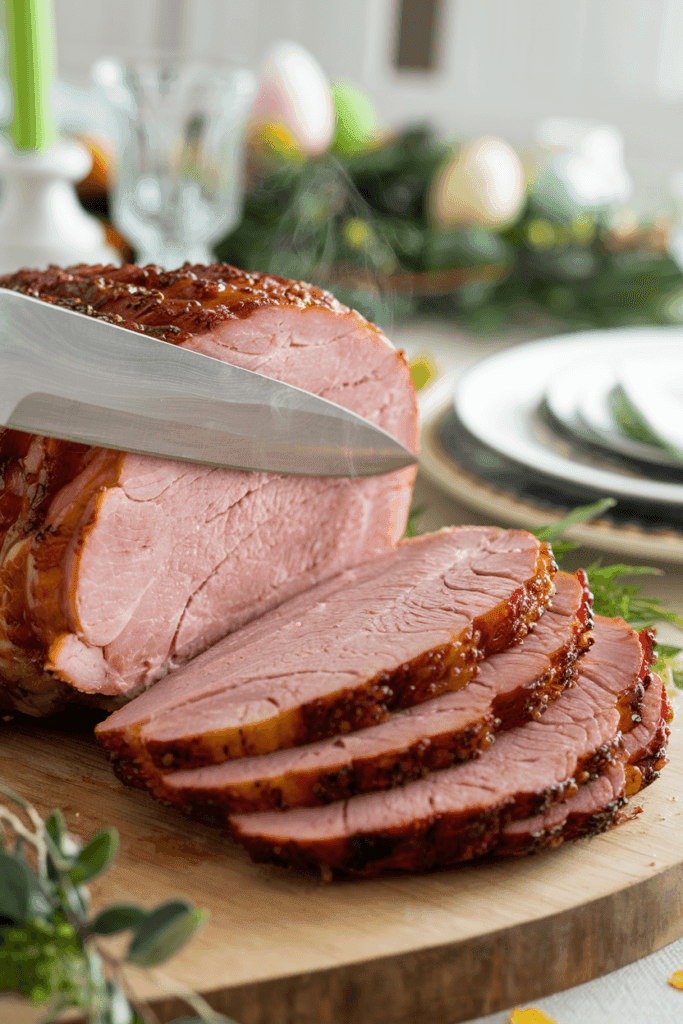
- Remove the ham from the oven and tent it loosely with foil. Let it rest for 20-30 minutes before slicing.
- Serve with any extra glaze from the pan spooned over the top.
Pro Tips for the Juiciest Ham
Let it rest properly – 20-30 minutes minimum. Resting allows the juices to redistribute through the meat. Cut into it too soon and those juices run straight onto the board. A loose foil tent keeps it warm throughout the resting period – don’t skip this step after all that roasting time.
Baste every 10 minutes during the final glazing stage. Multiple thin layers of glaze build up more flavor and a better caramelized finish than one thick coat. Set a timer so you don’t miss a basting round – the last 30-45 minutes are where the magic happens.
Use a meat thermometer – it’s the only reliable way to know. Pork should reach 145°F (63°C) at the thickest part, away from the bone. Guessing based on time leads to either underdone or dried-out meat. A basic instant-read thermometer costs very little and removes all the guesswork.
Save the bone. Once you’ve carved the ham, the bone goes into a zip-lock bag in the freezer. It’s the base for an extraordinary ham and bean soup, a pot of split pea soup, or a deeply flavored stock. Don’t throw it away.
Score deeply enough. The diamond scoring should go through the skin and into the fat layer beneath – about 1/4 inch deep. Shallow scoring just scratches the surface and doesn’t allow the seasoning or glaze to penetrate. The scored channels are also what creates those beautiful defined lines on the finished ham.
Bring it to room temperature first. Taking the ham out of the fridge 1-2 hours before cooking is not optional – it’s what ensures even cooking throughout. A cold center means you either overcook the outside to get the center up to temperature, or undercook the center to protect the outside. Room temperature start solves this entirely.
Serving Suggestions for Your Easter Ham
Pair your ham with these classic Easter side dishes:
🥔 Scalloped Potatoes – Creamy, cheesy perfection.
🥕 Maple Roasted Carrots – A sweet and savory balance.
🌽 Buttery Cornbread – A soft and delicious complement.
🥗 Spring Pea Salad – Light and refreshing.
Storing & Reheating Leftovers
- Refrigerate: Store leftovers in an airtight container for up to 5 days.
- Freeze: Wrap slices tightly and freeze for up to 3 months.
- Reheat: Warm in a 325°F oven, covered, for 10-15 minutes, or microwave individual slices.
❓ FAQ
Can I make this ham the day before Easter?
Yes – and it’s actually a good approach for stress-free hosting. Roast and glaze the ham fully the day before, let it cool completely, then refrigerate. On Easter day, cover loosely with foil and reheat in a 325°F oven for 45-60 minutes until warmed through. Make a little extra glaze to brush on during reheating to freshen the caramelized coating.
What’s the difference between fresh ham and pre-cooked ham?
A fresh ham is raw pork that has never been cured or cooked – it needs to be fully roasted from scratch. A pre-cooked or cured ham has already been processed and just needs reheating. Fresh ham gives you far more control over flavor and texture and tastes genuinely homemade. Pre-cooked is more convenient but you’re essentially reheating and glazing something already done.
How long does it take to roast a fresh ham?
Plan for 18-20 minutes per pound at 325°F for the main roast, plus 30-45 minutes at 425°F for the glazing stage. A 10-pound ham takes roughly 4-4.5 hours total. Use a meat thermometer rather than relying on time alone – you’re looking for 145°F at the thickest point.
Can I use a boneless ham instead of bone-in?
Yes – boneless is easier to carve and works with the same recipe. The trade-off is slightly less moisture and flavor since the bone contributes to both during roasting. If you use boneless, check the internal temperature earlier as it may cook slightly faster than bone-in.
My glaze is burning before the ham is cooked – what do I do?
This happens when the oven is too hot or the glaze goes on too early. If the glaze is darkening too fast, cover loosely with foil and reduce the oven temperature by 25°F. Make sure you’re only adding the glaze once the ham reaches 130°F internally – adding it earlier means it sits in the oven too long and burns before the ham finishes.
Can I substitute anything in the glaze?
Orange juice works well instead of pineapple juice for a slightly different but equally good citrus note. Maple syrup can replace some or all of the honey for a deeper, earthier sweetness. Regular yellow mustard works if you don’t have Dijon – it’s slightly sharper but still good. The brown sugar is the one ingredient worth keeping – it gives the glaze its characteristic depth and caramelization.
What do I do with leftover Easter ham?
Leftover ham is genuinely one of the best things about making this recipe. Thin slices in sandwiches with mustard and pickles. Diced into a frittata or scrambled eggs. Stirred through a potato soup. Used as a pizza topping. The ham bone makes an extraordinary base for split pea soup or ham and bean soup – freeze it if you’re not using it within a few days.
How many people does this feed?
An 8-12 pound bone-in ham feeds 8-12 people generously as a main course alongside sides. A bone-in ham loses roughly 30-35% of its weight during roasting, so factor that in when calculating portions. Better to go slightly larger than you think you need – leftover ham is never a problem.
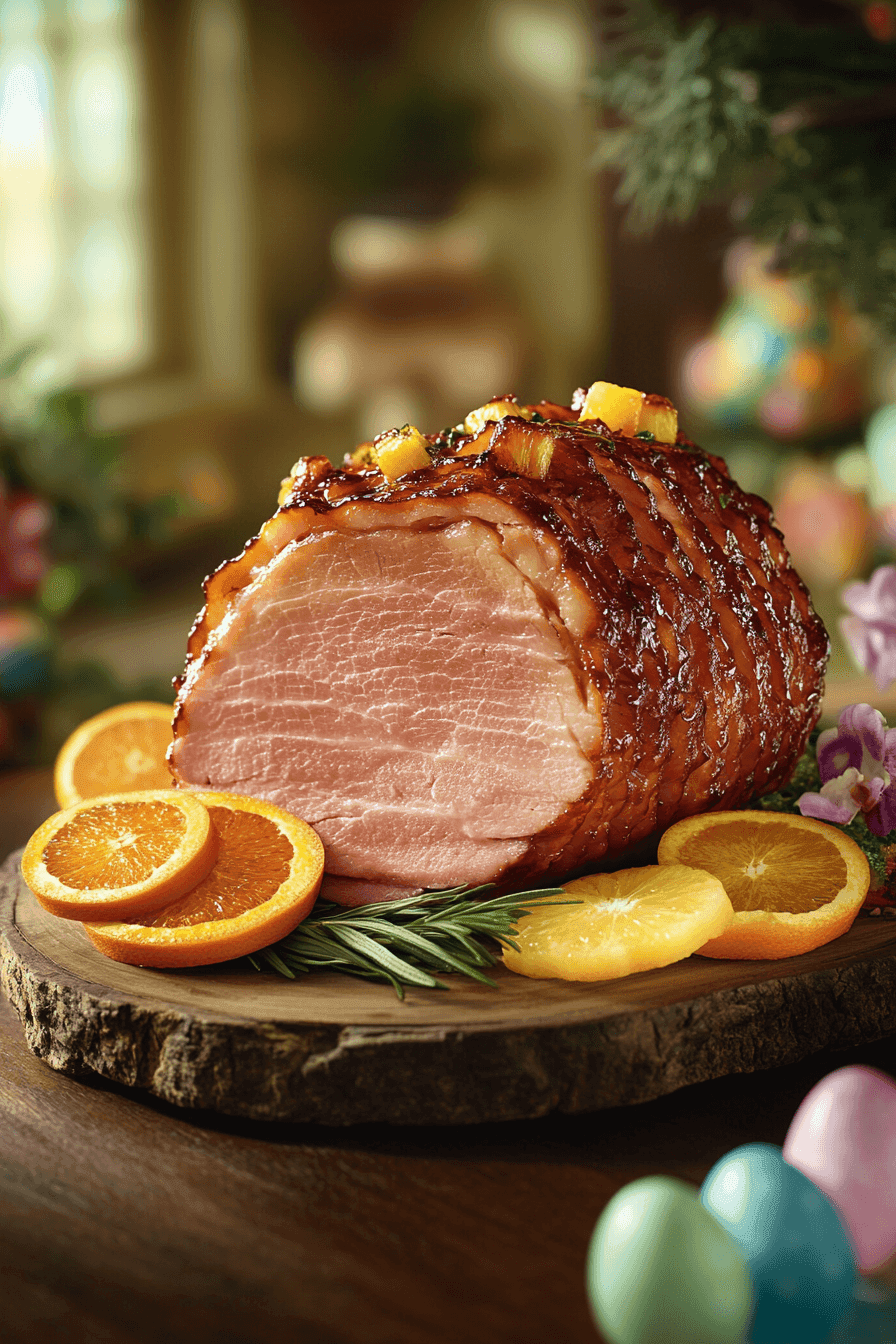
A slow-roasted ham from scratch is one of those recipes that rewards the time you put into it in a way that’s visible the moment it comes out of the oven. The glaze caramelizes to something deeply golden and slightly sticky, the scoring on the skin opens up into defined diamond shapes, and the whole thing looks like exactly the centerpiece an Easter table deserves.
Once you’ve made it this way, the pre-cooked version stops being an option. This is the ham your family will ask for every year.
Planning the rest of your Easter table? My Easy Easter Party Ideas covers everything from appetizers to desserts – all the sides and treats to build around this centerpiece. And if you want a lighter spring option alongside it, the Blueberry Glazed Salmon with Lemon Herb Couscous is a beautiful second centerpiece for a larger gathering.
The Ultimate Baked Easter Ham
Love it? Click to rate
Ingredients
Equipment
Method
- Remove the ham from the refrigerator 1-2 hours before cooking to let it come to room temperature. This ensures even cooking.
- Preheat your oven to 325°F (163°C).
- Pat the ham dry with paper towels.
- Score the Skin for Maximum Flavor
- Using a sharp knife, score the ham’s skin and fat in a diamond pattern, making shallow cuts (about ¼ inch deep). This allows the seasoning and glaze to penetrate the meat.
- In a small bowl, mix kosher salt, black pepper, garlic powder, paprika, and ground cloves.
- Rub the seasoning mixture all over the ham, making sure to get into the scored cuts.
- Place the ham skin-side up on a roasting rack in a large pan. Pour 2 cups of chicken broth or water into the bottom of the pan (this keeps the ham moist).
- Cover loosely with foil and roast for 18-20 minutes per pound (about 3.5-4.5 hours for a 10-lb ham), until the internal temperature reaches 130°F (54°C).
- While the ham is roasting, combine brown sugar, honey, pineapple juice, Dijon mustard, apple cider vinegar, cinnamon, and cloves in a saucepan.
- Simmer over medium heat for 5-7 minutes until thickened. Remove from heat.
- Once the ham reaches 130°F, remove the foil and brush the ham generously with the glaze.

- Increase the oven temperature to 425°F (218°C).
- Return the ham to the oven, uncovered, and continue roasting for 30-45 minutes, basting every 10 minutes, until the glaze is bubbling and caramelized.
- The ham is done when it reaches an internal temperature of 145°F (63°C).
- Remove the ham from the oven and tent it loosely with foil. Let it rest for 20-30 minutes before slicing.
- Serve with any extra glaze from the pan spooned over the top.

Nutrition
Notes
Pro Tips for the Juiciest Ham
✔️ Let it Rest – Resting allows juices to redistribute, making every slice tender.✔️ Baste Frequently – More glaze = more flavor and caramelization!
✔️ Use a Meat Thermometer – Prevents overcooking and keeps the ham juicy.
✔️ Save the Bone – Perfect for making ham stock, soups, or bean dishes later.
Serving Suggestions for Your Easter Ham
Pair your ham with these classic Easter side dishes:🥔 Scalloped Potatoes – Creamy, cheesy perfection.
🥕 Maple Roasted Carrots – A sweet and savory balance.
🌽 Buttery Cornbread – A soft and delicious complement.
🥗 Spring Pea Salad – Light and refreshing.
Storing & Reheating Leftovers
Refrigerate: Store leftovers in an airtight container for up to 5 days.Freeze: Wrap slices tightly and freeze for up to 3 months.
Reheat: Warm in a 325°F oven, covered, for 10-15 minutes, or microwave individual slices. Looking for the perfect sides and desserts to complete the table? Check out my 10 Easy Easter Party Ideas for everything from appetizers to bunny-themed treats.
Tried this recipe?
Let us know how it was!Recommended:
 26 Delicious Recipes for an Unforgettable Easter Family Gathering
 Irresistible Creamy Easter Poke Cake with Hidden Candy Layers
 Show-Stopping Blueberry Balsamic Glazed Ham With Thyme & Black Pepper
 Irresistible Mulled Wine and Plum Glazed Ham for Christmas
 Easter Egg Hot Chocolate – A Festive Springtime Treat!
Made this ham for Easter 2025 and it was amazing! The rub and glaze created a beautiful color on the final presentation. The taste was restaurant quality. I will be making this for years to come, thanks so much for this recipe!
Thanks Candice – I’m delighted you liked it!