This post contains affiliate links. I only recommend products I genuinely use and love at no extra cost to you.
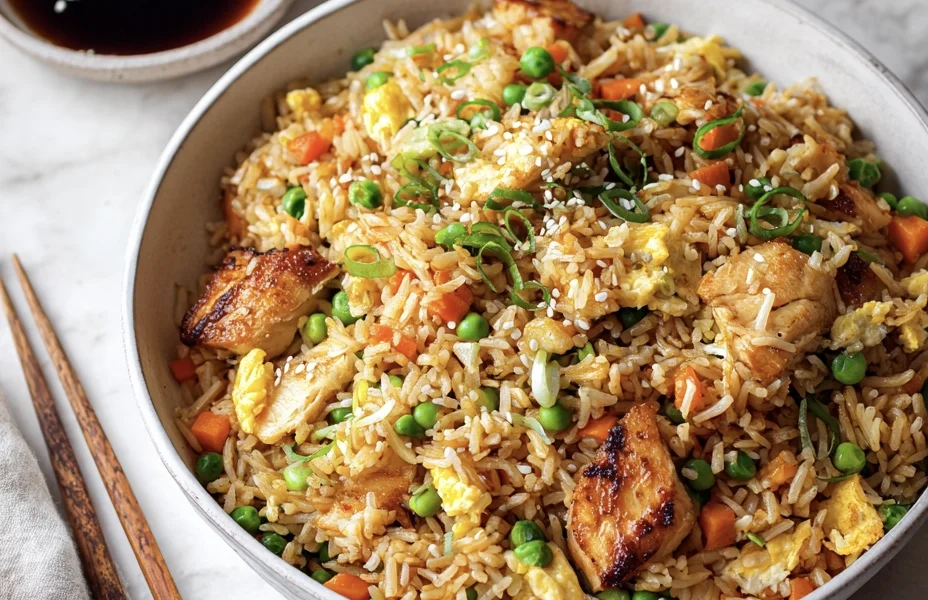
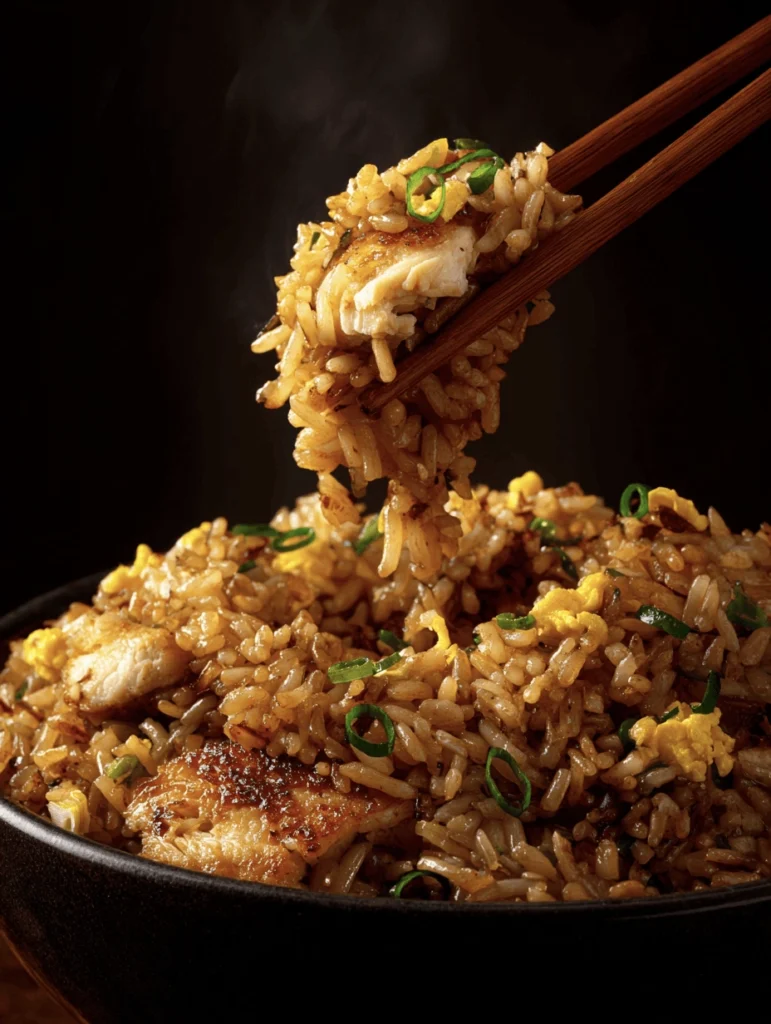
I’ve made a lot of fried rice over the years and most of it was fine. It tasted like fried rice. What it didn’t taste like was the fried rice from a good Chinese restaurant – the kind with slightly smoky, deeply savory rice where every grain is separate and coated, the egg is folded through in soft ribbons, and the whole thing has that indefinable quality that makes you eat more than you planned to.
The difference comes down to two things that most home recipes skip over. The first is day-old rice – cold, dried-out rice from the fridge fries completely differently to freshly cooked rice, and that difference is everything. The second is high heat. Restaurant woks run at temperatures a home stove can’t match, but you can get closer than you think if you know what to do.
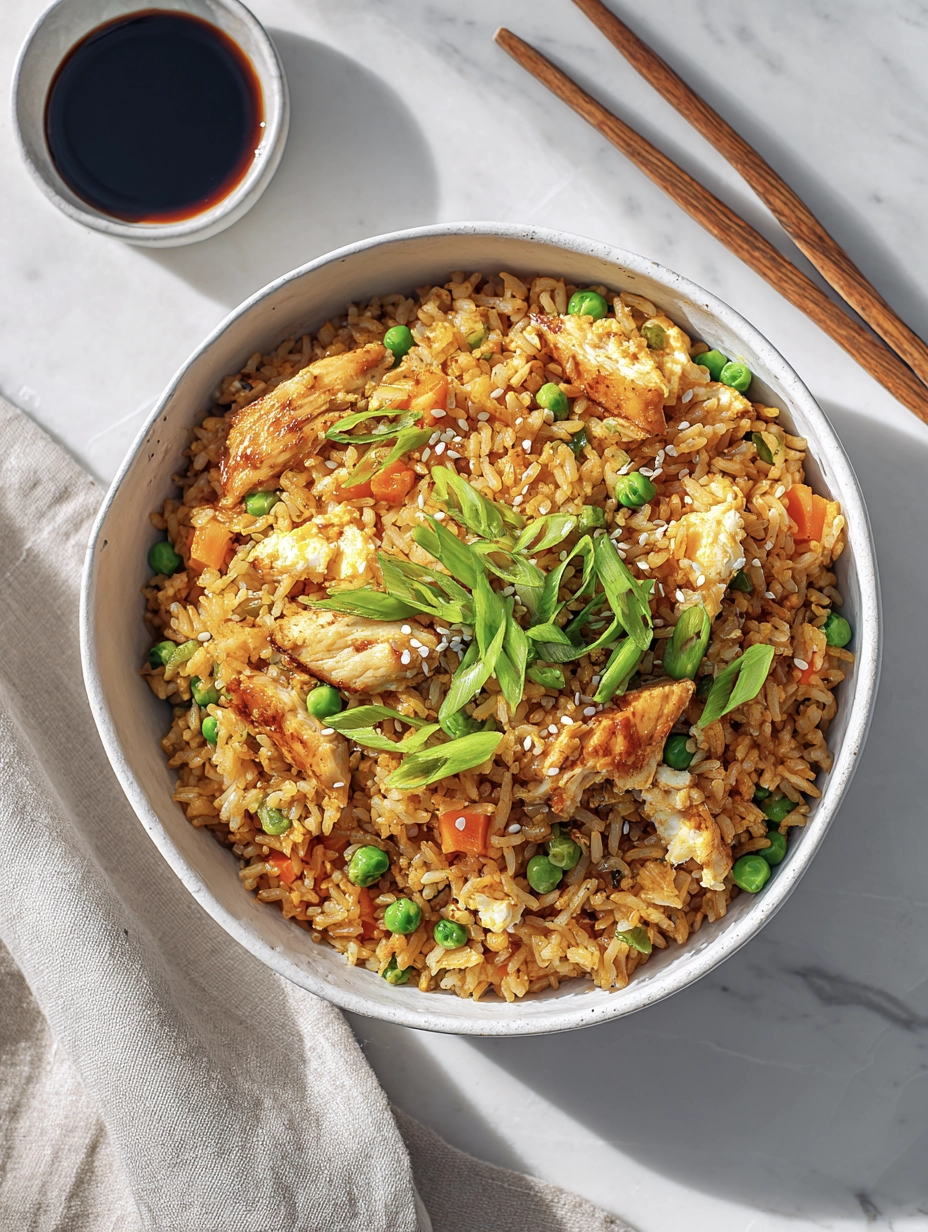
This recipe walks you through both. The result is genuinely restaurant-quality chicken fried rice – better than most takeout versions, ready in 20 minutes once you have the rice sorted, and cheaper than delivery by a significant margin. If you don’t have day-old rice, there’s a workaround below that gets you 90% of the way there.
The Secret to Restaurant Fried Rice (What Most Recipes Don’t Tell You)
Restaurant fried rice has a quality called wok hei – literally “breath of the wok” in Cantonese. It’s that slightly smoky, charred, almost caramelized flavor that makes restaurant fried rice taste fundamentally different to the homemade version. Professional woks run at 1,200°F or higher, which is how they get it.
You can’t fully replicate wok hei on a home stove, but you can get surprisingly close by following three rules:
- Use the highest heat your stove has. Don’t be shy. The pan needs to be properly screaming hot before anything goes in.
- Work in small batches. Crowding the pan drops the temperature and steams everything instead of frying it. If you’re making fried rice for four, cook it in two batches.
- Don’t stir constantly. Let the rice sit against the hot pan for 30-45 seconds at a time before tossing. That’s where the flavor develops.
Follow these and your home fried rice will have more of that restaurant quality than any recipe that just says “stir fry over medium heat.”
Day-Old Rice – Why It Matters and What to Do If You Don’t Have It
Freshly cooked rice is full of moisture. Put it in a hot pan and it steams and clumps rather than frying. Day-old rice has had time to dry out in the fridge – the individual grains firm up and separate, and when they hit a hot pan they fry properly rather than turning into a sticky mass.
The overnight method (best): Cook your rice the night before. Spread it out on a tray or in a wide bowl to let steam escape, then refrigerate uncovered for at least a few hours, ideally overnight. When you’re ready to cook, break up any clumps with your hands before it goes in the pan.
No day-old rice? Here’s the workaround: Cook the rice, spread it on a baking sheet in a thin layer, and put it in the freezer for 20-30 minutes. It won’t be quite as good as overnight rice but it’s significantly better than using it straight from the pot. The goal is to remove moisture and firm the grains – the freezer speeds that process up.
Whatever method you use, make sure the rice has been properly refrigerated – never use cooked rice that has been sitting at room temperature for more than 2 hours.
Ingredients
For the Chicken
- 2 boneless skinless chicken thighs (about 300g / 10oz), cut into small bite-sized pieces
- 1 tablespoon soy sauce
- 1 teaspoon sesame oil
- 1 teaspoon cornstarch
- ½ teaspoon white pepper
For the Fried Rice
- 3 cups cooked day-old jasmine rice (about 1.5 cups uncooked)
- 3 tablespoons neutral oil (vegetable, sunflower or canola – not olive oil)
- 3 eggs, beaten
- 1 cup frozen peas and carrots, thawed
- 4 green onions, thinly sliced (whites and greens separated)
- 4 cloves garlic, minced
- 1 teaspoon fresh ginger, grated
The Sauce
- 3 tablespoons soy sauce (low sodium works well here)
- 1 tablespoon oyster sauce
- 1 teaspoon dark soy sauce (for color – regular soy is fine if you don’t have it)
- 1 teaspoon sesame oil
- ½ teaspoon sugar
- ¼ teaspoon white pepper
To Finish
- 1 tablespoon sesame oil
- Extra green onion greens for serving
Why chicken thighs, not breast? Thighs stay juicy at the high heat needed for proper fried rice. Breast meat can go rubbery if it hits a screaming hot pan and overcooks by even 30 seconds. Thighs are more forgiving and have more flavour.
Equipment
- Wok or large skillet – the wider and heavier the better. Carbon steel wok is ideal. A 12-inch cast iron or stainless steel skillet works well. Avoid non-stick at high heat.
- Wok spatula or wide flat spatula – for tossing the rice without breaking the grains
- Small bowls – for prepping all ingredients before cooking starts (this goes fast once the heat is on)
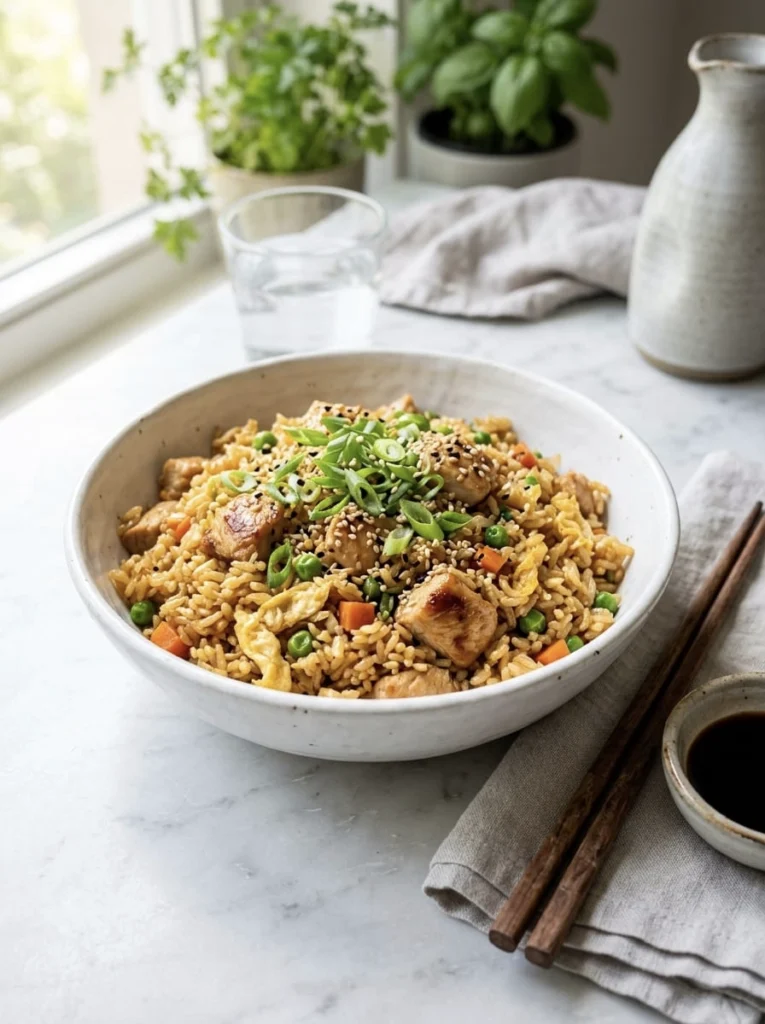
How to Make Better Than Takeout Chicken Fried Rice
Marinate the chicken Toss the chicken pieces with soy sauce, sesame oil, cornstarch and white pepper. Set aside for 10 minutes while you prep everything else. Mix all the sauce ingredients together in a small bowl and have it ready to go.
2. Get everything ready before you start cooking This is important. Once the pan gets hot, this recipe moves quickly. Have your chicken marinated, rice broken up into individual grains, eggs beaten, vegetables thawed, garlic and ginger minced, green onions sliced, and sauce mixed. Everything lined up and within reach.
3. Cook the chicken Heat 1 tablespoon of oil in your wok or pan over the highest heat your stove has. Wait until the oil is shimmering and just starting to smoke. Add the chicken in a single layer – don’t stir immediately. Let it sear for 60-90 seconds until golden on the bottom, then toss and cook another minute until just cooked through. Remove to a plate and set aside. The chicken will finish cooking when it goes back into the rice.
4. Scramble the eggs Add a little more oil to the pan. Pour in the beaten eggs and scramble them quickly – you want large, soft, slightly underdone curds. Remove to the plate with the chicken before they’re fully set. They’ll finish cooking in the rice.
5. Fry the aromatics and vegetables Add the remaining oil. Add the white parts of the green onions, garlic and ginger. Stir fry for 30-45 seconds until fragrant – you’ll smell it immediately. Add the peas and carrots and toss for another minute.
6. Add the rice – this is the key step Add the cold rice to the pan. Break up any remaining clumps with your spatula. Spread it out in as thin a layer as possible across the pan. Now leave it. Don’t stir for 45-60 seconds – let the rice sit against the hot pan and start to toast. You’ll hear it crackling. That’s exactly what you want. Toss, spread again, leave again. Repeat two or three times. This is where the flavor develops.
7. Add the sauce Pour the sauce evenly over the rice. Toss everything together thoroughly until every grain is coated and the sauce has been absorbed, about 1-2 minutes. The rice should look evenly colored and glossy.
8. Return the chicken and eggs Add the chicken and eggs back to the pan. Toss everything together for another minute until heated through and evenly combined. Taste and adjust – a little more soy if it needs salt, a tiny pinch of sugar if it needs balance.
9. Finish and serve Remove from heat. Drizzle over the final tablespoon of sesame oil and toss once more. Serve immediately, topped with the green parts of the green onions. Fried rice waits for no one – it’s best eaten right away.
Tips for the Best Result
- Don’t use freshly cooked rice unless you’ve done the freezer trick. This is the single most common reason homemade fried rice disappoints.
- Jasmine rice is the right choice. It has the right starch level and fragrance for Chinese-style fried rice. Long-grain works. Short-grain sushi rice is too sticky.
- Use a neutral oil with a high smoke point. Vegetable, sunflower, or peanut oil. Olive oil will burn and taste wrong.
- Cook in batches if feeding more than 2-3 people. A crowded pan is a steamy pan. Make two batches rather than one large one.
- The dark soy sauce is worth buying. It’s what gives restaurant fried rice that deep amber color rather than pale yellow. Find it in the Asian foods aisle or online – one bottle lasts months.
- White pepper, not black. This is the pepper used in Chinese cooking and gives a distinctly different, slightly more floral heat. Worth having in the cupboard.
Variations
| Variation | What to Change |
|---|---|
| Shrimp fried rice | Swap chicken for large shrimp, skip the marinade, cook shrimp for just 1-2 minutes per side |
| Egg fried rice (vegetarian) | Leave out the chicken entirely and double the eggs – use 5-6 eggs for a proper egg-forward version |
| Pork fried rice | Use 200g char siu (Chinese BBQ pork) instead of chicken – slice thinly and just warm through in step 8 |
| Extra spicy | Add 1-2 teaspoons of chili crisp or sambal oelek with the sauce in step 7 |
| Kimchi fried rice | Add ½ cup chopped kimchi with the vegetables in step 5 and reduce soy sauce by half |
Make Ahead and Storage
Fried rice actually keeps well and reheats better than most rice dishes because the grains are already coated in oil and sauce. Store leftovers in an airtight container in the fridge for up to 3 days.
To reheat: a hot skillet with a tiny bit of oil is best – 3-4 minutes tossing over medium-high heat brings it back beautifully. Microwave works but softens the texture.
For meal prep: cook the rice the night before and keep everything else prepped in small bowls in the fridge. The actual cooking takes 12-15 minutes so it’s a genuinely fast weeknight dinner with a little planning.
What to Serve With Chicken Fried Rice
Chicken fried rice works as a standalone dinner but it’s excellent alongside other Chinese-inspired dishes. Air fryer bang bang chicken is a natural pairing – crispy chicken with the creamy spicy sauce works beautifully with the savory rice. For a full spread, better than takeout roundup has 17 more ideas including Korean beef bowls, cheesy birria tacos and sticky peanut butter ramen carbonara.
If you want something lighter alongside, a simple cucumber salad with rice vinegar and sesame oil takes 5 minutes and cuts through the richness of the rice.
FAQs
Can I use leftover rice from a Chinese restaurant?
Yes – and it’s actually ideal. Restaurant rice is typically jasmine, already cooked and a day old by the time you use it. It’ll fry perfectly.
Why does my fried rice always come out soggy?
Almost always the rice. Freshly cooked rice has too much moisture and steams in the pan rather than frying. Use day-old rice from the fridge or do the freezer trick – 20-30 minutes on a tray in the freezer before cooking makes a real difference.
Can I make this without a wok?
Yes. A large heavy skillet – cast iron or stainless steel – works well. The key is the same: highest heat, small batches, don’t stir constantly. Avoid non-stick at very high heat.
What’s the difference between soy sauce and dark soy sauce?
Regular soy sauce is salty and thin. Dark soy sauce is thicker, slightly sweet, less salty, and much darker in color. It’s what gives Chinese fried rice its deep amber color. You can use just regular soy sauce but the color will be paler. Find dark soy sauce in the Asian foods section of most supermarkets.
Can I use brown rice instead of jasmine?
You can but the result will be denser and chewier than the restaurant version. Brown rice also takes longer to cook and dry out properly. If you want the real thing, jasmine is worth it.
How do I stop the chicken going rubbery?
Two things: use thighs not breast, and don’t overcook. Sear quickly at high heat until just done, then remove. It finishes cooking when it goes back into the rice at the end. The cornstarch in the marinade also helps protect the texture.
Is this actually better than Chinese takeout?
Genuinely, yes – with the right technique. The wok hei won’t be identical to a professional restaurant but the flavors, the sauce, and the texture of properly fried rice are better than most delivery versions which are often made in bulk and sit in containers. Fresh out of the pan is always better than 30 minutes in a delivery bag.
Is day-old rice safe to use?
Yes, as long as it has been stored correctly. The key is to cool the rice quickly after cooking and get it into the fridge within an hour – don’t leave it sitting on the counter to cool down slowly. Once refrigerated in a covered container it keeps safely for up to 3 days.
The risk with cooked rice comes from a bacteria called Bacillus cereus which can form heat-resistant spores during cooking. Those spores can multiply quickly if cooked rice is left at room temperature for more than an hour or two. Refrigerating promptly stops that process.
For fried rice specifically, the rice then gets cooked again at high heat which adds another layer of safety. The golden rules are: cool quickly, refrigerate promptly, use within 3 days, and make sure it’s piping hot all the way through when you fry it.
If your rice has been sitting at room temperature for more than 2 hours after cooking, don’t use it – start fresh.
Nutrition (Per Serving, Serves 4)
| Calories | Protein | Carbs | Fat | Fiber | Sodium |
|---|---|---|---|---|---|
| ~480 | 28g | 52g | 16g | 3g | ~900mg |
Approximate values. Sodium varies based on soy sauce brand and quantity.
Better Than Takeout Chicken Fried Rice
Love it? Click to rate
Ingredients
Method
- Toss chicken with marinade ingredients. Set aside 10 minutes. Mix sauce ingredients in a small bowl. Have all ingredients prepped and ready before you start cooking.
- Heat 1 tbsp oil in a wok or large skillet over highest heat until shimmering and just smoking. Add chicken in a single layer. Sear 60-90 seconds without stirring, then toss and cook 1 more minute until just cooked through. Remove to a plate.
- Add a little more oil. Scramble eggs until large and just underdone. Remove to the plate with the chicken.
- Add remaining oil. Fry green onion whites, garlic and ginger for 30-45 seconds until fragrant. Add peas and carrots and toss 1 minute.
- Add cold rice. Break up any clumps. Spread flat and leave to toast against the pan for 45-60 seconds – you’ll hear it crackling. Toss, spread flat again, leave again. Repeat 2-3 times. This is where the flavor develops.
- Pour sauce over rice. Toss thoroughly until every grain is coated, about 1-2 minutes.
- Return chicken and eggs to the pan. Toss everything together for 1 minute until heated through. Taste and adjust seasoning.
- Remove from heat. Drizzle over final tablespoon of sesame oil, toss once and serve immediately topped with green onion greens.
Nutrition
Notes
Tried this recipe?
Let us know how it was!Recommended:
 24 Struggle Meals That Actually Taste Great
 22 Easy Japanese Recipes You Can Make at Home
 Korean Ground Beef Bowl That Tastes Like Takeout and Takes 20 Minutes Flat
 18 Dinners That Are Better Than Takeout (and Way Cheaper)
 12 Creative Ways to Transform Leftovers into Delicious Pasta, Risotto, and Rice Dishes