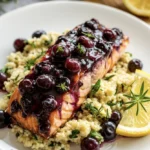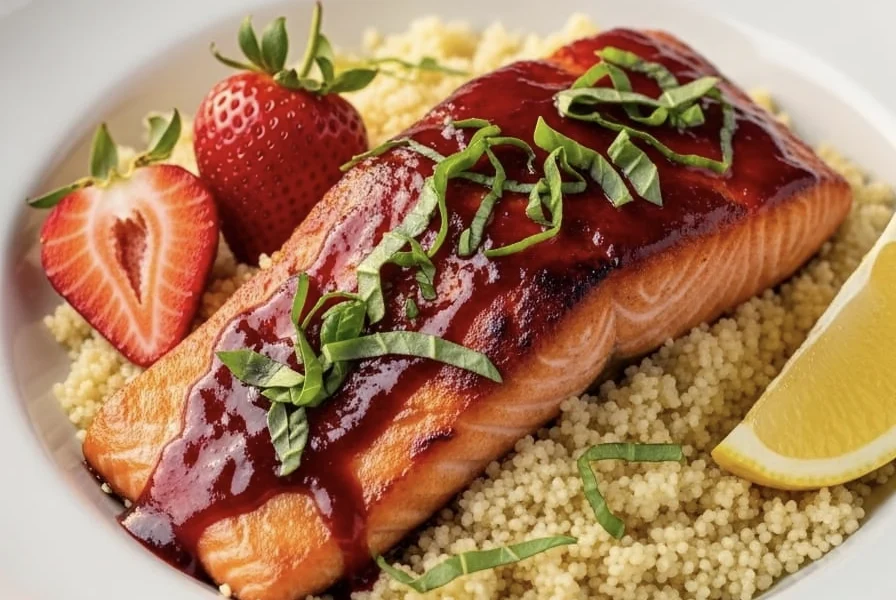
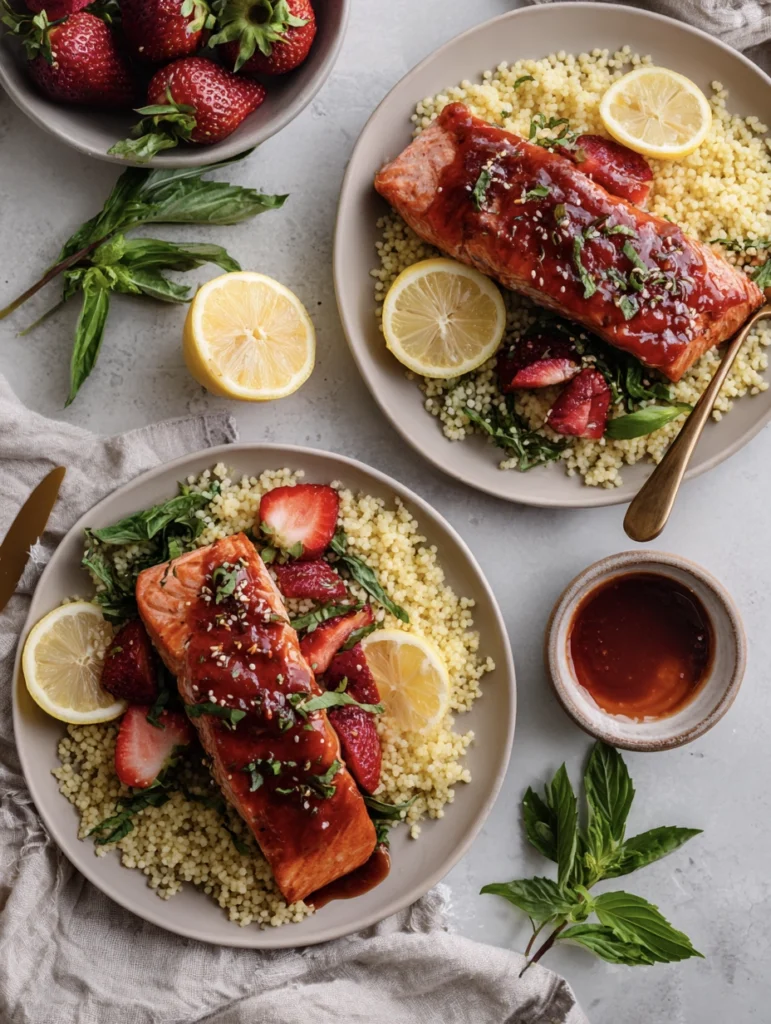
This one started because I had a punnet of strawberries going soft and a piece of salmon in the fridge and absolutely no plan. I had a hunch that strawberries would do the same job as any sharp, acidic fruit alongside a rich piece of fish – cutting through the fat rather than competing with it – so I made a quick balsamic glaze and found out I was right. The glaze goes a shade of deep cerise-pink when it reduces that is genuinely one of the most appealing colors I’ve put on a plate.
The basil is the detail that makes it feel considered rather than accidental. A small handful of fresh basil torn over the top just before serving adds a herby, slightly aniseed note that bridges the sweetness of the strawberry and the savory salmon in a way that mint or parsley wouldn’t quite manage. It’s also what makes the combination distinctly its own thing rather than just glazed salmon with fruit.
The lemon couscous underneath takes five minutes and provides a fresh, citrusy base that keeps the whole plate feeling light rather than heavy. Twenty-five minutes including the couscous. One skillet and a baking sheet. This is one of the easiest impressive dinners on the site.
If you love this style of glazed salmon, the blueberry balsamic salmon with lemon couscous uses the same approach with a slightly deeper, more complex glaze – worth having both in rotation. For ten more quick salmon ideas, the easy salmon dinners roundup covers the full range.
Why This Works
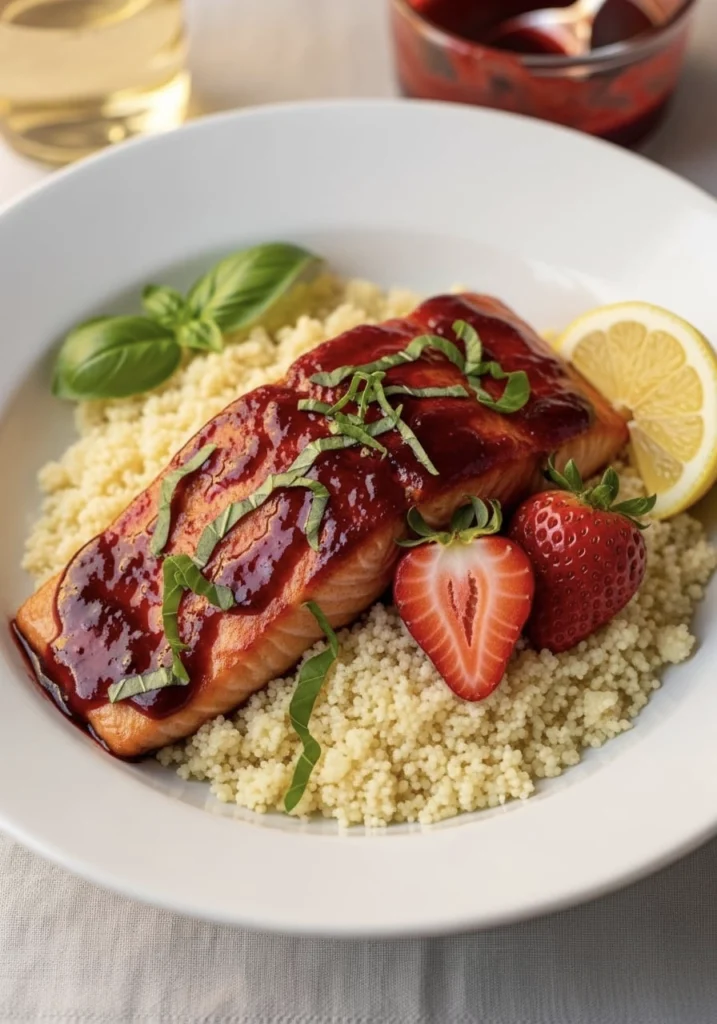
The science behind fruit glazes on salmon is simple: salmon is rich and fatty, and fat needs acidity to balance it. Lemon juice is the obvious choice and works perfectly well, but a fruit glaze adds sweetness alongside the acidity which creates a more interesting, layered result. The balsamic vinegar deepens the strawberry flavor significantly – it adds a slightly caramelized, complex note that raw strawberry alone doesn’t have, and it helps the glaze thicken and cling to the fish rather than running off.
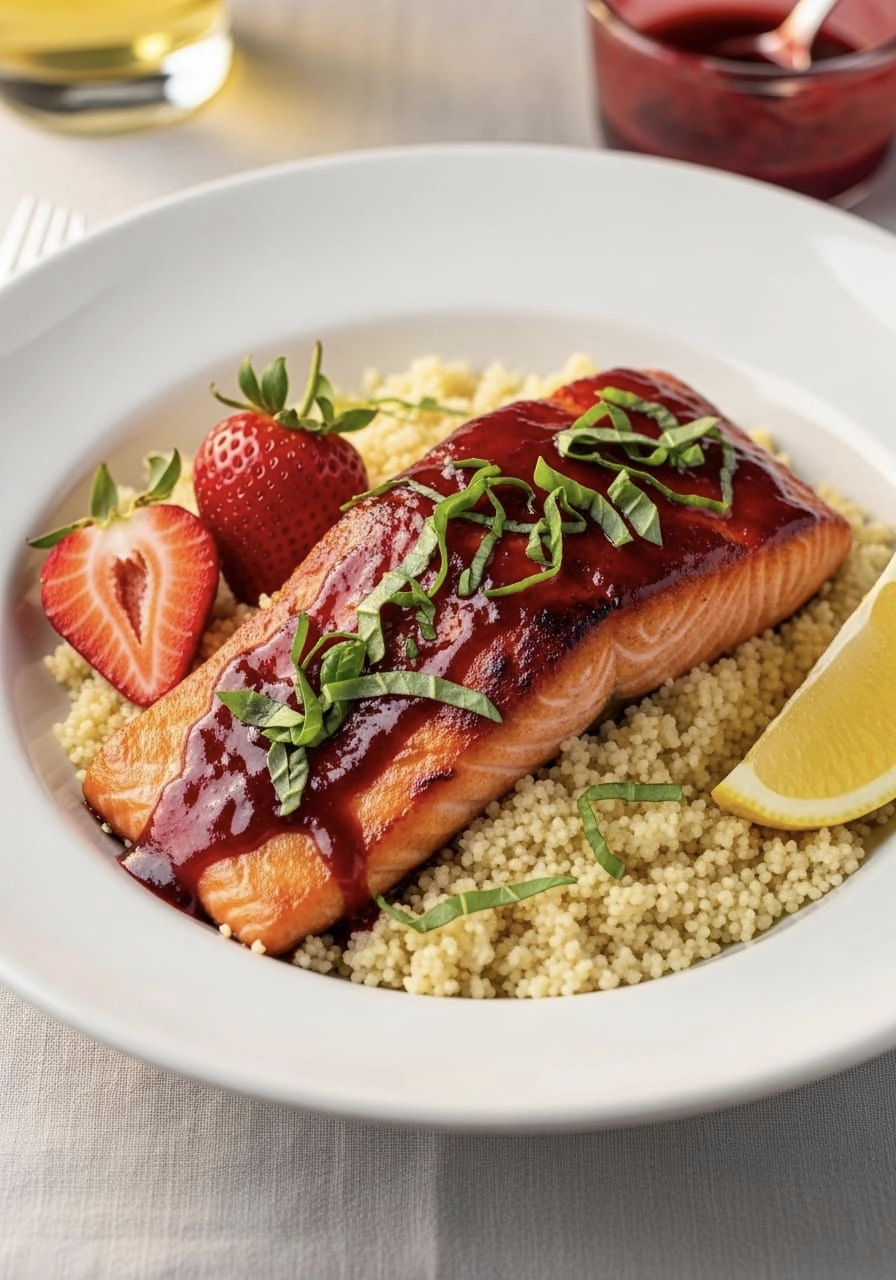
The key technique step is the broil at the end. Baking the salmon gives you a soft, even cook, but two minutes under the broiler after the glaze goes on caramelizes the sugars in the strawberry and balsamic into something slightly sticky and burnished. That’s what produces the glossy, deep-colored finish in the photographs rather than a pale, wet-looking glaze. Don’t skip it.
Fresh basil rather than dried is non-negotiable here. Dried basil would add nothing – fresh basil torn just before serving blooms from the residual heat of the fish and fills the whole plate with a fragrance that dried herbs can’t replicate. It’s also what makes the dish photograph well – the bright green against the deep pink is the color contrast that stops the scroll.
Equipment You’ll Need
Baking sheet with parchment or foil. The glaze is sticky enough that it will bond to an unlined sheet and be difficult to clean. Line it generously so the edges are covered too.
Small saucepan. For making the glaze – it needs to simmer and reduce, so a wide pan speeds this up. A small frying pan also works well.
Silicone pastry brush. For applying the glaze to the salmon. A spoon works but a brush gives better, more even coverage. Metal brushes will scratch the fish.
Medium heatproof bowl and fork. For the couscous – you just need something with a lid or a plate to cover it while it steams.
Zester or fine grater. For the lemon zest in the couscous. A microplane gives the finest, most fragrant zest. The zest is where most of the lemon flavor lives so don’t skip it in favor of extra juice.
Meat thermometer (optional but recommended). Salmon is done at 125-130F for medium or 145F for fully cooked. A thermometer removes the guesswork entirely and is the difference between perfectly cooked fish and overdone fish.
Ingredients
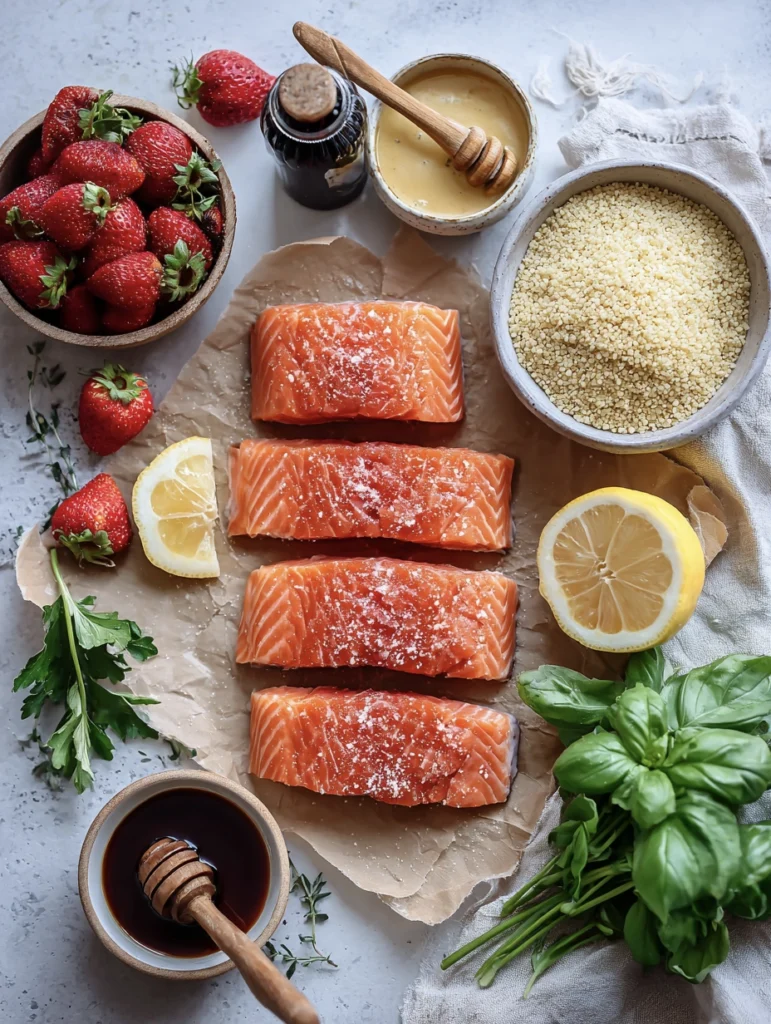
For the salmon:
- 4 salmon fillets, about 5-6 oz each, skin on or off
- 1 teaspoon olive oil
- Salt and black pepper
For the strawberry balsamic glaze:
- 1 cup fresh strawberries, hulled and roughly chopped (about 8-10 medium berries)
- 2 tablespoons balsamic vinegar
- 1 tablespoon honey
- 1 teaspoon Dijon mustard
- Zest of half a lemon
- Pinch of salt
For the lemon herb couscous:
- 1 cup dry couscous
- 1 cup boiling water or vegetable broth
- Zest of 1 lemon
- Juice of half a lemon
- 1 tablespoon olive oil
- 2 tablespoons fresh parsley or basil, roughly chopped
- Salt and pepper to taste
To finish:
- Small handful of fresh basil leaves, torn
- Extra lemon wedges
- Optional: a few whole fresh strawberries, halved, to serve
Instructions
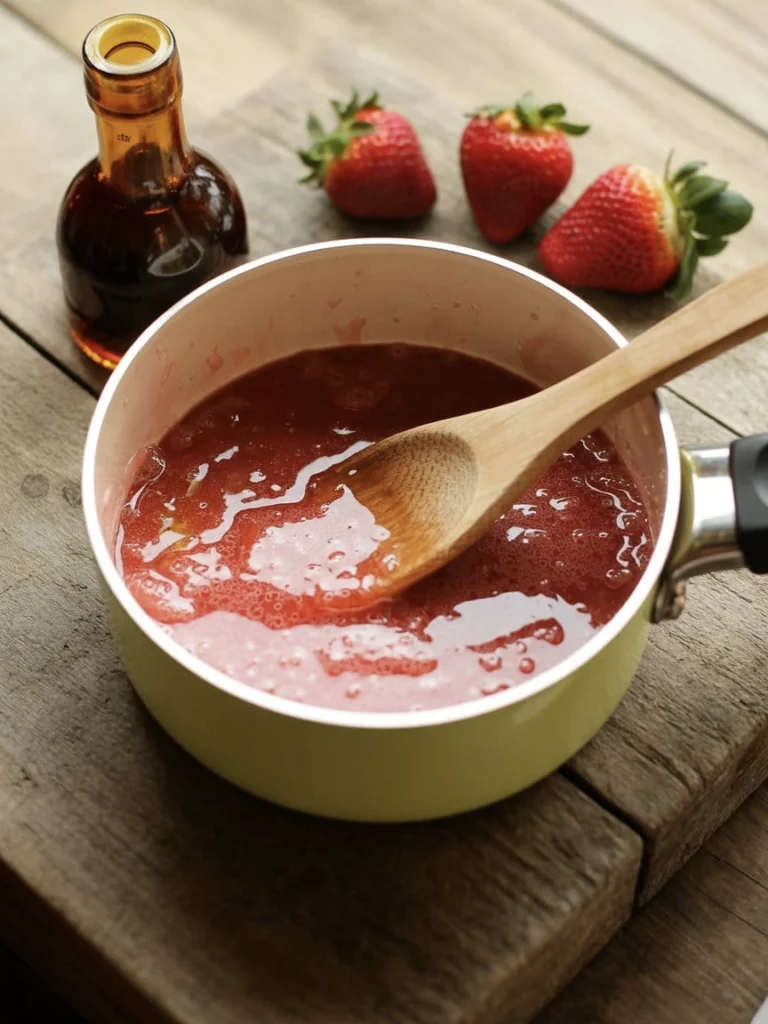
Step 1: Make the strawberry balsamic glaze. Put the chopped strawberries, balsamic vinegar, honey, Dijon, lemon zest, and a pinch of salt into a small saucepan over medium heat. Stir to combine. Bring to a gentle simmer and cook for 5-7 minutes, stirring occasionally, until the strawberries have completely broken down and the glaze has thickened enough to coat the back of a spoon. Mash any remaining strawberry chunks with the back of the spoon. Remove from heat and set aside – it will thicken further as it cools.
Step 2: Prepare the salmon. Preheat your oven to 400F (200C) and line a baking sheet with parchment. Pat the salmon fillets completely dry with paper towel – this is important for getting the glaze to adhere rather than slide off. Place on the baking sheet, drizzle lightly with olive oil, and season with salt and pepper.
Step 3: Glaze and bake. Brush the strawberry glaze generously over the top of each fillet. Bake for 10-12 minutes depending on thickness, until the salmon is almost cooked through. Switch the oven to broil and cook for a further 2 minutes until the glaze is bubbling, caramelized, and deeply colored. Keep an eye on it – the high sugar content means it can catch quickly.
Step 4: Make the couscous. While the salmon bakes, put the dry couscous in a heatproof bowl with a pinch of salt. Pour over the boiling water or broth, cover tightly with a plate or plastic wrap, and leave for exactly 5 minutes. Fluff with a fork, then stir through the lemon zest, lemon juice, olive oil, and fresh herbs. Taste and adjust seasoning – it should be well-seasoned and bright.
Step 5: Serve. Spoon the couscous onto plates. Place a salmon fillet on top of each portion. Drizzle over any remaining glaze from the pan. Tear fresh basil over the top and add a few halved strawberries alongside if using. Serve immediately with extra lemon wedges.
Tips for the Best Result
Use ripe strawberries. The glaze lives or dies on the quality of the strawberries. Ripe, in-season berries have enough natural sweetness that you barely need the honey. Out-of-season berries tend to be watery and lack flavor – in that case increase the honey slightly and simmer the glaze for a minute or two longer to concentrate it.
Pat the salmon completely dry. Moisture on the surface of the fish prevents the glaze from sticking and means it will steam rather than caramelize. This is the most important prep step.
Don’t skip the broil. The difference between baked-only and baked-then-broiled is dramatic. The broil caramelizes the sugars in the glaze and transforms a pale coating into the deep, glossy finish that makes the dish look as good as it tastes.
Make extra glaze. The recipe makes enough for four fillets but if you’re serving this to people who will want more on the side, double the glaze. It keeps in the fridge for up to five days and is also excellent on grilled chicken, stirred through yogurt as a dip, or spooned over vanilla ice cream.
The couscous is best seasoned aggressively. Plain couscous is neutral to the point of blandness. The lemon zest, juice, and olive oil need to be properly worked in and tasted – underseasoned couscous will make the whole plate taste flat. It should taste bright and lemony on its own before the salmon goes on top.
Variations Worth Trying
Add black pepper to the glaze. A generous amount of freshly cracked black pepper stirred into the glaze adds a heat that works extremely well against the sweet strawberry. This is the version to make if you want something a little more interesting than the base recipe.
Swap balsamic for pomegranate molasses. Deeper, more complex, and slightly more tart than balsamic – pomegranate molasses produces a richer glaze with a different kind of acidity. The color is also more vivid. Worth trying if you have it.
Serve over rice instead of couscous. Jasmine rice works particularly well – the slight sweetness complements the strawberry glaze better than a more neutral long-grain rice. The dill rice from the baked salmon recipe would be an interesting combination with this glaze.
Add crumbled feta to the couscous. The saltiness of the feta against the sweet strawberry glaze is an excellent combination. Stir it through the couscous just before serving so it stays in crumbles rather than melting in.
Make it a salad. Let the couscous cool slightly and serve it on a bed of arugula with the glazed salmon on top. The peppery arugula works well against the sweet glaze and makes the whole thing feel lighter for a summer lunch.
Make-Ahead and Storage
The glaze can be made up to five days ahead and kept in a sealed jar in the fridge – warm it gently on the stove before using as it will thicken considerably when cold. The couscous can be made a few hours ahead and stored at room temperature, though it is best made fresh. The salmon is best cooked to order – it takes 12 minutes and doesn’t reheat well.
Leftover cooked salmon keeps in an airtight container in the fridge for up to two days. Serve it cold over a salad rather than reheating – reheated salmon loses texture. The leftover glaze is excellent as a salad dressing base mixed with a little extra olive oil and lemon juice.
Frequently Asked Questions
Can I use frozen strawberries?
Yes – thaw them first and drain off as much liquid as possible. Frozen strawberries tend to be wetter than fresh so simmer the glaze for an extra 2-3 minutes to drive off the excess moisture and concentrate the flavor. The color will still be beautiful.
Can I grill this instead of baking?
Yes. Preheat the grill to medium-high, oil the grates well, and cook the salmon skin-side down for 4-5 minutes. Brush the glaze on during the last 2 minutes of cooking rather than at the start – applied too early it will burn before the fish is cooked through. The char from the grill adds another layer of flavor that works really well with the sweet glaze.
What’s the best salmon to use?
Skin-on fillets work best for this recipe – the skin protects the underside during baking and the flesh stays more moist. Atlantic salmon has the right fat content to stand up to a sweet glaze. Wild salmon works well but is leaner so reduce the baking time by 1-2 minutes to avoid drying it out.
Can I make the couscous with something else?
Quinoa, farro, and orzo all work well. Orzo is a particularly good match – the pasta shape catches the glaze in a way that couscous doesn’t quite. For a lower-carb option, cauliflower rice tossed with lemon zest and olive oil takes 5 minutes in a hot pan and provides a similar neutral base.
What other salmon recipes are on the site?
The blueberry balsamic glazed salmon is the closest cousin to this recipe – same format, different fruit, equally good. The pistachio-crusted salmon with brown butter vinaigrette is the one to make when you want something that looks even more dramatic. For a quick full week of salmon dinners, the easy salmon dinners roundup covers ten options worth rotating through.
Fresh Strawberry Basil Salmon with Lemon Couscous – Ready in 25 Minutes
Love it? Click to rate
Ingredients
Equipment
Method
- Instructions
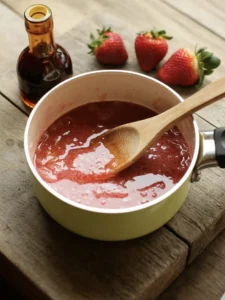
- Step 1: Make the strawberry balsamic glaze. Put the chopped strawberries, balsamic vinegar, honey, Dijon, lemon zest, and a pinch of salt into a small saucepan over medium heat. Stir to combine. Bring to a gentle simmer and cook for 5-7 minutes, stirring occasionally, until the strawberries have completely broken down and the glaze has thickened enough to coat the back of a spoon. Mash any remaining strawberry chunks with the back of the spoon. Remove from heat and set aside – it will thicken further as it cools.
- Step 2: Prepare the salmon. Preheat your oven to 400F (200C) and line a baking sheet with parchment. Pat the salmon fillets completely dry with paper towel – this is important for getting the glaze to adhere rather than slide off. Place on the baking sheet, drizzle lightly with olive oil, and season with salt and pepper.
- Step 3: Glaze and bake. Brush the strawberry glaze generously over the top of each fillet. Bake for 10-12 minutes depending on thickness, until the salmon is almost cooked through. Switch the oven to broil and cook for a further 2 minutes until the glaze is bubbling, caramelized, and deeply colored. Keep an eye on it – the high sugar content means it can catch quickly.
- Step 4: Make the couscous. While the salmon bakes, put the dry couscous in a heatproof bowl with a pinch of salt. Pour over the boiling water or broth, cover tightly with a plate or plastic wrap, and leave for exactly 5 minutes. Fluff with a fork, then stir through the lemon zest, lemon juice, olive oil, and fresh herbs. Taste and adjust seasoning – it should be well-seasoned and bright.
- Step 5: Serve. Spoon the couscous onto plates. Place a salmon fillet on top of each portion. Drizzle over any remaining glaze from the pan. Tear fresh basil over the top and add a few halved strawberries alongside if using. Serve immedia